eSIM Guide for Dubai 2026: Connectivity in the World's Most Connected City
Dubai's Mobile Network: A Global Reference Point
Dubai is the city that other cities compare themselves to when discussing mobile network ambition. The emirate's government made world-class telecommunications infrastructure a pillar of its economic diversification strategy long before most countries had launched 5G, and the results are measurable: Etisalat and du between them provide 5G coverage across the entire city, including underground metro stations, the world's busiest international airport, and every major tourist attraction. Download speeds in central Dubai regularly exceed 300-500 Mbps in independent testing. For travelers arriving from most other countries, the first experience of Dubai's 5G network on a modern device is genuinely striking.
This guide covers the specific connectivity experience across Dubai's different districts, what to expect at major attractions, how the city's unique digital regulations affect your communication strategy, and the practical app stack that makes navigating Dubai efficient and enjoyable.
5G Coverage by Dubai District
Downtown Dubai and Business Bay
The area around the Burj Khalifa, Dubai Mall, and Fountain Square is among the most densely instrumented mobile environments on Earth. Both Etisalat and du have priority infrastructure deployment in this zone, supporting the tens of millions of visitors annually who arrive with 5G-capable smartphones and high data expectations. Speeds regularly exceed 400 Mbps in testing at the Burj Khalifa observation deck and across the Dubai Fountain viewing area. Indoor coverage penetrates into Dubai Mall's basement levels and the Dubai Aquarium area. At peak times during Dubai Shopping Festival or New Year's Eve fireworks events, network congestion does reduce speeds -- both operators deploy temporary capacity reinforcement for major events, but simultaneous uploads from hundreds of thousands of devices at the same moment still create temporary slowdowns.
Dubai Marina and JBR (Jumeirah Beach Residence)
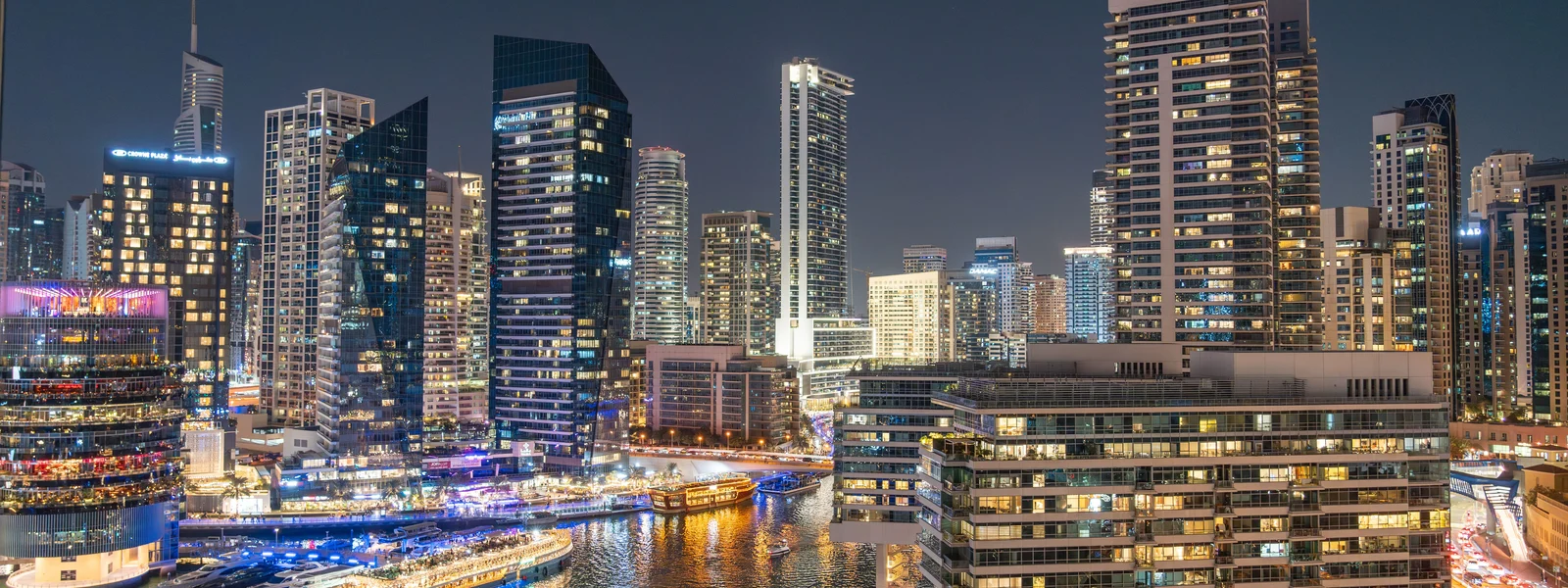
Dubai Marina's waterfront, the marina promenade, and the JBR beach strip are fully covered by 5G from both operators. This is one of Dubai's most Instagram-active zones -- sunset photos from the marina, JBR beach panoramas, and Ain Dubai (the world's largest observation wheel) are all popular content creation locations with consistent 5G upload speeds supporting instant posting. The Bluewaters Island area (adjacent to JBR and home to Ain Dubai) has full 5G coverage. The Palm Jumeirah, accessible via monorail from the marina area, has 5G across the entire trunk and fronds including the Atlantis resort area at the palm's tip.
Deira and Bur Dubai (Historic Districts)
Dubai's older commercial and residential districts on both sides of Dubai Creek have comprehensive 4G and 5G coverage despite the denser, lower-rise building fabric. The Gold Souk and Spice Souk areas have 4G/5G signal in the open-air covered passages. The Dubai Museum and Al Fahidi Historic Neighbourhood have good outdoor coverage; deep interior spaces of individual buildings may have reduced penetration. The Dubai Creek waterfront (the Corniche area near Al Seef) has 5G throughout. Taking an abra (traditional wooden boat) across the creek involves a few minutes outdoors over water -- coverage is maintained as both banks of the creek have tower coverage that extends across the narrow waterway.
Dubai International Airport (DXB)
Heydar Aliyev International is well-connected -- DXB is exceptional. All three terminals have 5G coverage throughout, including baggage claim areas, the transit shopping zones, and the inter-terminal shuttle train. For travelers connecting through DXB, connectivity for work or entertainment during a layover is genuinely fast -- not the throttled public airport Wi-Fi of many international hubs but full 5G speeds from a pre-installed travel eSIM. The Aerotrain connecting Terminal 1, 2, and 3 maintains signal throughout, allowing continuous connectivity during the transit between terminals.
Dubai Metro Coverage
The Dubai Metro is one of the world's most technically impressive urban rail systems and has the connectivity infrastructure to match. 4G and 5G signals are maintained throughout the metro network -- both elevated sections and the fully underground portions of the Red and Green lines -- via a distributed antenna system installed when the metro was built and subsequently upgraded for 5G. This means you can navigate, stream, and communicate without interruption during metro rides. For visitors using the metro as their primary transit mode, this is a significant convenience -- the 30-minute ride from Rashidiya to the Dubai Mall station, for example, is fully connected throughout.
Indoor Coverage: Malls, Hotels, and Venues
Dubai's mall culture creates a specific indoor coverage situation. The emirate's largest malls -- Dubai Mall (the world's largest by total area), Mall of the Emirates, Dubai Festival City, Ibn Battuta Mall, and the dozens of smaller commercial centers -- all have comprehensive indoor cellular coverage, typically 4G and 5G throughout. Mall operators have worked with Etisalat and du to ensure coverage because connectivity is a customer experience expectation in Dubai's mall environment. You will experience no signal degradation while shopping, dining, or visiting mall attractions like Ski Dubai or the Dubai Mall ice rink.
Hotels throughout Dubai at the four-star level and above supplement their Wi-Fi with strong indoor cellular coverage. Most modern hotel construction includes passive distributed antenna systems that bring outdoor 5G signal into interior corridors and rooms. Older buildings and budget accommodations have more variable indoor signal, but even these benefit from Dubai's overall tower density -- meaningful indoor coverage gaps are uncommon in the central city.
Communication in Dubai: The VoIP Reality
Dubai shares the UAE's national VoIP restriction: WhatsApp voice and video calls, FaceTime audio and video, Skype, and most standard internet calling applications do not function on Dubai's local networks. This restriction applies to every data connection on UAE network infrastructure -- local SIM, travel eSIM, hotel Wi-Fi, and mall Wi-Fi equally. The filtering is applied at the infrastructure level rather than the carrier level, making it uniformly effective across all connectivity types that route through UAE networks.
For travelers visiting Dubai from countries where WhatsApp calls are the primary way of staying in touch with family and friends, this requires a specific communication plan adjustment. The most practical approaches: download BOTIM before departure and brief key contacts on using it for calls during your Dubai visit; keep your home SIM active for incoming cellular calls at no extra cost (callers reach you on your normal number); or use a travel eSIM from a provider that routes data via European servers, enabling WhatsApp calls despite the UAE network restriction. WhatsApp text messaging, voice notes, and file sharing all work normally -- only the real-time call function is restricted.
Transport and Navigation in Dubai
Dubai's geography challenges navigation in ways that a good mobile data connection substantially resolves. The city is large, spread along a coastal corridor over 50 km long, with complex road interchanges, multiple bridge crossings over the creek, and districts that do not map intuitively to a first-time visitor's spatial understanding. Google Maps works without restriction and handles Dubai navigation excellently -- the map data is detailed and current, and real-time traffic updates for Sheikh Zayed Road and other major arteries are accurate. Download the offline Dubai map (approximately 450 MB) before exploring for zero-data navigation backup.
Careem is the primary ride-hailing app in Dubai, with deep integration into the city's transport ecosystem including integration with Dubai Metro journey planning. Uber operates in Dubai as well but with smaller market share. Both apps work without restriction on your eSIM data connection. Dubai Taxis (official government-regulated taxis) are also abundant and can be flagged at taxi ranks outside major hotels, malls, and attractions -- you do not need an app for these, though the RTA Dubai app allows advance booking. Nol cards (Dubai's transit smart card) cover metro, bus, and water bus fares -- the RTA Dubai app allows top-up but the physical card is purchased at metro stations.
Data Consumption Profile: Dubai-Specific
Dubai's 5G speeds accelerate data consumption in ways that surprise first-time visitors. Instagram, YouTube, and TikTok all default to maximum video quality on the UAE's fast connection. A morning of photos at the Burj Khalifa followed by JBR beach in the afternoon, with active Instagram posting throughout, can consume 1.5-2.5 GB in a single day without any intentional streaming. For a 5-day Dubai break, budget 8-12 GB for a moderate social media user and 15-20 GB for a heavy content creator or regular video caller. The city rewards visual storytelling -- your eSIM's data allowance is doing real work throughout your stay.
Practical Tips for First-Time Dubai Visitors
Dubai rewards connectivity preparation more than most cities because its geography, road system, and social norms all interact with mobile technology in specific ways. A few practical notes that experienced Dubai travelers consistently share: First, Careem and Uber pricing in Dubai is metered and displayed in-app before booking -- always confirm the fare estimate before accepting. Second, the Dubai Metro fare system uses Nol cards, not contactless payment from your phone. Top up a Nol card at any metro station -- the process takes about 3 minutes and the card covers metro, bus, and water bus fares for your entire stay. Third, Dubai's residential areas and some older commercial districts have large blocks without pedestrian crossing infrastructure -- Google Maps walking directions sometimes route you across roads that are not practical on foot. Use the metro or Careem for longer distances rather than walking Google Maps routes that assume North American or European pedestrian infrastructure.
Fourth and most importantly for connectivity: the VoIP restriction. Download BOTIM before you land and tell key contacts they can reach you there for video calls. For text communication, WhatsApp, iMessage, and Telegram all work normally. For anyone who has not visited the UAE before, the WhatsApp call block is the one connectivity element that catches people off guard -- everything else about Dubai's mobile environment exceeds expectations.
Free Dubai Wi-Fi: What Is Available and Is It Worth Using?
The Dubai government operates a free public Wi-Fi network called 'Dubai Free WiFi' in selected public spaces including parts of the metro, some parks, and popular tourist areas. The network is free to access with a one-time SMS registration (requiring a phone number). Speeds are highly variable -- from adequate for messaging to essentially unusable during peak tourist times. Dubai Mall has its own free Wi-Fi network that is faster and more reliable than the public city Wi-Fi in the tourist zones surrounding it. JBR has public Wi-Fi from du in the beachfront area.
For most travelers with a travel eSIM providing 4G/5G speeds of 50-300 Mbps, the free public Wi-Fi networks are simply unnecessary for light use. Where they add genuine value: downloading large files (hotel location-based Wi-Fi or mall Wi-Fi can supplement your eSIM for heavy downloads), or as a zero-data backup when approaching the end of your eSIM plan's allowance. Hotel Wi-Fi in Dubai's established properties is reliable enough to use for work tasks in your room, leaving your eSIM as the primary outdoor and transit connectivity source.
Photography Connectivity: Dubai's Unique Context
Dubai is arguably the world's most photographed contemporary city -- the Burj Khalifa, the Palm Jumeirah aerial view, the Dubai Frame, and the Old Dubai Creek waterfronts all generate billions of social media posts annually. If photography and social media content creation are significant parts of your Dubai visit, your eSIM data allowance needs to account for this explicitly. Each Instagram post consumes 2-5 MB. A 60-second Reels video uploads at 15-40 MB. A full day of active posting (10-15 posts, 3-5 Reels) consumes 150-400 MB. A drone flight over the marina with multiple video clips uploaded to the cloud consumes 500 MB - 1 GB depending on video quality. Plan your eSIM allowance around your content creation intensity rather than your general travel data assumptions, which may significantly underestimate Dubai-specific consumption.
Dubai Beyond the Tourist Circuit
Visitors who venture beyond the main tourist zones into neighborhoods like Al Quoz (the art district), Jumeirah (the original villa neighborhood), or the older residential communities of Satwa and Karama will find full 4G/5G coverage throughout. Dubai's network investment has not focused exclusively on tourist-facing zones -- the residential and commercial fabric of the entire emirate has comprehensive coverage. Whether you are visiting a friend's apartment in Al Barsha, attending a gallery opening in Al Quoz, or exploring the Friday market in Al Quoz's industrial district, your eSIM delivers the same quality connectivity as it does at the Burj Khalifa. This is one of the UAE's genuine network achievements: the consistency of coverage across the full socioeconomic and geographic spectrum of the city, not just in the zones that make the highlight reels.
Get your United Arab Emirates eSIM
Compare eSIM plans for United Arab Emirates before your trip.
FAQ
What coverage and network performance should travelers expect in United Arab Emirates?
The Dubai Metro is one of the world's most technically impressive urban rail systems and has the connectivity infrastructure to match. 4G and 5G signals are maintained throughout the metro network -- both elevated sections and the fully underground portions of the Red and Green lines -- via a distributed antenna system installed when the metro was built and subsequently upgraded for 5G. This means you can navigate, stream, and communicate without interruption during metro rides. For visitors using the metro as their primary transit mode, this is a significant convenience -- the 30-minute ride from Rashidiya to the Dubai Mall station, for example, is fully connected throughout.
What should travelers know about dubai international airport (dxb) in United Arab Emirates?
Heydar Aliyev International is well-connected -- DXB is exceptional. All three terminals have 5G coverage throughout, including baggage claim areas, the transit shopping zones, and the inter-terminal shuttle train. For travelers connecting through DXB, connectivity for work or entertainment during a layover is genuinely fast -- not the throttled public airport Wi-Fi of many international hubs but full 5G speeds from a pre-installed travel eSIM. The Aerotrain connecting Terminal 1, 2, and 3 maintains signal throughout, allowing continuous connectivity during the transit between terminals.
Free Dubai Wi-Fi: What Is Available and Is It Worth Using?
The Dubai government operates a free public Wi-Fi network called 'Dubai Free WiFi' in selected public spaces including parts of the metro, some parks, and popular tourist areas. The network is free to access with a one-time SMS registration (requiring a phone number). Speeds are highly variable -- from adequate for messaging to essentially unusable during peak tourist times. Dubai Mall has its own free Wi-Fi network that is faster and more reliable than the public city Wi-Fi in the tourist zones surrounding it. JBR has public Wi-Fi from du in the beachfront area.
What should travelers know about downtown dubai and business bay in United Arab Emirates?
The area around the Burj Khalifa, Dubai Mall, and Fountain Square is among the most densely instrumented mobile environments on Earth. Both Etisalat and du have priority infrastructure deployment in this zone, supporting the tens of millions of visitors annually who arrive with 5G-capable smartphones and high data expectations. Speeds regularly exceed 400 Mbps in testing at the Burj Khalifa observation deck and across the Dubai Fountain viewing area. Indoor coverage penetrates into Dubai Mall's basement levels and the Dubai Aquarium area.
Can I cancel an eSIM purchase if I do not use it?
Yes. An unused eSIM can be cancelled within 30 days as long as it has not been used on the destination network. Once it has connected and been used, this condition no longer applies.