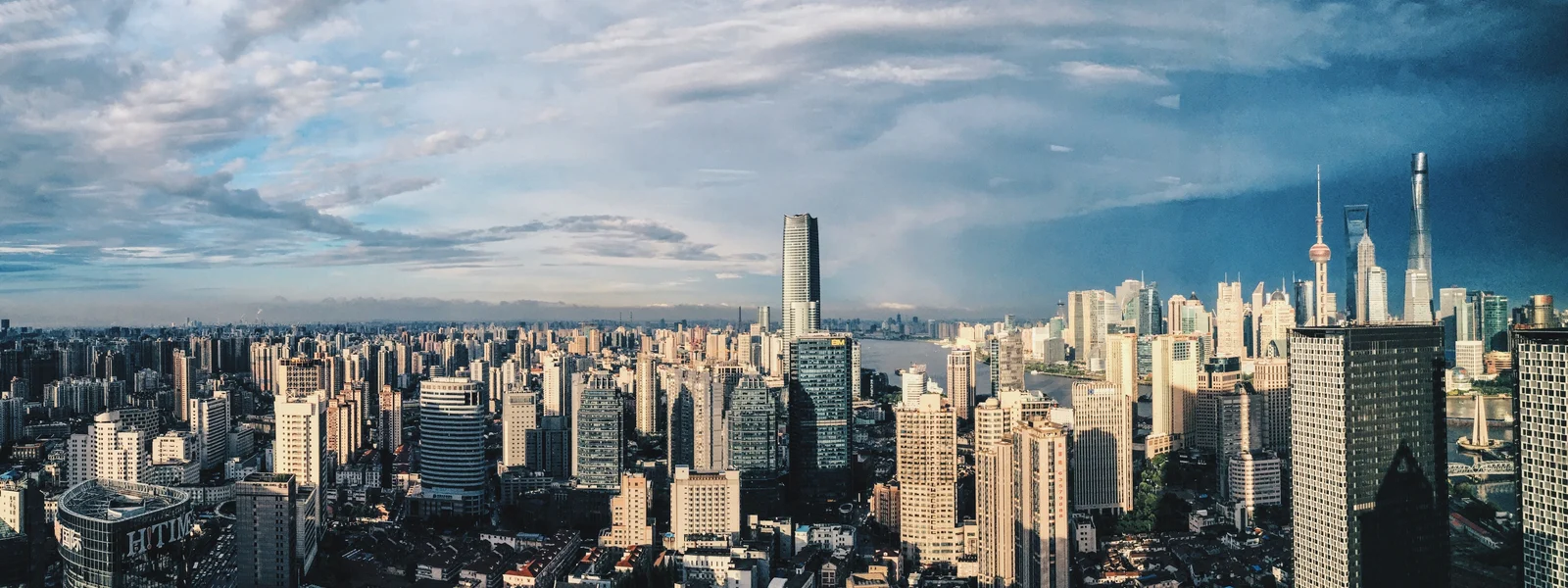
Shanghai eSIM Guide 2026: The Bund, Pudong, and China's Most International City
Shanghai's connectivity landscape
Shanghai is China's financial capital and most internationally-connected city. The combination of a large expatriate population, major multinational company headquarters, and continuous investment in international business infrastructure has given Shanghai a connectivity environment that feels more globally integrated than other Chinese cities -- even as the Great Firewall applies equally throughout the city.
Shanghai's 5G network is among the densest in China. Huawei, which supplies much of China's 5G infrastructure, maintains significant operations in Shanghai. The result is 5G deployment that covers not just the main business districts but also the residential areas of Puxi (historic west Shanghai), the French Concession, Xintiandi, and the modern towers of Pudong's financial district. Speedtest data from Shanghai consistently shows median 5G speeds of 200-400 Mbps -- among the highest in China.
Shanghai by area: connectivity guide
| Area | Coverage | Character |
|---|---|---|
| The Bund (Waitan) | Excellent 5G | Historic waterfront -- photos and video calling destination |
| Pudong (Lujiazui) | World-class 5G | Financial towers, Shanghai Tower -- fastest speeds in the city |
| French Concession | Excellent 5G | Cafe and restaurant district -- best for connected working |
| Xintiandi | Excellent 5G | Entertainment district -- high-density tourist infrastructure |
| Yu Garden / Old Town | Strong 4G/5G | Historic quarter -- dense signal through narrow streets |
| Jing'an District | Excellent 5G | Upscale residential and commercial -- strong infrastructure |
| M50 Art District | Good 4G/5G | Industrial repurposed space -- good signal throughout |
| Shanghai Hongqiao Hub | Excellent 5G | Airport + HSR station combined -- state-of-art infrastructure |
Getting around Shanghai
Shanghai's metro is the world's second-longest by route length and is the backbone of urban transport in a city too large to navigate by taxi alone. The metro app (Metro Da Dou or Shanghai Metro) provides real-time information in both Chinese and English. Apple Maps navigation works for metro trips without VPN. The system uses QR codes for ticketing at many stations, which links naturally to your WeChat or Alipay app.
Didi in Shanghai: Shanghai is one of Didi's strongest markets. Driver availability is excellent throughout the city including the French Concession, Hongqiao, and Pudong. The international Didi app accepts international credit cards and is English-language. For airport transfers (Pudong International Airport is 30 km from the city center), Didi is significantly cheaper than metered taxis and comparable to the Maglev train for door-to-door convenience.
Shanghai for business travelers
Shanghai hosts the China headquarters of hundreds of multinational companies. Business travelers visit for trade fairs (China International Import Expo, Auto Shanghai), industry meetings, and corporate operations. The connectivity infrastructure for business in Shanghai is the strongest in China: fast 5G, the most international-agreement-connected Unicom infrastructure, major international hotel chains with dedicated international internet gateways, and a critical mass of foreign business travelers who have collectively figured out the VPN and firewall management system.
International hotels in Shanghai (Four Seasons, St. Regis, Ritz-Carlton, Shangri-La) often provide better VPN performance than local accommodation -- their internet gateways may route through international connections that are less aggressively filtered. This is not guaranteed but is a commonly reported experience among frequent Shanghai business travelers.
Shanghai day trips and connectivity
Shanghai's position in China's most densely developed region means that day trips to Suzhou, Hangzhou, Zhujiajiao (water town), and other nearby destinations are accessible via high-speed rail and all have good 4G/5G coverage. China's high-speed rail network delivers the excellent signal between cities -- HSR trains in China have 4G coverage throughout most of their routes, including tunnels in more modern sections.
Hangzhou specifically (45 minutes from Shanghai by HSR) has exceptional connectivity -- it is the headquarters of Alibaba and has received the infrastructure investment of a top-tier tech city. Suzhou's historic gardens have good signal throughout the tourist sites. These day trips use the same eSIM as your Shanghai stay with no switching required.
China eSIM and VPN: the essential combination
Every China eSIM plan provides access to China's fast network but not to blocked Western content. Install a paid VPN (Astrill, ExpressVPN, or NordVPN) before departure -- VPN sites are blocked inside China. Configure and test at home. In China: use Chinese apps (WeChat, Didi, Baidu Maps, Alipay) without VPN for best speed; enable VPN when you need Google, WhatsApp, or Gmail. Download Google Maps offline for all China destinations before arrival. Set up WeChat with your international number before departure. These steps together give you full China connectivity -- fast local network plus access to your Western digital toolkit.
China connectivity: the two-layer system in practice
Experienced China travelers develop a reliable two-layer connectivity system that becomes automatic after the first day or two. Layer one -- the Chinese network layer -- handles navigation, transport, payments, and communication through Chinese apps. Layer two -- the VPN layer -- handles access to Western platforms when needed. These two layers serve different purposes and switching between them intelligently reduces friction.
The Chinese layer (no VPN needed) handles: Didi for all transport bookings, WeChat for messaging with Chinese contacts and payments via QR codes, Baidu Maps or Apple Maps for real-time navigation, Alipay for merchant payments, and Chinese restaurant and attraction apps. These apps are fast, well-designed for China, and work at full network speed without VPN overhead.
The VPN layer is activated for: Google Maps live update (when offline maps are insufficient), Gmail and Google Workspace, WhatsApp and Telegram communication with international contacts, Instagram and social media posting, international news reading, and FaceTime or WhatsApp video calls home. These tasks require the VPN but are not continuous -- they happen at specific moments during the day rather than requiring constant VPN activity.
Data consumption in China
China's fast network drives higher-than-average data consumption. Apps load at full speed, maps update frequently, and background processes consume data at faster rates. VPN use adds approximately 10-20% overhead to all data consumption. Factor both the speed premium and VPN overhead into your plan sizing.
| Activity | Without VPN | With VPN |
|---|---|---|
| Google Maps (live) | N/A (blocked) | 5-20 MB/hour |
| WeChat messaging | 5-15 MB/hour | N/A (no VPN needed) |
| WhatsApp calls | N/A (blocked) | 35-70 MB/hour |
| Instagram browsing | N/A (blocked) | 120-350 MB/hour (VPN overhead) |
| Didi booking | Under 5 MB/trip | N/A (no VPN needed) |
| Baidu Maps navigation | 10-25 MB/hour | N/A (no VPN needed) |
| Video calling (WeChat) | 180-300 MB/hour | N/A (no VPN needed) |
Practical data sizing: plan for 1.2-1.5 GB per full urban day in Beijing or Shanghai, 0.5-0.8 GB per transit or rural day, and add 20% for VPN overhead if you use VPN heavily. A 15 GB plan covers a 10-day China trip for moderate users. Heavy social media and video callers should plan for 20 GB.
Payment and cashless China
China has become one of the most cashless societies in the world. WeChat Pay and Alipay handle the vast majority of Chinese consumer transactions -- from major retailers to small market stalls. Travelers who cannot use Chinese mobile payments face friction at many establishments that no longer have cash processing capability or have cash change available.
The good news: both WeChat Pay and Alipay have expanded international card support since 2023. Visitors can link a Visa or Mastercard to the international version of Alipay and to WeChat Pay's foreign card feature. The setup process is smoother outside China -- complete this before arrival. With mobile payments configured, your eSIM enables the QR code scanning and payment confirmation that underpins daily life in Chinese cities. Without mobile payments set up, you will need to rely on cash from ATMs, which adds friction to what should be seamless transactions.
China connectivity tips for specific travel scenarios
Train travel in China: China's high-speed rail (HSR) network is extensive and comfortable. Most HSR routes have 4G coverage throughout the journey, with occasional gaps in tunnels. 5G coverage on HSR is expanding but less consistent than urban areas. Download offline content for long train journeys as a buffer for connectivity gaps. The train station apps (12306 is the official booking platform) and navigation to/from stations are best handled through your VPN-connected Google Maps or offline maps.
Hotel connectivity: Chinese hotels offer a range of Wi-Fi quality. International chain hotels (Marriott, Hilton, IHG, Hyatt) in major cities often have better international connectivity than local hotels -- their internet gateways may provide slightly more stable VPN connections. Local boutique hotels and guesthouses use standard Chinese ISPs with the same firewall. Your eSIM serves as a backup and primary connection when hotel Wi-Fi is unreliable, which is common in China.
Tourist sites: Major tourist sites (Forbidden City, West Lake, Terracotta Warriors, Zhangjiajie) have China Mobile 4G throughout visitor areas. Photography-heavy sites naturally drive high data consumption for photo sharing and cloud backup. WeChat Moments is the Chinese platform for photo sharing (works without VPN). Instagram requires VPN but is the platform international followers expect. Manage the photo sharing split: WeChat for immediate in-China sharing, Instagram via VPN for international audience.
China connectivity summary
China offers fast, dense network coverage across eastern and central China with VPN as the essential companion for blocked content access. Install Astrill, ExpressVPN, or NordVPN before departure. Activate your China eSIM before landing. Configure WeChat with your international number. Download Google Maps offline. With this preparation, China's dual-layer connectivity system -- Chinese apps for daily life, VPN for Western platform access -- works reliably for most travelers on most days throughout their China trip. The Great Firewall is an inconvenience that preparation converts into a manageable workflow rather than a trip-disrupting barrier.
Final note
China's connectivity works reliably when prepared correctly. Fast 5G network, Chinese apps for daily navigation and payments, and a paid VPN for Western platform access -- this three-component system covers everything most travelers need in China's major cities and tourist circuits. Prepare all three before departure and the network quality will be a travel asset rather than a challenge.
Get your China eSIM
World-class Shanghai 5G on China Unicom or Mobile routing.
FAQ
Is Shanghai more international-friendly for connectivity?
Shanghai is China's most internationally-oriented city with a large expat community, international-chain infrastructure, and more English-speaking support. However, the Great Firewall applies identically in Shanghai as in all mainland China. Google, WhatsApp, and blocked services require a VPN regardless of Shanghai's international character.
Is there good signal in Shanghai's French Concession?
Yes. The French Concession is covered by excellent 4G and 5G throughout. The residential and cafe-heavy streets have strong signal. This is one of Shanghai's most pleasant working-from-cafe neighborhoods with strong connectivity.
Which operator is best in Shanghai?
China Unicom has a particularly strong presence in Shanghai -- the city's international orientation aligns with Unicom's stronger international roaming agreements. China Mobile also delivers excellent 5G throughout Shanghai. Both are good choices for a Shanghai-focused eSIM.