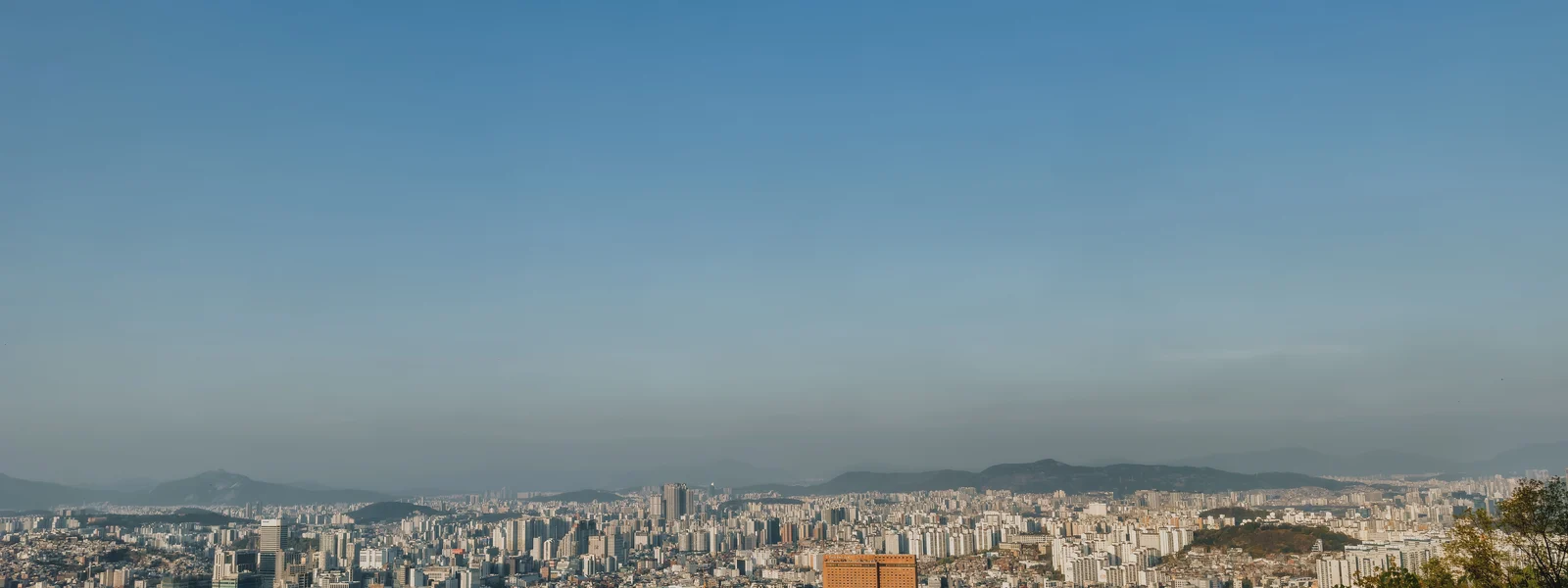
eSIM for Busan
Busan, Korea's second city and its great coastal hub, is as effortlessly connected as Seoul, with fast 5G across the beaches, the hillside villages, and the harbour. All three carriers cover the city comprehensively, including the subway tunnels and the famous Gamcheon culture village climbing the hills. As the southern terminus of the KTX high-speed line from Seoul, Busan keeps you online for the whole journey down. For a Busan trip any network is excellent, so the choice is about speed and price. As everywhere in Korea, the practical key is loading KakaoMap or Naver Map rather than Google Maps, which gives incomplete directions across the country.
An eSIM South Korea gives you access to the same plans in Busan as in the rest of the country. 5 GB is generally enough for maps, messaging and social media, while video streaming and hotspot use require more data. The plans shown range from 1 to 50 GB and start at $1.90. They are fully refundable within 30 days provided the eSIM has not been used on a network at the destination. The activation link is sent by email after purchase.
Getting connected in Busan
Most travellers arrive by KTX from Seoul, staying connected the whole high-speed route, or fly into Gimhae airport where the wifi completes any eSIM activation. The light rail and subway from the airport into the city stay online throughout. Busan station and the airport have strong 5G on all carriers. If activation lags, toggle airplane mode once. Before you start exploring the hilly, spread-out city, load KakaoMap or Naver Map and KakaoTalk, since Busan's layout across beaches, hills, and harbours makes reliable local navigation especially valuable for finding the scenic viewpoints and the coastal trails.
South Korea eSIM plans
Prices in USD. Instant QR activation. Pick your data, land connected.
Coverage in Busan
Coverage across Busan is comprehensive on all three networks with widespread 5G. The beaches of Haeundae and Gwangalli, the Jagalchi fish market, the BIFF cinema district, and the Seomyeon centre are all saturated. The Busan Metro carries fast signal in tunnels and stations throughout. The hillside neighbourhoods, including the colourful Gamcheon culture village climbing the slopes, stay well covered along their winding lanes. The coastal walking paths around Taejongdae and the Igidae cliffs hold signal on the trails. There are effectively no dead zones in the city, with SKT holding strongest on the highest hill paths and the cliff routes.
Best network here
Any network; all excellent across the coastal city
| Area | Best network | What to expect |
|---|---|---|
| Haeundae and Gwangalli beaches | All networks | Saturated 5G along the famous beaches and the bridge views, reliable even in peak summer crowds. |
| Seomyeon centre | All networks | The central shopping and nightlife hub with top 5G speeds and strong indoor coverage in the malls. |
| Gamcheon culture village | All networks | The colourful hillside village stays well covered along its winding lanes and viewpoint stairways. |
| Busan Metro tunnels | All networks | The subway carries fast 4G and 5G in tunnels and stations, so navigation holds underground throughout. |
| Taejongdae and Igidae cliffs | SKT | The coastal cliff walking paths stay covered, with SKT holding strongest on the more remote trail sections. |
| Jagalchi and Nampo | All networks | The fish market and old downtown are fully connected, reliable for translation and payments among the stalls. |
Where to stay and connect in Busan
Haeundae
The flagship beach district with top coverage, resort hotels, and the liveliest seaside base in the city.
Seomyeon
The central transport and shopping heart, fully connected and the most convenient hub for getting around.
Nampo and Jagalchi
The old downtown, fish market, and BIFF square, reliably covered through the busy market streets.
Gwangalli
The beach district with the bridge views and a relaxed cafe scene, well covered along the shore.
Staying online while you move
Busan is the southern end of the KTX line from Seoul, with strong 4G and 5G the entire high-speed journey. The Busan Metro is fully connected in tunnels and stations across its network, so navigation never drops underground. The light rail to the airport, the city buses, and the coastal Donghae line all stay online. The ferries around the harbour and to nearby islands hold signal near the coast. You stay connected on every form of transit in and around the city, making the live transit arrivals in KakaoMap reliable across Busan's spread-out, hilly geography.
How much data in Busan
Busan rewards data like the rest of Korea, with the city running on navigation, transit, translation, and KakaoTalk. Budget 1 to 2GB per day for active use, more if you stream. Many Korea eSIMs offer unlimited or generous daily allowances resetting every 24 hours, which suits the app-heavy rhythm. The beaches, the hillside villages, and the harbour views are the photo highlights, so keep cloud backup on wifi-only at your accommodation. The fast 5G makes tethering smooth, and the abundant cafe and hotel wifi handles large downloads, leaving your mobile data for navigation across the sprawling coast.
Apps worth having in Busan
| App | Why it helps here |
|---|---|
| KakaoMap or Naver Map | Essential navigation in Korea, since Google Maps gives incomplete directions across Busan's hilly geography. |
| KakaoTalk | The dominant messaging app locals and businesses use; set it up before arriving in Korea. |
| Naver Papago | Strong Korean translation with camera and voice modes, useful at the fish market and local restaurants. |
| Busan Metro app | Subway routing with live arrivals and transfer guidance across the city's spread-out network. |
| Kakao T | The standard taxi app, especially handy for the steep hillside neighbourhoods and late nights. |
Practical data tips for Busan
- Download KakaoMap or Naver Map before exploring, since Google Maps is limited across Korea.
- Use the subway and its full underground 5G to navigate the hilly, spread-out city reliably.
- Keep photo backup on wifi-only for the beach, bridge, and Gamcheon village shots.
- Choose your plan on speed and price, as coverage is excellent on every network here.
Real speed tests in Busan
We measured these mobile speeds on the ground in Busan with our own eSIM. 1 on-site measurement, no estimates.
Real speeds we measured in Busan
On the ground in Busan, we recorded a median of 82.5 Mbps download across 1 measurement(s). Real travel conditions, unedited, so you know what you actually get with an eSIM.
| Location | Download | Network | Place type |
|---|---|---|---|
| Busan Seafront | 82.5 Mbps | LG U+ |
Busan eSIM FAQ
Is Busan as well connected as Seoul?
Yes. Busan has comprehensive coverage and fast 5G on all three networks across its beaches, hills, and harbour, including full signal in the subway tunnels, so connectivity is on par with the capital.
Which network is best in Busan?
All three are excellent in the city, so choose on price and speed. SKT has a slight edge on the more remote coastal cliff trails and if you continue into rural areas beyond Busan.
Is the KTX from Seoul connected?
Yes. The KTX high-speed line carries strong 4G and 5G the entire route between Seoul and Busan, so you stay online and can stream or work throughout the journey in both directions.
Will I have signal in Gamcheon culture village?
Yes. The colourful hillside village is well covered on all networks along its winding lanes and viewpoint stairways, so navigation and photo uploads work reliably as you climb the slopes.
How much data do I need in Busan?
Around 1 to 2GB per day covers active map, transit, and messaging use, more if you stream. Many Korea eSIMs offer unlimited or generous daily allowances that reset every 24 hours.
Do I need Google Maps for Busan?
No, and it will frustrate you, since Korea limits its mapping data. KakaoMap and Naver Map give accurate walking and transit directions with live arrivals, which matters in Busan's hilly, scattered layout.
Planning your South Korea trip?
See the full South Korea eSIM guide: operators, coverage, real prices and the honest verdict.
Your South Korea eSIM connects to the networks of the 2 local operators: SK Telecom, LG U+. Based on our agreements with the network provider, we normally activate the best available operator for your plan and your location.