Installing an eSIM is not the same as starting its plan
Six profiles installed in Thailand on one day had validity starts split across two days. The plan clock and the first data session were different events.
Historical observations: September 2026 · One Android phone

The short version
- Six profiles were installed on 22 September. The phone was already in Thailand and mobile data for the tested profiles was off.
- Three retained validity starts fell on the 22nd, three on the 23rd. The first data use was recorded the following morning.
- A start date does not prove the trigger. Installation, network registration and first Internet use are separate events.
Installed together, but the clocks did not all start together
Six profiles installed
Approximately 17:00 to 17:30, with mobile data disabled on the tested lines.
Airalo · Yesim · Thailand Performance test profile
First data use recorded
Approximately 10:00 to 11:00 Thailand time, according to the campaign notes.
Saily · Nomad · Ubigi
Saily: 04:07 UTC = 11:07 Thailand
In the plans we tested, Airalo, Yesim and the historical Performance profile had started their validity before the first recorded data session. Saily, Nomad and Ubigi have retained start dates on 23 September. These same-day observations do not establish that using data caused each start.
Saily’s precise timestamp anchors the second day
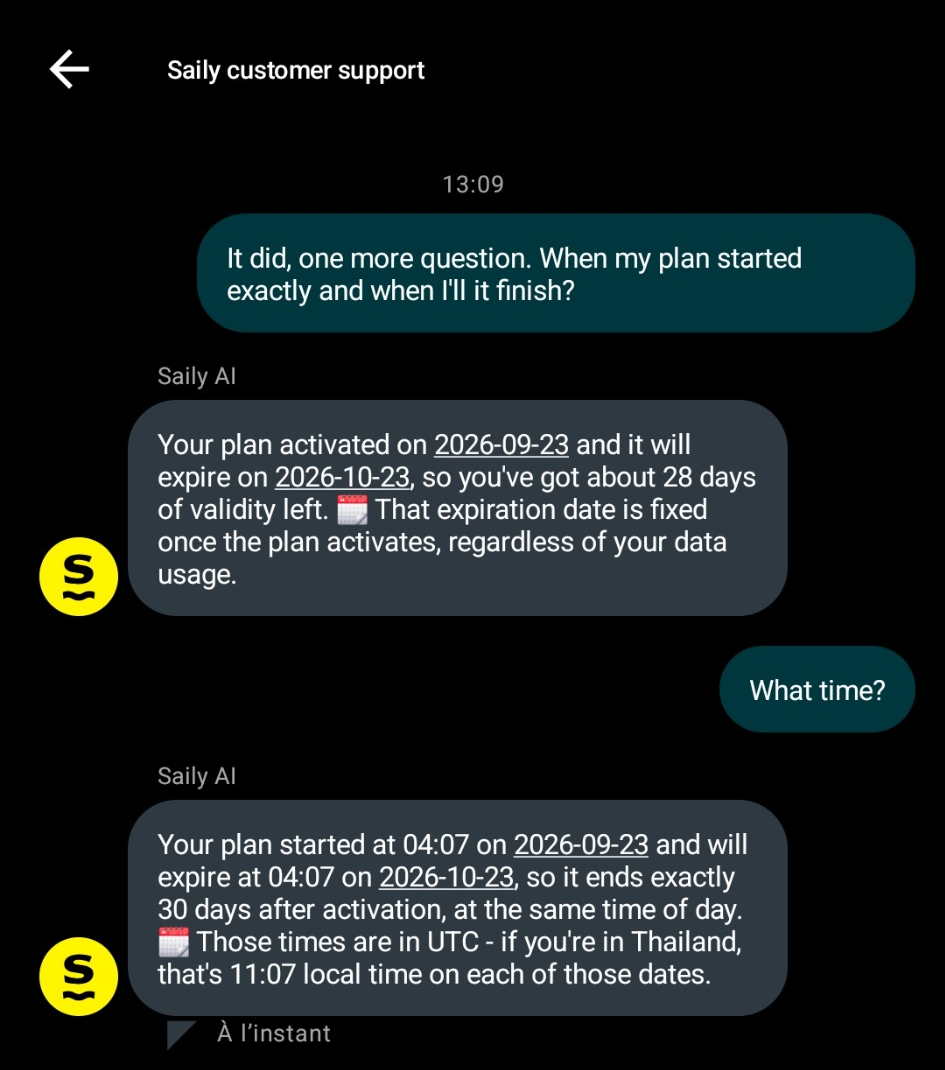
Saily’s support reply states a start on 23 September 2026 at 04:07 UTC, or 11:07 in Thailand. It also gives an expiry on 23 October at 04:07 UTC. We retain that explicit supplier timestamp rather than infer an earlier date from a relative counter.
Five moments to keep separate
Install the profile
Add the eSIM to the phone.
Register on a network
A line can attach locally while its data is off.
Start commercial validity
The plan’s own rule starts its clock.
Select the data line
Choose which SIM will carry mobile data.
Use the Internet
The selected line successfully transfers data.
An expiry date can reveal the commercial clock without showing the first network registration or first successful data transfer. That distinction explains why “installed” and “ready to use” should not be treated as one timestamp.
The dates, and how precise each source is
| Profile / provider | Retained start | Source and precision | Documented expiry |
|---|---|---|---|
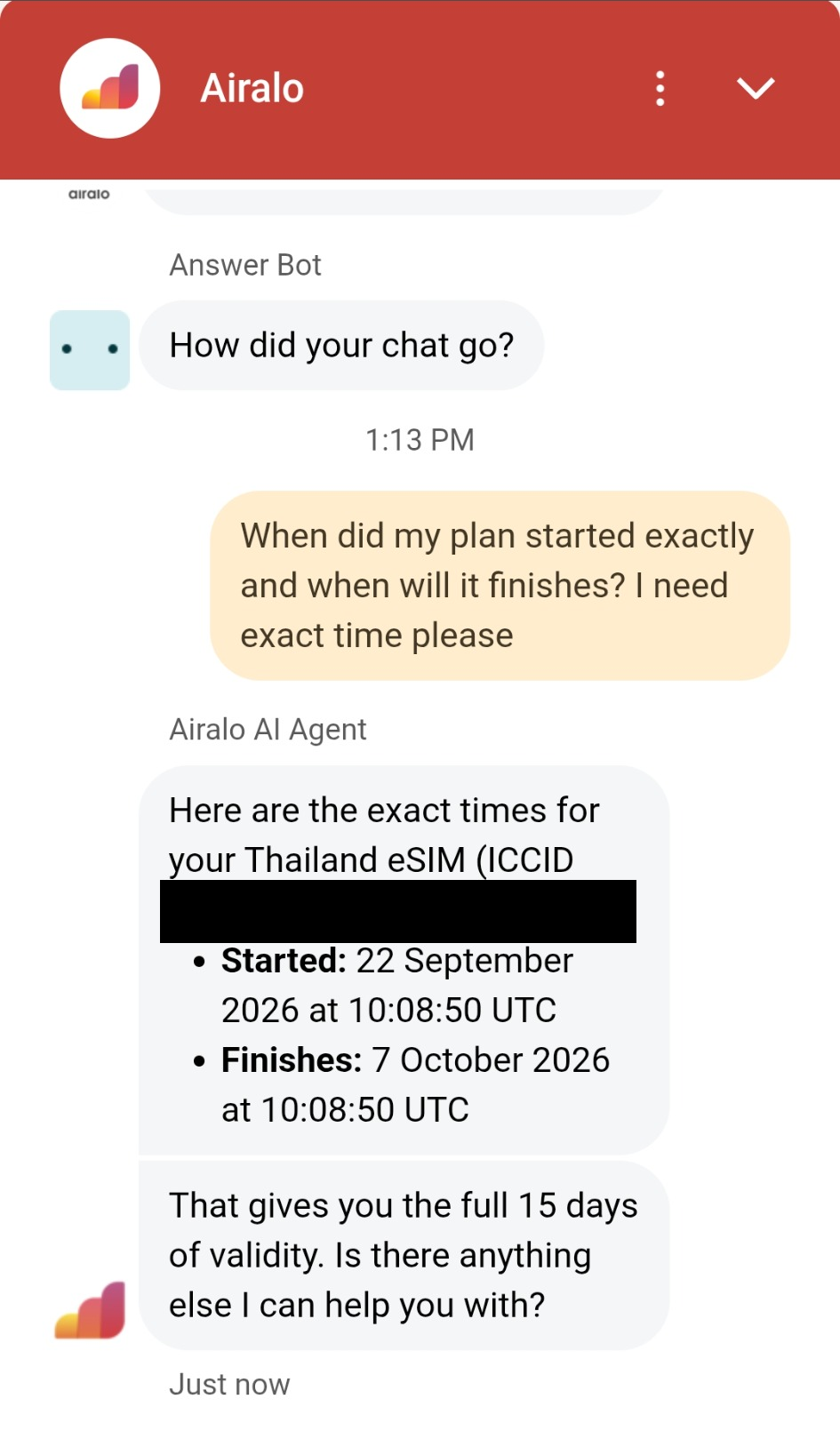
| Airalo | 22 September, 17:08:50 Thailand | Support timestamp: 10:08:50 UTC | 7 October, 10:08:50 UTC |
| Saily | 23 September, 11:07 Thailand | Supplier timestamp: 04:07 UTC | 23 October, 04:07 UTC |
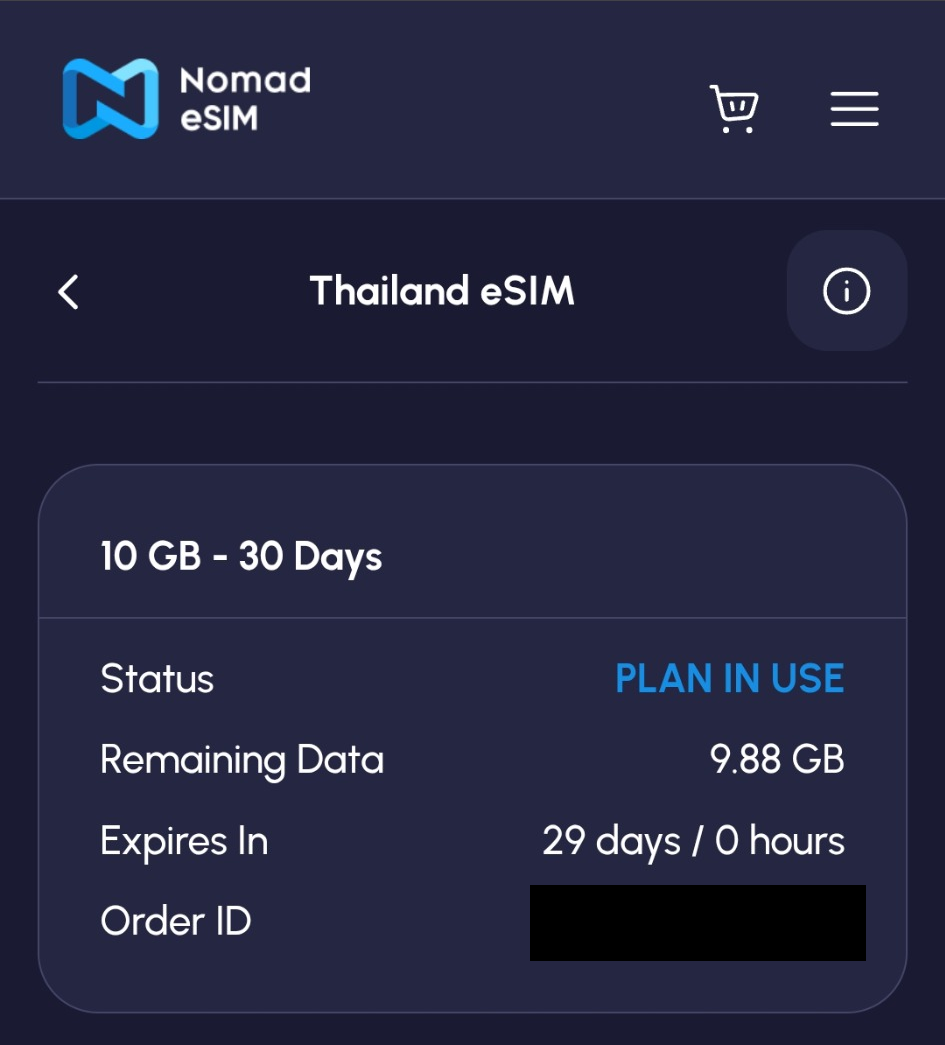
| Nomad | 23 September, around 11:00 | Estimated from counter / tester notes | Absolute date not recovered |
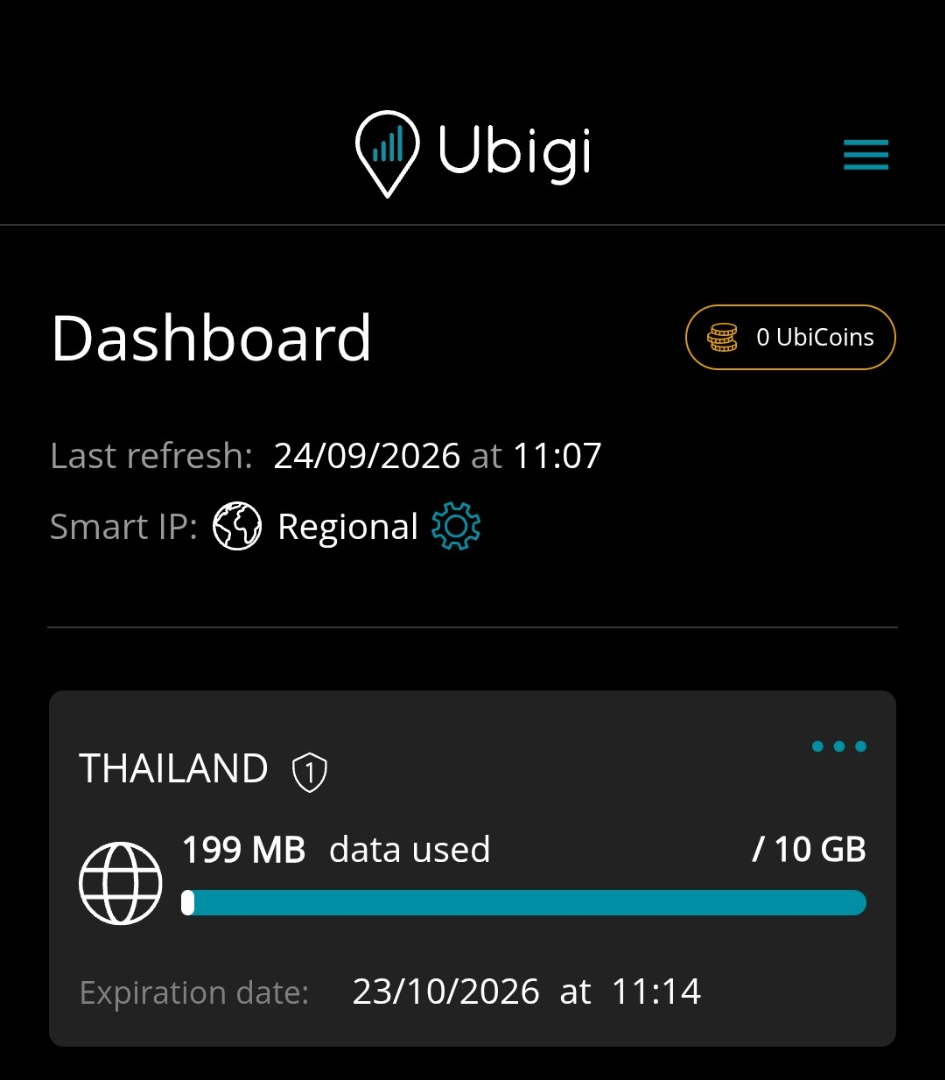
| Ubigi | 23 September, around 11:14 | Inferred from displayed expiry; time zone not shown | 23 October 2026, 11:14; time zone not shown |
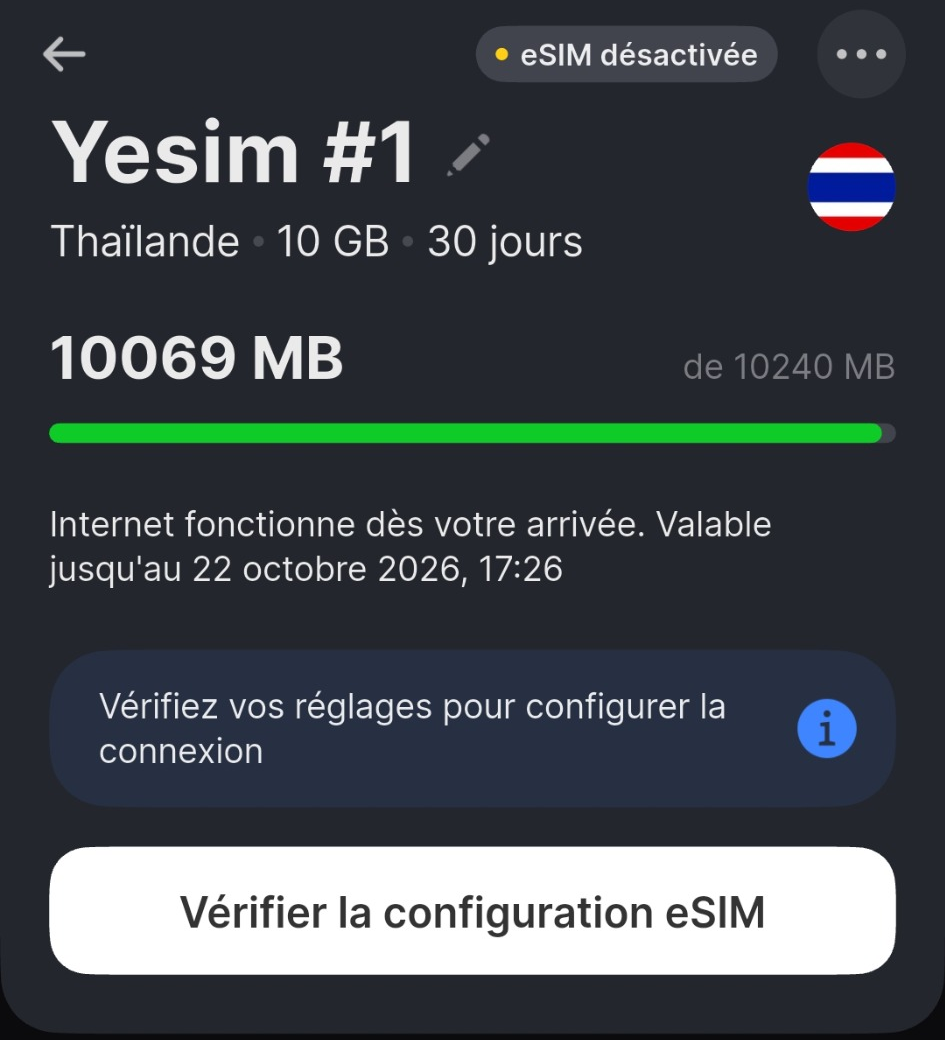
| Yesim | 22 September, around 17:26 | Inferred from displayed expiry; time zone not shown | 22 October 2026, 17:26; time zone not shown |
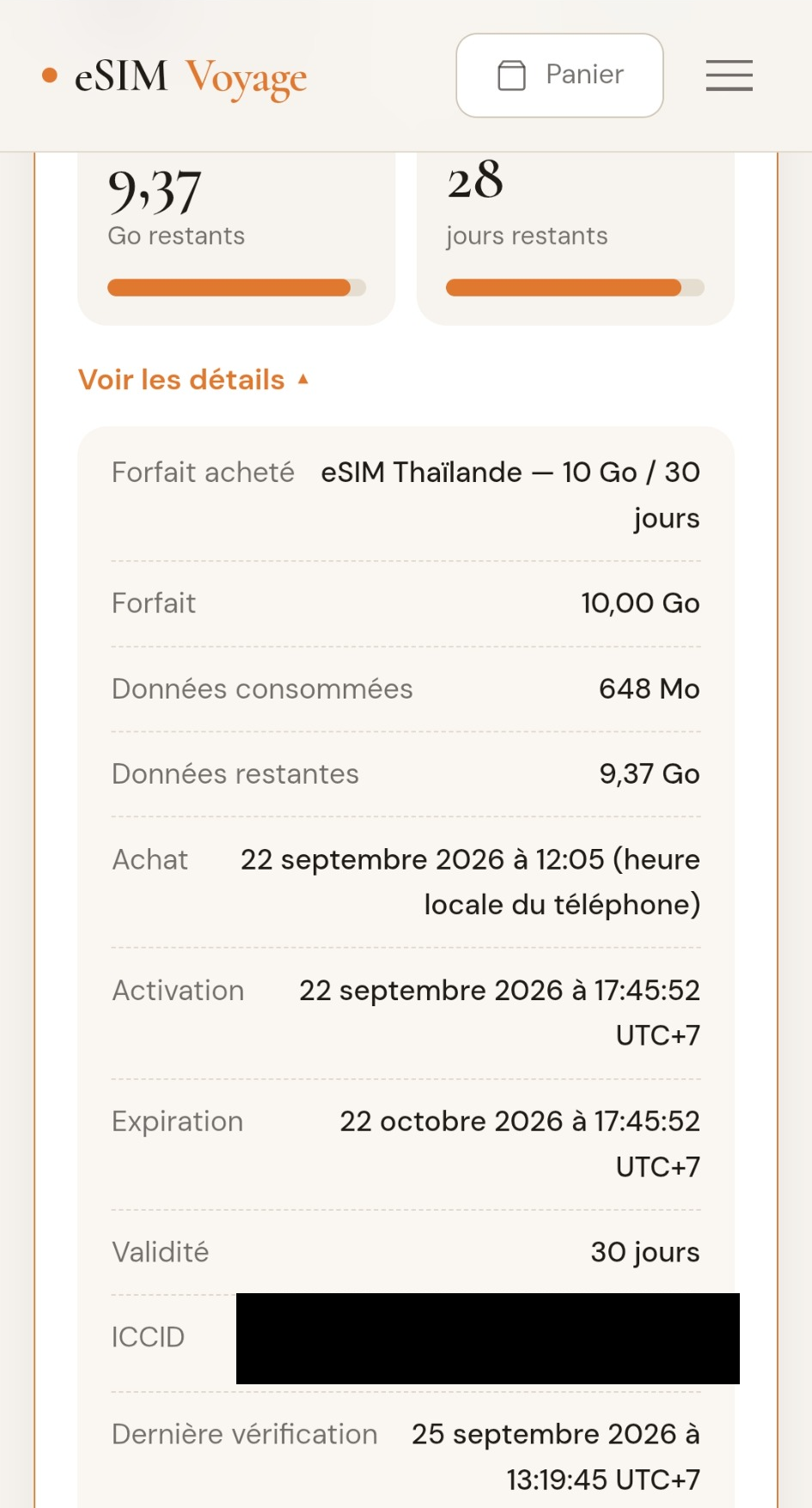
| Thailand Performance test profile | 22 September, 17:45:52 UTC+7 | Historical plan dashboard | 22 October, 17:45:52 UTC+7 |
Scroll sideways on smaller screens.
About the tested profile. The Thailand Performance test profile was bought through our French sister site eSIMVoyage. We have not confirmed that it is the same underlying plan currently sold by DriftAsia. Its historical measurements are kept separate from our present-day offers.
Nomad’s approximate start is estimated from the counter and notes. Ubigi’s and Yesim’s starts are inferred from displayed expiry dates; their screens do not show a time zone. A displayed expiry is not an observed service cut-off.
View the other five plan records
Remaining data has its own update rhythm
Nomad’s recorded sequence shows 9.62 GB at 13:48, a Speedtest at 13:49 and 9.51 GB at 14:13: an update observed roughly 24 minutes after that test. The historical Performance counter was recorded at around 30 minutes, as a tester estimate. Other recorded estimates ranged from near-real-time to about one minute.
See the consumption-counter observations
| Profile / provider | Recorded delay | Source or limit |
|---|---|---|
| Airalo | Near real time | Tester estimate |
| Saily | Nearly immediate | Tester estimate |
| Nomad | About 24 minutes | 9.62 GB at 13:48; Speedtest at 13:49; 9.51 GB at 14:13 |
| Ubigi | Immediate | Tester estimate |
| Yesim | Within about one minute | Tester estimate |
| Thailand Performance test profile | About 30 minutes | Tester estimate, not a DriftAsia timing |
Scroll sideways on smaller screens.
These observations are about the displayed counter, not the speed of the data connection. One episode does not establish a service guarantee or a ranking.
Alerts report remaining or consumed data
The messages did not all describe the same threshold. Airalo’s emails referred to remaining data, while Saily’s pushes referred to the proportion used. A warning without a numeric threshold is kept that way.
Historical competitor notifications
| Provider | Channel | Visible messages |
|---|---|---|
| Airalo | 25% and 10% remaining | |
| Saily | Push | 80%, 90% and 100% used |
| Nomad | Running out of data; no numeric threshold visible | |
| Ubigi | Below 100 MB; exhausted | |
| Yesim | Email + push | Around 30% remaining by email; almost exhausted push without an exact threshold |
Scroll sideways on smaller screens.
Top-up behaviour is a separate question. The support study documents the reported queueing or replacement rules; no competitor top-up was bought in this protocol.
Before travelling, check which event starts your plan
Installing before a trip can be convenient when the plan’s rules allow it. Our experiment took place after arrival: the phone was already registered on Thai networks. In some of the tested plans, validity had begun even though the tested line’s mobile data was off. The campaign did not test installation outside Thailand or isolate every provider’s internal trigger.
The current DriftAsia Performance instructions say validity begins when the eSIM first connects to a network at the destination. They do not describe the clock as waiting for the first mobile data session.
How the experiment was recorded
Six historical profiles, one Samsung Galaxy S23 FE running Android 16. Installations took place on 22 September in Thailand, with Wi-Fi active and the main True SIM present. Tested-line mobile data was disabled; first actual data use was recorded on 23 September. The installation window and data-use window are approximate tester notes.
Support timestamps, dashboard values, inferred dates and estimates are labelled separately. The screenshots keep their original wording and anonymisation. The dates describe these plans and conditions, not every offer sold by each provider.
The plan clock is the event worth checking
The six profiles were added on one day, yet their retained validity starts split across two days. Saily’s precise 23 September timestamp and the other plan records make that difference visible. Follow the conditions of the specific plan, and ask which event starts its clock before enabling it at the destination.
More from the Thailand eSIM field campaign
This study is part of our Thailand eSIM field campaign.

Speed & networks
Speed, latency and Thai networks, compared across six common locations.
Read the study →
eSIM support
What five support teams said about top-ups and Internet routing.
Read the study →
Purchase & installation
Five September purchases, with the current DriftAsia flow kept separate.
Read the study →All studies · Data Index · Programme methodology · Press and corrections
For journalists and researchers
Six historical eSIM profiles installed in Thailand on 22 September had retained validity starts split across 22 and 23 September. Saily stated 23 September at 04:07 UTC, 11:07 Thailand time.
Citation: DriftAsia, Installing an eSIM is not the same as starting its plan. Published 8 October 2026; editorial revision 9 October 2026. Keep the sample, historical dates and evidence qualifications when quoting these findings.
Source field record: the final French-language campaign report published by our sister site. This English edition keeps the historical observations separate from current DriftAsia offers.
Adapted original text and tables: CC BY 4.0 with attribution and a link to this article. Third-party documents, screenshots and trademarks retain their own rights.