Golden Triangle eSIM guide 2026
The Golden Triangle -- Delhi, Agra, and Jaipur -- is India's most visited tourist circuit and one of the most data-intensive travel routes in Asia. The three cities are well-connected by Jio and Airtel, with 5G in Delhi and growing 5G in Jaipur. Agra has solid 4G. The road and rail connections between the three cities have consistent coverage. For a traveler doing this circuit, WhatsApp driver coordination, monument navigation, and the constant photographic documentation of extraordinary sites make daily consumption consistently high.
Delhi: the starting point
Most Golden Triangle itineraries begin in Delhi, where the density of major attractions -- Red Fort, Humayun's Tomb, Qutb Minar, India Gate, Old Delhi's Chandni Chowk -- generates high daily data use from navigation and photo posting. Delhi has excellent Jio and Airtel 5G throughout the NCR. The eSIM activates on landing at IGI Airport and the first Ola or Uber booking can be placed before reaching baggage claim. Delhi's complexity -- a city of 20 million people with multiple distinct historical layers -- makes data-driven navigation more necessary here than at the more compact destinations later in the circuit. Budget 2.5 to 3.5 GB per day for Delhi days on the circuit.
Delhi to Agra: coverage on the Yamuna Expressway and by train
The two standard ways to travel from Delhi to Agra are the Yamuna Expressway by car (200 kilometers, 3 to 4 hours depending on traffic) and the Gatimaan Express or Shatabdi Express trains (90 minutes to 2 hours). Both routes have consistent Jio 4G coverage throughout. The Yamuna Expressway is a modern divided highway with network infrastructure along its length -- coverage at toll plazas, service areas, and the highway proper. The train routes through the Gangetic Plain are flat, open terrain where cell towers have unobstructed reach. Coverage does not vary significantly between road and rail for this specific corridor; both deliver reliable data throughout the journey.
Agra city has solid Jio 4G throughout the tourist areas. The Taj Mahal complex and its surroundings -- the Eastern and Western gates, the main entrance plaza, and the gardens -- are well-covered with 15 to 25 Mbps speeds typical. Agra Fort, Itmad-ud-Daulah (Baby Taj), and Mehtab Bagh on the opposite bank of the Yamuna all have adequate coverage. The approach roads from Agra's taxi stand areas to the monuments are covered. Agra has limited 5G deployment in 2026 despite its tourism significance -- network investment has followed commercial geography, and the tourist sites are adequately served by 4G.
| Destination | Coverage | Typical speed | Notes |
|---|---|---|---|
| Delhi (major sites) | Excellent 5G | 100+ Mbps | Old Delhi lanes: variable 4G (5-15 Mbps) |
| Yamuna Expressway | Consistent 4G | 15-30 Mbps | Full route coverage; no significant gaps |
| Taj Mahal complex | Strong 4G | 15-25 Mbps | All gates and garden area covered |
| Agra Fort | Good 4G | 10-20 Mbps | Covered throughout the fort area |
| Jaipur (city center) | Strong 4G / partial 5G | 25-60 Mbps | Palace area and Pink City well covered |
| Delhi-Jaipur highway (NH48) | Good 4G | 10-25 Mbps | Main route covered; brief rural gaps |
Agra to Jaipur: the road through Rajasthan
The Agra to Jaipur route (approximately 240 kilometers by road, 4 to 5 hours) passes through the state of Rajasthan's eastern agricultural zone before reaching the capital. NH21 and the connecting highways have adequate Jio coverage throughout, with stronger signal near the towns along the route (Fatehpur Sikri is a common stop -- it has adequate coverage at the UNESCO-listed abandoned Mughal city) and variable coverage in the agricultural sections between towns. The Fatehpur Sikri complex itself has Jio 4G -- slightly weaker than in Agra or Jaipur but sufficient for navigation, photo posting, and the audio guides that many visitors access via downloaded apps or streaming.
Jaipur: the Pink City and Rajasthan coverage
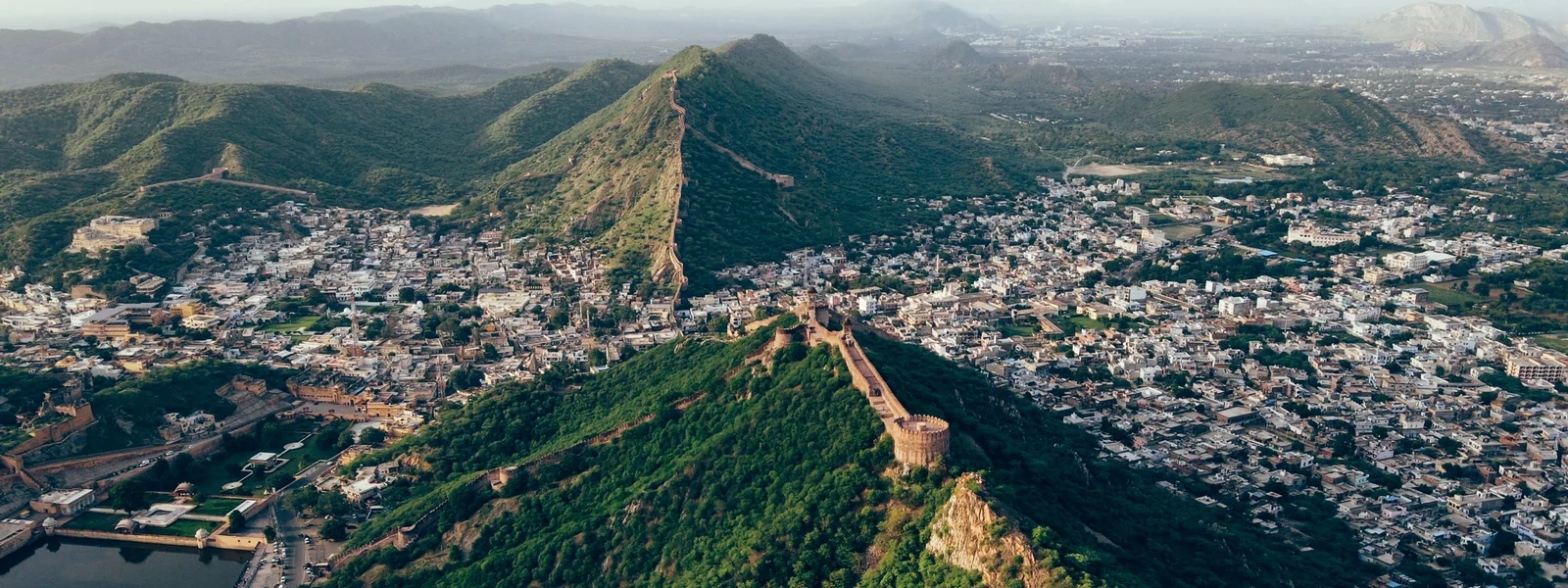
Jaipur has good Jio 4G throughout the old walled city (the Pink City proper) and stronger 5G beginning to deploy in the modern commercial areas outside the old city. The Amber Fort (Amer Fort), the most-visited attraction in Jaipur about 11 kilometers from the city center, has good 4G coverage throughout the fort complex. The City Palace, Hawa Mahal (Palace of the Winds), Jantar Mantar, and the bazaars of Johari and Bapu markets are all covered with adequate 4G. The road from central Jaipur to Amber Fort is one of the better-covered approach roads in the circuit -- the elephant ride route and the road along the Aravalli hills have consistent signal.
Beyond Jaipur, Rajasthan's tourism extends to Jodhpur (Blue City), Udaipur (Lake City), and Jaisalmer (the desert fort city near the Pakistan border). All three have adequate Jio 4G in their city centers and tourist areas. Jaisalmer's sand dune area for camel safaris and overnight camps is the most remote part of any popular Rajasthan itinerary -- coverage in the dune belt is present near the main Sam Sand Dunes tourist area but weakens deeper into the desert. Download navigation and emergency contacts before heading to desert camp areas.
Driver coordination on the Golden Triangle: WhatsApp as the operational tool
Most Golden Triangle travelers hire a driver for the circuit -- either through a tour operator for the full package or independently through hotel recommendations. The coordination between traveler and driver throughout this circuit happens almost entirely via WhatsApp. Morning pickup confirmation, monument arrival time adjustments, restaurant recommendations sent as Google Maps pins, and the inevitable departure time negotiations all flow through WhatsApp messages. This means the data connection needs to be operational from wake-up until the day's driving is done -- typically 12 to 14 hours on a Golden Triangle day trip between cities. The circuit's high daily eSIM consumption is partly driven by this continuous WhatsApp thread with the driver throughout active days.
Photography and data consumption on the circuit
The Golden Triangle generates more photographic documentation than almost any other tourist circuit in Asia. The Taj Mahal at sunrise, the Amber Fort's mirror palace, Delhi's Red Fort, Jaipur's Hawa Mahal -- these are images with global recognition that travelers post in real time. The data consumption from photo uploads at these sites -- posting compressed mobile photos immediately rather than uploading over hotel wifi in the evening -- adds 300 to 800 MB per monument day on top of base navigation and communication consumption. Total daily consumption on a Golden Triangle monument day easily reaches 3 to 4 GB for a traveler posting actively. Hotel wifi handles the evening batch upload of better-quality photos, but the real-time posting that social media culture encourages adds meaningful eSIM data throughout the monument visiting hours.
Varanasi extension: connectivity at India's holiest city
Many Golden Triangle visitors extend their circuit to include Varanasi, the ancient city on the Ganges that is central to Hindu pilgrimage and one of the most visually intense destinations in India. Varanasi has strong Jio and Airtel 4G throughout the ghat area -- the steps leading to the river where cremations, morning aarti ceremonies, and river boat trips all take place. The narrow lanes of the old city behind the ghats (the Vishwanath Gali area leading to the Kashi Vishwanath temple) have variable coverage at street level due to building density, similar to Old Delhi. Coverage opens up at the ghats themselves, where the wider riverside promenade provides unobstructed signal. WhatsApp is essential in Varanasi for coordinating with the drivers who arrange early-morning boat rides (typically 5am departures for sunrise) and for guesthouse communication in an accommodation scene that operates largely through messaging rather than formal booking systems.
Data consumption across the full circuit
Planning data allocation for the full Golden Triangle plus Rajasthan circuit requires thinking about each leg's consumption profile. Delhi days at 2.5 to 3.5 GB set the highest daily rate. Agra monument days at 2 to 3 GB (slightly lower than Delhi because the city is smaller and navigation simpler). Jaipur days at 2 to 2.5 GB -- the Pink City's organized layout and smaller scale reduce navigation overhead compared to Delhi. Rajasthan extension days in Jodhpur and Udaipur at 1.5 to 2.5 GB depending on how much time is spent in the historic city centers versus resort areas. The road and train journeys between cities add 0.5 to 1 GB per travel day for navigation, WhatsApp driver communication, and background app sync. A two-week circuit from Delhi through Agra, Jaipur, and one Rajasthan extension city will consume 28 to 40 GB of eSIM data for an active tourist -- the argument for either a 30 GB plan or a local SIM is strong for this specific circuit length.
Plans for India
India eSIM plans
Prices in USD. Instant QR activation. Pick your data, land connected.
FAQ
Is there mobile signal at the Taj Mahal?
Yes. Jio and Airtel both have solid 4G coverage throughout the Taj Mahal complex -- all gates, the main garden, and the monument area. Typical speeds of 15 to 25 Mbps are sufficient for photo uploads, navigation, and WhatsApp. 5G is limited in Agra overall -- 4G is the standard experience.
What is the best way to travel between Golden Triangle cities for connectivity?
Both road (Yamuna Expressway) and train (Gatimaan Express) have consistent Jio 4G coverage on the Delhi-Agra corridor. The Agra-Jaipur road route has good coverage with some rural gaps. Either transport option supports continuous data use during the journey.
How much data does the Golden Triangle circuit use?
2.5 to 4 GB per day. Delhi days run highest due to complexity. Monument days at Agra and Jaipur run 2.5 to 3.5 GB from navigation, WhatsApp driver coordination, and photo posting. Budget 20 to 30 GB for a two-week circuit including travel days.
Does Jaipur have good mobile coverage?
Yes. Jio 4G throughout the Pink City walled area and tourist sites including Amber Fort, City Palace, and Hawa Mahal. Partial 5G in modern commercial Jaipur. The circuit's coverage is consistently strong -- the weakest segment is the agricultural road between Agra and Jaipur with brief rural gaps.
What if I extend the circuit beyond Delhi-Agra-Jaipur?
Rajasthan's major cities (Jodhpur, Udaipur, Jaisalmer) all have adequate Jio 4G in city centers. Jaisalmer's sand dune safari area has coverage near Sam Sand Dunes and weakens deeper into the Thar Desert. Download navigation and emergency contacts before desert camp trips.