eSIM for Siem Reap and Angkor Wat 2026
Siem Reap is Cambodia's second city and the base for Angkor, the largest religious monument complex in the world. The city has reliable 4G on Smart Axiata throughout, and coverage extends into the main Angkor Archaeological Park in a way that surprises many travelers expecting connectivity to thin out in ancient temple forests. Knowing where coverage holds and where it degrades shapes how you plan offline navigation for the more remote sites.
Siem Reap city connectivity: better than the reputation suggests
Siem Reap has spent the past decade building tourism infrastructure at a pace that has included mobile network investment. The city around the Old Market (Psar Chas) and Pub Street has dense 4G coverage on all three major Cambodian operators. The areas most visited by international tourists -- the guesthouse districts around Sivutha Boulevard, the restaurants and bars of Pub Street, the riverside walking areas, and the road out to Angkor -- are all reliably covered. Download speeds in central Siem Reap on Smart Axiata typically run 20 to 50 Mbps, which is more than adequate for maps, messaging, booking apps, and video calls from your accommodation.
The newer hotel developments north of the city center and around the airport road have strong coverage as well. Siem Reap International Airport -- which has been expanded significantly and serves increasing international traffic -- has good 4G in the arrivals hall. If you are arriving in Siem Reap directly from a regional flight rather than transiting through Phnom Penh, your eSIM will connect at the airport without difficulty. The airport's newer international terminal has better indoor coverage than the older domestic section.
Angkor Archaeological Park: temple by temple coverage
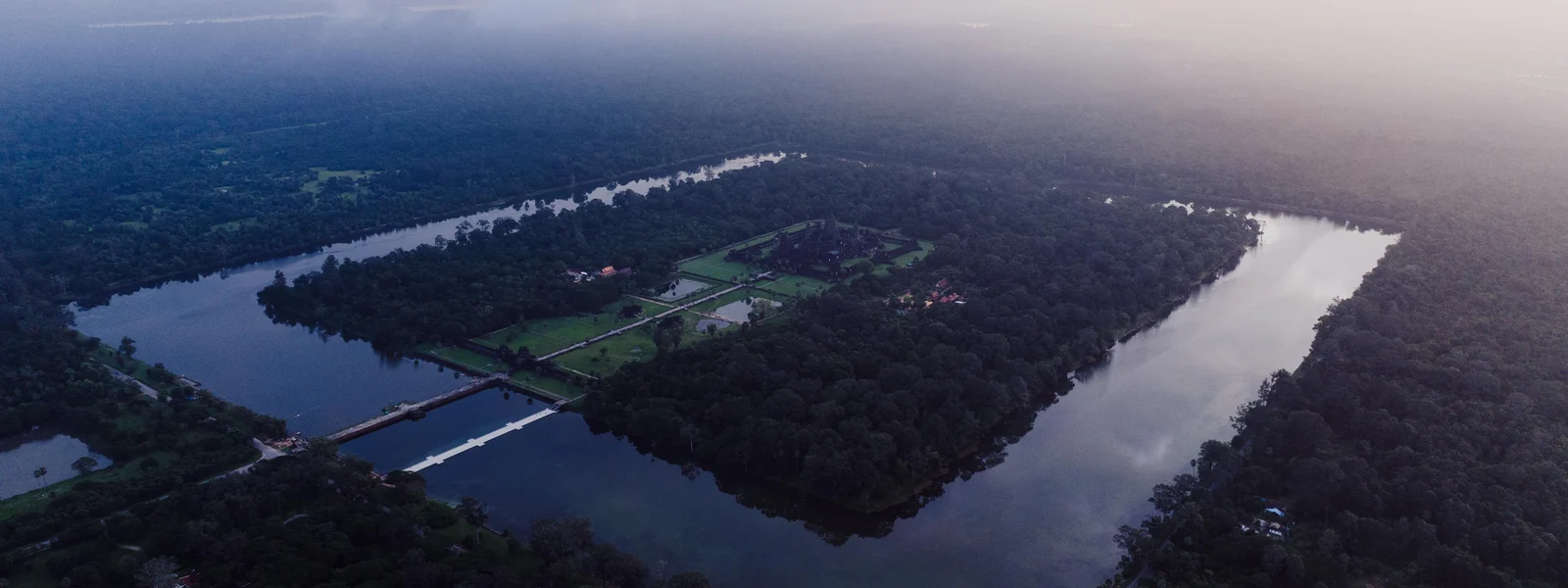
Angkor Wat and the main Angkor complex lie about 7 kilometers north of Siem Reap city center. Smart Axiata has 4G infrastructure serving the main visitor areas, which means coverage at the iconic sites is generally available. The reality is more nuanced than blanket coverage across 400 square kilometers of archaeological area -- signal is strong at the main temple entrances and visitor areas, and weakens on jungle paths between temples and at smaller, less-visited sites far from the main circuit.
| Location | Coverage | Practical note |
|---|---|---|
| Angkor Wat main entrance and causeway | Strong 4G | Consistent signal for photos, posting, navigation |
| Bayon (Angkor Thom) | Good 4G | Coverage holds within the temple; weaker on surrounding walls |
| Ta Prohm (Tomb Raider temple) | Moderate 4G | Signal present but slower than city; download maps before arriving |
| Preah Khan and Neak Pean | Variable, 3G/4G | Outer temples on the main circuit have weaker signal |
| Banteay Srei (30km from Siem Reap) | 4G at temple, weaker on road | Download directions before leaving Siem Reap; Smart Axiata covers the temple itself |
| Remote outer temples (Beng Mealea, Koh Ker) | Weak or no signal | These sites are 60-120km from Siem Reap; Metfone has better rural coverage here |
The practical implication is that the 3-day Angkor Pass experience -- covering the main and grand circuit temples within the archaeological park -- is well served by a Smart Axiata eSIM. You will have signal at virtually all the major sites. For day trips to Banteay Srei or Beng Mealea, download your map directions in Siem Reap before departure. For Koh Ker or other distant sites, treat connectivity as absent for planning purposes and navigate offline.
Getting around Siem Reap: tuk-tuks, apps, and data
Siem Reap's transport ecosystem for tourists runs on a combination of traditional tuk-tuks arranged through guesthouses or at the road, and increasingly on app-based platforms. Grab operates in Siem Reap with both tuk-tuk and car options and is the most reliable way to get a fixed price for journeys to and from the airport and Angkor. PassApp is a Cambodian alternative to Grab that some travelers find has better local driver availability in less central areas. Both apps require mobile data to function. This is worth bearing in mind when planning transport to early-morning Angkor sunrise visits -- you will want data working before dawn to book your tuk-tuk or confirm the pre-arranged driver meeting point.
Many Angkor visitors arrange a dedicated tuk-tuk driver for the day or for the duration of their Angkor pass, paying a fixed daily rate negotiated directly. This model does not require a data connection for the transport itself -- you agree on the circuit the evening before, and your driver takes you through the sites. In this scenario, data is needed for the mapping, restaurant booking, and communication activities that fill the gaps between temples, not for the transport booking itself. Understanding which model you plan to use shapes how dependent your experience is on continuous data connectivity.
Sunrise at Angkor Wat: connectivity in the dark
The Angkor Wat sunrise is one of Southeast Asia's iconic travel experiences and one that happens before dawn, typically requiring arrival at the west entrance between 5 and 5:30am. At this time and location, coverage is present but the combination of low light, humid jungle air, and the fact that you are primarily watching a sunrise over a thousand-year-old temple rather than posting it in real time means data needs are minimal during the experience itself. The posting happens later. What you do need before leaving your accommodation is your transport confirmed and a rough plan for which position inside the grounds you want for the best view -- a quick Google search or offline notes downloaded the evening before resolves this without needing live data at 4:30am.
Data needs for a Siem Reap and Angkor trip
A 3-day Angkor pass itinerary in Siem Reap has moderate data needs by Asian travel standards. The temples themselves generate less data activity than a city neighborhood -- you are walking through ancient architecture, not navigating a grid of restaurants and transport options. Navigation within the park uses a modest amount of data for map loading; offline maps downloaded the night before handle the main circuit without live data. The Siem Reap city portion of the trip -- evenings at Old Market, restaurant selection, booking tours and transport -- uses data more intensively but on a reliable city network.
For a 5 to 7 day Siem Reap trip including both city time and full Angkor coverage, a 5 GB plan is workable for light users. A 10 GB plan removes any need for data rationing and covers the trip with headroom for heavier posting and streaming evenings at the guesthouse. If Siem Reap is part of a larger Cambodia circuit that includes Phnom Penh and Sihanoukville, scale up to 15 to 20 GB for the full itinerary.
Airport arrival: Siem Reap International
Siem Reap International Airport serves growing regional traffic with connections to Bangkok, Kuala Lumpur, Singapore, and increasingly direct routes from East Asia. The arrivals hall has Smart Axiata and other carrier SIM counters if you prefer a local SIM over a travel eSIM -- prices start around $3 for a tourist package. A travel eSIM installed before departure activates on landing without any airport stop. Grab drivers from the airport to the city charge a fixed rate, so your first data need on arrival is confirming your accommodation address and placing the Grab order, both of which work immediately once your eSIM connects to Smart Axiata's airport coverage.
Language, translation, and connectivity at the temples
The signage at Angkor Wat and the main Angkor complex is in Khmer, English, French, and increasingly Mandarin. For English speakers, Angkor is one of the better-documented tourist sites in Asia -- information boards are thorough and English guides are widely available. For other languages, Papago or Google Translate's camera function is the practical tool at smaller sites where English signage is absent. Both apps work with any data connection, and Google Translate also has an offline Khmer download that works without connectivity -- worth installing before departure for the remote sites where signal is absent.
Plans for Cambodia
Cambodia eSIM plans
Prices in USD. Instant QR activation. Pick your data, land connected.
FAQ
Does mobile data work inside Angkor Wat?
Yes. Smart Axiata has 4G coverage at the main Angkor Wat entrance, causeway, and interior. Coverage holds at Bayon and Ta Prohm as well. Signal weakens at outer temples on the main circuit and becomes unreliable at remote sites like Beng Mealea and Koh Ker, which are 60 to 120 kilometers from Siem Reap.
How much data do I need for a week in Siem Reap?
5 GB is workable for a week of standard Siem Reap tourism including Angkor. A 10 GB plan is comfortable with no rationing required. If you plan significant video uploading or streaming in the evenings, move to 10 to 15 GB.
Does Grab work in Siem Reap?
Yes. Grab operates in Siem Reap with tuk-tuk and car options. It is the most reliable app-based transport for the airport and Angkor trips at fixed prices. PassApp is a local alternative. Both require mobile data for booking and tracking.
What is the best network for Siem Reap?
Smart Axiata delivers the best 4G performance in Siem Reap city and the main Angkor temples. For day trips to very remote temples like Koh Ker, Metfone has better rural coverage -- but most eSIM providers default to Smart Axiata, which is the right network for the standard Angkor itinerary.
Can I watch the Angkor sunrise without data?
Yes. Download your map, your morning transport details, and any guide notes the evening before. The sunrise itself requires no connectivity. Posting the photos can happen later over fast Siem Reap city wifi.