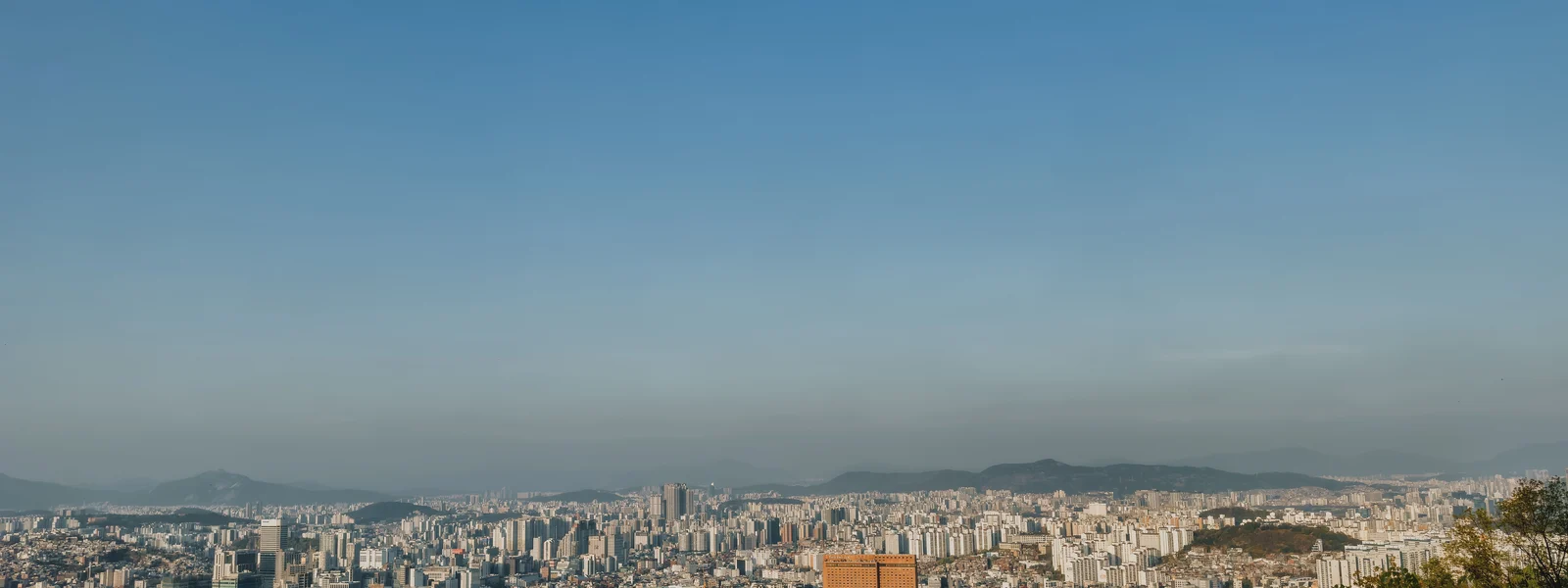
South Korea 5G & 4G coverage for travelers 2026
South Korea was first to launch commercial 5G globally. By 2026, coverage figures that would be headline news elsewhere are routine here: 5G availability above 90% of the population, in-tunnel coverage on most subway lines, real-world download speeds regularly exceeding 500 Mbps. This page breaks down what that actually means for a traveler moving between Seoul, Busan, Jeju, and the countryside.
The three Korean carriers: coverage compared
South Korea's mobile market is shared among three national operators. All three invest heavily in network infrastructure, and all three outperform the average Asian carrier on most metrics. The differences between them are real but marginal for travelers.
| Carrier | 5G population coverage | Median 5G download | 4G rural |
|---|---|---|---|
| SK Telecom | ~99% population | ~1064 Mbps peak | Best nationwide |
| KT Corporation | ~99% population | ~480 Mbps average | Strong major routes |
| LG U+ | 90.3% availability | Consistent indoor | Good main corridors |
In most countries, 5G for travelers is a marketing number - the coverage is thin and real-world speeds often match 4G. South Korea is the exception. 5G availability above 90%, combined with real-world speeds regularly above 400 Mbps, means you will actually notice when your device connects to 5G here. Downloading an offline map in two seconds instead of fifteen is not theoretical.
Coverage by destination
South Korea's compact geography and dense urban population have concentrated network investment into a relatively small area. Coverage gaps are the exception, not the rule.
| Destination | 4G | 5G | Reality check |
|---|---|---|---|
| Seoul (all districts) | Ubiquitous | Dense, all districts | 5G works in Gangnam, Hongdae, Insadong, and most subway tunnels |
| Busan | Full city coverage | Strong city-wide | Haeundae beach and Gamcheon covered; Gwangalli fully connected |
| Jeju Island | Full island coverage | Main towns and coast | Hiking routes on Hallasan have 4G; brief signal gaps at summit |
| Gyeongju | Full coverage | City center | Historic sites, Bulguksa Temple area all covered |
| Seoraksan National Park | Trailheads and cable car | Entrance areas | Signal weakens on backcountry trails; main routes covered |
| Rural and agricultural areas | 99%+ population | Expanding | SKT has slight edge; smaller villages covered on 4G |
Seoul subway coverage: the detail that matters
Seoul's metro system is one of the world's most extensive, and in-tunnel coverage is a genuine differentiator versus other Asian cities. Most major lines have 4G throughout tunnels, and LG U+ has the strongest 5G in-tunnel footprint. Practically, this means:
- Line 2 (circular line) - Full 4G in tunnels, patchy 5G in some sections.
- Airport Railroad (AREX) to Incheon - 4G throughout the express journey. Your eSIM is active before you leave the airport area.
- Bundang Line and Sinbundang Line - Strong coverage, one of the better-connected commuter lines for mobile signal.
- Deep transfer stations (Yeoksam, City Hall, Express Bus Terminal) - Full signal at all platforms on all major carriers.
KTX high-speed rail coverage
The KTX network connects Seoul to Busan in about 2.5 hours at speeds up to 305 km/h. Mobile coverage along the route is generally strong but not perfect.
| Route segment | Coverage | Notes |
|---|---|---|
| Seoul to Daejeon | Strong 4G / 5G | Open terrain, excellent signal throughout |
| Daejeon to Daegu | 4G with brief gaps | Mountain tunnels cause 10-30 second drops |
| Daegu to Busan | Strong 4G / 5G | Urban approach to Busan is well covered |
| Seoul to Gangneung (for ski resorts) | 4G on most route | Mountain sections have periodic drops |
The Gyeongbu line (Seoul-Busan) passes through numerous mountain tunnels. Signal drops are real but typically last 15 to 45 seconds per tunnel. For streaming music or podcasts this is invisible - the buffer handles it. For video calls it causes brief freezes. Schedule important calls when you know you are in open terrain or at a station stop.
What speeds to realistically expect on a travel eSIM
Travel eSIM plans on Korean networks deliver the same network access as local SIM cards on the same carrier. The bottleneck is the plan's data allocation, not the network itself. On a standard travel eSIM with full-speed data:
- 4G in Seoul or Busan - 50 to 150 Mbps download typical. Enough for 4K streaming, fast map downloads, and video calls without buffering.
- 5G in Seoul or Busan - 300 to 700 Mbps download typical. Noticeably faster for large file transfers and offline content downloads.
- 4G in rural areas - 20 to 60 Mbps download typical. Fully adequate for navigation, streaming audio, and messaging.
- After fair-use throttle (unlimited plans) - 128 kbps. Usable for WhatsApp text and basic maps. Not usable for streaming or calls.
Coverage dead zones: where signal is actually limited
South Korea's coverage dead zones are specific and predictable rather than widespread. Knowing them in advance avoids surprises.
| Location type | Coverage reality | Workaround |
|---|---|---|
| Hallasan summit (Jeju) | Weak or no signal at peak | Download offline maps before starting the hike |
| Backcountry trails (Seoraksan, Jirisan) | Variable, weakens on remote routes | Offline maps essential; tell someone your route |
| Underground parking / basements | Usually covered by in-building repeaters | Modern buildings have good indoor coverage |
| Ferry crossings to smaller islands | 4G on most routes, gaps mid-crossing | Download content before boarding |
Plans for South Korea
South Korea eSIM plans
Prices in USD. Instant QR activation. Pick your data, land connected.
FAQ
Is 5G available throughout South Korea?
5G population availability exceeds 90% on LG U+ and is similarly high on SKT and KT. Major cities have dense 5G coverage including most subway tunnels. Rural areas are primarily 4G with 5G expanding along main roads and in larger towns.
Does mobile data work on the Seoul subway?
Yes. Most Seoul subway lines have 4G coverage throughout tunnels, and many stations have 5G. LG U+ has the strongest in-tunnel 5G footprint. Signal is consistent enough for maps and messaging throughout your journey.
What speeds can I expect in Seoul on a travel eSIM?
On 4G, expect 50 to 150 Mbps download in central Seoul. On 5G, 300 to 700 Mbps is typical. These are among the fastest real-world mobile speeds available anywhere in Asia. Your travel eSIM accesses the same network as local SIM cards.
Is coverage good in Jeju Island?
Yes. Jeju has full island coverage on 4G and 5G in the main towns. Hiking routes on Hallasan have 4G on most trails, with signal weakening near the summit. Beach areas and tourist sites around the coast are fully covered.
Does signal drop on the KTX train?
Briefly, yes. Mountain tunnels on the Gyeongbu (Seoul-Busan) line cause drops of 15 to 45 seconds. The rest of the route has strong 4G or 5G. Drops are short enough that buffered streaming is unaffected; schedule video calls for open sections or station stops.