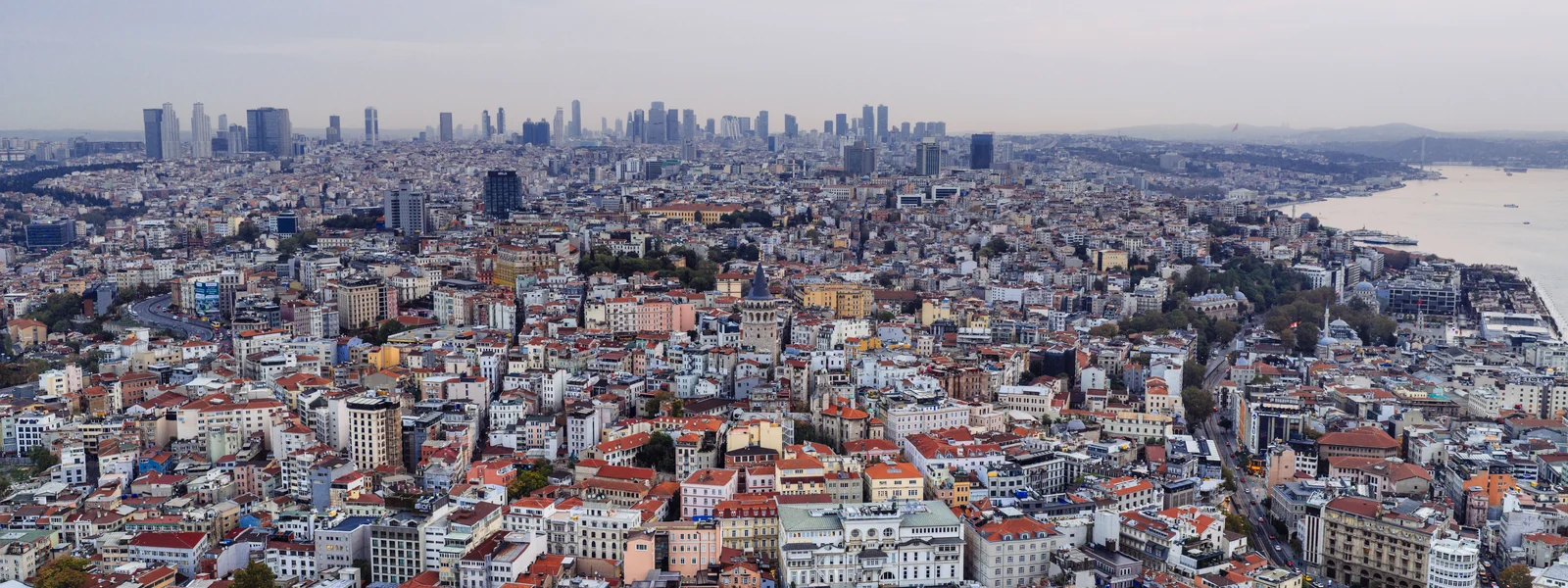
Turkey 4G and 5G Coverage 2026: Turkcell vs Vodafone vs Türk Telekom
Turkey's competitive mobile market
Turkey has three major mobile operators competing in a market of 85 million people. Turkcell holds approximately 40% market share and has historically invested most heavily in rural coverage. Vodafone Turkey focuses on urban performance and 5G leadership. Türk Telekom, the state-linked operator, provides solid nationwide coverage with particular strength in eastern Turkey where government infrastructure investment has extended reach.
The competitive market has driven Turkey's data pricing to reasonably low levels by regional standards. Turkish consumers benefit from affordable data, and international eSIM providers can offer Turkey plans at competitive prices relative to the Middle East or Western European destinations.
| Operator | Market share | 5G status | Coverage strength |
|---|---|---|---|
| Turkcell | ~40% | Active, expanding | Widest geographic, rural Anatolia leader |
| Vodafone Turkey | ~27% | Active, Istanbul leader | Urban speed, Aegean coast |
| Türk Telekom | ~33% | Active | Nationwide, strong in east |
Coverage by destination
| Destination | Coverage | Best network | Notes |
|---|---|---|---|
| Istanbul European side | Excellent 5G/4G | Vodafone or Turkcell | Both sides of Bosphorus well covered |
| Istanbul Asian side | Excellent 5G/4G | Any operator | Kadikoy, Uskudar -- full coverage |
| Cappadocia (Göreme, Ürgüp) | Good Turkcell 4G | Turkcell | Main towns reliable; deep valley variable |
| Pamukkale | Good 4G | Turkcell or Vodafone | Thermal pools and visitor area covered |
| Ephesus (Selçuk) | Good 4G | Any operator | Archaeological site and town well covered |
| Bodrum | Strong 4G/5G partial | Vodafone or Turkcell | Resort town with good infrastructure |
| Antalya | Strong 4G/5G partial | Any operator | Major tourism city, excellent coverage |
| Fethiye / Ölüdeniz | Good 4G | Turkcell | Paragliding area and town covered |
| Trabzon | Good 4G | Turkcell | Black Sea city, good urban coverage |
| Eastern Turkey (Van, Diyarbakir) | Moderate 4G | Türk Telekom | City centers covered; rural gaps exist |
| Mount Ararat approaches | Variable | Turkcell | Town of Dogubayazit covered; high altitude limited |
5G rollout in Turkey
Turkey's 5G deployment began commercially in 2023 and has expanded through 2024-2026. Istanbul's main commercial districts (Levent, Maslak, Besiktas, and the central peninsula including around the Grand Bazaar) have 5G coverage from all three operators. Ankara has 5G in government and business districts. Other cities including Izmir, Antalya, and Bursa have partial 5G coverage in central areas.
For travelers, 5G matters primarily in Istanbul -- the rest of Turkey's tourist circuit operates on 4G LTE with adequate speeds for all standard travel tasks. Istanbul 5G delivers speeds of 100-400 Mbps in good coverage areas, making photo uploads, video calls, and navigation near-instantaneous.
Cappadocia coverage in detail
Cappadocia is Turkey's most unique destination and coverage behavior in the volcanic valley landscape requires specific understanding. The main towns -- Göreme, Ürgüp, Avanos, Uchisar, and Ortahisar -- all have reliable Turkcell 4G. The hot-air balloon launch points (typically on the valley rim above Göreme) have good signal in the early morning. At altitude during the balloon flight, signal is present but may vary as you drift over different valley sections.
The walking trails through the rose valley, red valley, pigeon valley, and love valley have generally usable signal along the main paths. Extreme valley-floor positions and narrow gorge sections may have weaker coverage. The underground cities (Derinkuyu, Kaymakli) have no signal underground -- as expected for chambers 8 levels below the surface. Download offline maps before entering the underground city and treat the underground sections as offline territory.
Eastern Turkey coverage
Eastern Turkey -- the historic sites of Gaziantep, Sanliurfa (near Göbekli Tepe), Van Lake, and the approaches to Mount Ararat -- has adequate coverage in cities and along main highways but meaningful gaps in rural and highland terrain. Türk Telekom has invested in eastern coverage as part of government connectivity initiatives. Turkcell also covers main towns. The remote Kurdish-majority villages and mountain passes on the Iranian and Georgian borders have limited coverage.
Travelers heading to eastern Turkey's archaeological sites (Göbekli Tepe, Nemrut Dag, Ani) should download offline maps before leaving the nearest city. Göbekli Tepe near Sanliurfa has Turkcell signal at the site visitor area. Nemrut Dag's summit area (at 2,150 meters) has variable coverage. The Ani ruins near Kars have moderate Turkcell signal at the site.
Turkey connectivity: practical summary
Turkey delivers solid 4G coverage across its main tourist circuit with 5G expanding in Istanbul. Turkcell is the coverage leader for all-Turkey travel including Cappadocia and eastern sites; Vodafone Turkey leads on Istanbul urban speed. Major apps including WhatsApp, Instagram, and YouTube work freely under normal conditions -- a VPN installed before arrival provides insurance against Turkey's occasional selective platform slowdowns during political events. Activate your eSIM at home before landing, download Google Maps offline for Cappadocia and the Aegean coast, install BiTaksi for Istanbul rides, and land connected from the Bosphorus to Ephesus.
- Install Turkey eSIM at home before departure -- activate before boarding
- Configure dual-SIM: Turkey eSIM for data, home SIM for voice
- Download Google Maps offline for Istanbul, Cappadocia, and coastal destinations
- Install BiTaksi (ride-hailing, dominant in Turkey) before landing
- WhatsApp calls work freely under normal conditions -- no BOTIM needed
- Consider a VPN installed before arrival for insurance against Turkey's selective filtering
- Confirm Turkcell routing if your itinerary includes Cappadocia, eastern Turkey, or rural Anatolia
Turkey in the regional connectivity context
Turkey sits at a connectivity crossroads -- geographically between Europe and Asia, its network quality reflects both. 5G in Istanbul competes with major European capitals. Rural Anatolian 4G reflects the extensive coverage investment of a country that has prioritized connectivity as economic infrastructure. The internet freedom situation is more nuanced than either the fully open environments of Western Europe or the structured restrictions of Gulf states -- Turkey applies selective, politically-motivated filtering that is inconsistent but real.
| Platform | Turkey normal status | During events |
|---|---|---|
| WhatsApp (calls) | Works freely | Occasional slowdown |
| Works freely | Temporary blocks in past | |
| Twitter/X | Works (was blocked 2014-2015) | Has been blocked |
| YouTube | Works freely | Has been slowed |
| Wikipedia | Restored 2019 after block | Generally accessible |
| VPN use | Legal and common | No enforcement issues |
For practical travel purposes: plan for normal connectivity with all major apps functioning. A pre-installed VPN is good insurance but not required for standard tourist activity. The risk of encountering a platform block during your Turkey trip is real but not high for most travel periods -- it correlates with political events rather than being a constant background condition like China's Great Firewall.
Data consumption in Turkey
Turkey's 4G network is fast enough that apps run at near-full speed in covered areas. Plan for 1.0-1.2 GB per urban day in Istanbul, 0.5-0.8 GB per Cappadocia day (valley areas have good but not exceptional signal), and 0.3-0.6 GB per coastal/boat day where resort Wi-Fi supplements mobile data. A 10-day Turkey trip for a moderate user needs 8-12 GB. Heavy social media users should plan for 12-15 GB.
Turkey's lira currency makes local SIM pricing appear cheap in foreign currency terms -- a Turkish local SIM with 20 GB costs the equivalent of USD 8-15 depending on exchange rates. The competitive Turkish mobile market has kept data pricing low. International eSIM plans for Turkey are moderately priced compared to Middle East or Western European destinations.
Turkey connectivity across different itinerary types
Turkey's geographic and cultural diversity creates dramatically different connectivity experiences depending on which part of the country your itinerary covers. Understanding these differences helps you prepare the right eSIM plan and offline content for your specific trip.
Istanbul-focused trips experience the best connectivity in Turkey. The city's 5G rollout, dense base station coverage, and competitive operator investment deliver speeds that rival Western European capitals. Navigation, social media, restaurant research, and ride-hailing all work seamlessly. Data consumption is high because everything works fast -- apps default to high quality, background syncing runs at full speed, and the constantly photogenic city drives constant sharing.
Cappadocia-focused trips operate in a paradox: exceptional scenery with moderate-quality connectivity. The volcanic tufa landscape of the valleys creates radio propagation quirks -- some valley positions have better signal than others based on topography rather than distance from base stations. Göreme and Ürgüp have reliable Turkcell 4G. The balloon flights provide surprisingly good aerial connectivity. The underground cities (Derinkuyu, Kaymakli) are signal-free underground but perfectly covered in the above-ground visitor areas.
Aegean and Mediterranean coast trips benefit from resort infrastructure. Major coastal destinations (Bodrum, Marmaris, Fethiye, Antalya, Kas) have good 4G coverage in the tourist areas. Offshore on boats, coverage fades with distance from the coast. The beach resort model means your hotel provides excellent Wi-Fi, reducing mobile data dependency for the periods you are at the property.
Eastern Turkey itineraries (Gaziantep, Sanliurfa, Van, Kars) require more conservative connectivity planning. Cities are well-covered by Türk Telekom and Turkcell, but inter-city driving and rural archaeological sites have meaningful signal gaps. Download offline content before leaving each major city for the next destination.
| Turkey region | Network quality | Recommended operator | Offline prep needed |
|---|---|---|---|
| Istanbul metro area | Excellent (5G) | Vodafone or Turkcell | Minimal |
| Cappadocia valleys | Good (4G) | Turkcell | Valley trail maps |
| Aegean coast resorts | Good (4G) | Turkcell or Vodafone | Boat excursion areas |
| Eastern Turkey | Moderate (4G) | Turkcell or Türk Telekom | Inter-city routes |
| Black Sea coast | Good (4G) | Turkcell | Mountain highland roads |
Turkey internet: what works and what to know
Turkey's internet environment is more open than Gulf states but less consistent than Western Europe. Major platforms -- WhatsApp, Instagram, YouTube, Twitter/X -- work freely under normal conditions. Turkey has temporarily blocked or slowed social media during political crises (elections, coup attempts, political protests) in 2014, 2016, and subsequent years. As of 2026, all major platforms are accessible but the history of temporary blocking makes a pre-installed VPN valuable insurance for travelers who need consistent access.
WhatsApp calls work without restriction under normal conditions -- Turkey does not have a permanent VoIP block like UAE or Qatar. Video calls via WhatsApp, FaceTime, and Zoom function normally. For travelers arriving from Gulf countries where VoIP was blocked, Turkey is a return to normal calling functionality.
VPN use in Turkey is legal and common. Many Turkish internet users employ VPNs for privacy and to bypass selective domestic filtering. Installing a VPN before arrival (recommended because VPN sites can occasionally be blocked inside Turkey) provides reliable access to all platforms regardless of political conditions during your visit.
Pre-departure checklist for Turkey connectivity
Install your Turkey eSIM at home over Wi-Fi. Configure as data SIM alongside your home SIM. Enable data roaming on Turkey eSIM. Download Google Maps offline for Istanbul, Cappadocia, and your coastal destinations. Install BiTaksi for ride-hailing. Consider installing a VPN as insurance against Turkey's occasional selective filtering. Save accommodation and tour operator contacts in WhatsApp -- Turkish businesses communicate via WhatsApp. Land at Istanbul Airport with working connectivity ready from the moment you clear customs.
Get your Turkey eSIM
Turkcell routing for maximum Turkey coverage from Istanbul to Cappadocia.
FAQ
Which Turkish network has the best coverage?
Turkcell has the widest geographic coverage including rural Anatolia, eastern Turkey, and Cappadocia's valley areas. Vodafone Turkey leads on speed in Istanbul. For all-Turkey itineraries, Turkcell routing provides the safest coverage guarantee.
Is there signal in Cappadocia?
Yes. The main Cappadocia towns -- Göreme, Ürgüp, Avanos, Uchisar -- all have solid Turkcell 4G. The valley floor and most walking trails have usable signal. Extreme off-trail areas and deep valley sections may have weaker coverage.
Is 5G available in Turkey?
Yes, in Istanbul and Ankara. All three operators have active 5G in Turkey's major cities. For the rest of the country including Cappadocia and the Aegean coast, 4G LTE is the practical standard.