5G Coverage in the UAE 2026: Etisalat vs du -- The World's Best Mobile Network Explained
The UAE's Network: A Global Benchmark
The United Arab Emirates operates what is, by most independent metrics, one of the world's top two or three mobile networks. The country's small geographic footprint (approximately 83,600 km2 -- slightly larger than Ireland), concentrated population in a handful of urban centers, and enormous oil-funded infrastructure investment have created conditions where deploying near-universal 5G coverage is achievable in a way it is not for larger nations. The result is a network that routinely features in global top-five rankings for 5G availability and download speed.
Two licensed operators share the market: Etisalat by e& (the dominant carrier with 16.3 million UAE subscribers and majority market share) and du (Emirates Integrated Telecommunications, the challenger with strong urban performance and 99% 5G population coverage). A third brand, Virgin Mobile UAE, operates as an MVNO on du's infrastructure and offers competitive prepaid pricing but depends on du's network quality. For travelers, the practical choice is between an eSIM roaming on Etisalat or du infrastructure -- both are exceptional.
5G Coverage: What 99.5% Actually Means
The UAE's Telecommunications and Digital Government Regulatory Authority (TDRA) reported 5G coverage exceeding 99.5% of populated areas as of late 2025, supported by more than 23,000 cell sites and over 10 million active 5G subscribers. This is not theoretical coverage extrapolated from tower positions -- it reflects actual user connectivity data from a sophisticated real-time measurement program. OpenSignal's March 2026 UAE Mobile Network Experience report confirmed both major operators achieve network availability scores above 99%, meaning users maintain an active data connection more than 99% of the time they are attempting to use mobile data.
For travelers, this translates to a simple practical reality: you will have fast 5G or 4G LTE essentially everywhere you go in the UAE. Dubai, Abu Dhabi, Sharjah, Ajman, Ras Al Khaimah, Fujairah, and Umm Al Quwain are all comprehensively covered. Major highways between emirates are covered. Shopping malls, the desert highway to Al Ain, and the coastal road to Fujairah all deliver consistent connectivity.
Speed Performance by Network
Etisalat by e& (e&)
Etisalat leads on upload speed (13.2 Mbps median upload, according to OpenSignal March 2026) and achieves average download speeds of around 51 Mbps across its full network user base. Peak 5G speeds regularly exceed 500 Mbps in central Dubai and Abu Dhabi. Etisalat's network is slightly older in some infrastructure segments but has been comprehensively upgraded for 5G and maintains the widest absolute coverage footprint in the country, including in Fujairah and Umm Al Quwain where du's penetration is somewhat thinner.
du (Emirates Integrated Telecommunications)
Du achieves a national median download speed of 264 Mbps -- making it the second-fastest mobile operator in the UAE by this measure and faster than Etisalat's median by a significant margin on the download side. City-level peak performance reaches 284 Mbps in Dubai. Du launched 5G Advanced (Release 18) commercially in January 2024 -- ahead of most global operators -- and has targeted national 5G-A coverage in 2026. Du's 99% 5G population coverage is on par with Etisalat, and its network availability score of 99.4% leads slightly in that category. For download-intensive use cases (streaming 4K video, large file transfers), du's infrastructure edge is measurable, though both networks far exceed anything a mobile device use case actually requires.
4G LTE as the Floor, Not the Ceiling
In most countries, 4G LTE is the travel standard and 5G is the bonus. In the UAE, 5G is the baseline for any modern device. If your phone supports 5G (all iPhones from iPhone 12 onwards, Samsung Galaxy S21 and later, Pixel 5 and later, and most premium Android devices released since 2020), you will be on 5G throughout virtually your entire UAE stay. If your device is 4G-only, you will receive excellent 4G LTE -- still delivering 50-150 Mbps in urban areas -- without any functional degradation for standard travel use cases. The gap between 5G and 4G in the UAE only matters for bandwidth-intensive applications like 4K video streaming or downloading large files, which most travelers do not need on a mobile connection.
Coverage by Emirate
Dubai
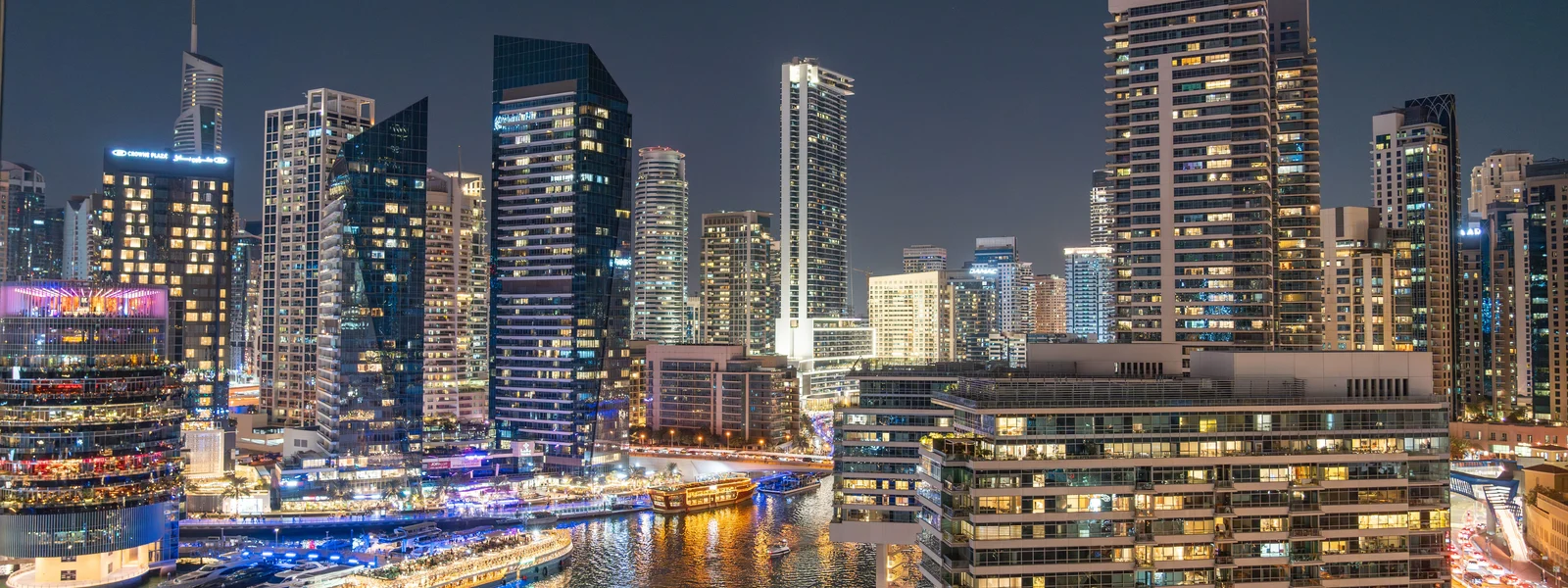
Dubai is the UAE's connectivity showpiece. 5G coverage is comprehensive across all established neighborhoods, from Deira's old gold souk to the futuristic Dubai Creek Harbour. The Dubai Metro has 4G coverage on platforms and in tunnels, maintained through a network of in-tunnel antennas. The Dubai International Airport (DXB) has 5G throughout terminals 1, 2, and 3 -- one of the world's busiest airports with one of its best connected networks. The Palm Jumeirah, JBR (Jumeirah Beach Residence), Dubai Marina, Downtown Dubai, Business Bay, and DIFC all deliver 5G with peak speeds regularly verified above 300 Mbps in network testing. Even in older, denser neighborhoods like Deira and Bur Dubai, 5G coverage is comprehensive.
Abu Dhabi
Abu Dhabi Island (the main city area) has full 5G coverage across the downtown Corniche, the government district, Yas Island (Ferrari World, Warner Bros. World, Yas Marina Circuit), Saadiyat Island (Louvre Abu Dhabi), and Al Maryah Island. The highway corridors from Abu Dhabi to Dubai (E11 Sheikh Zayed Road) and Abu Dhabi to Al Ain are covered throughout. Al Ain -- the UAE's fourth-largest city and a UNESCO Cultural Landscape -- has full 4G and 5G in urban areas.
Sharjah, Ajman, Umm Al Quwain, Ras Al Khaimah
The northern emirates are smaller in geography and population but fully covered by both operators. Sharjah, which shares a border with Dubai and functions partly as a residential overspill city, has 5G across its urban extent. Ras Al Khaimah (RAK), increasingly popular as a destination for adventure tourism -- particularly the Jebel Jais mountain and zip line -- has 5G in RAK city and on the Jebel Jais approach road. Umm Al Quwain and Ajman have full 4G and strong 5G in urban areas.
Fujairah and the East Coast
Fujairah sits on the Gulf of Oman coast, separated from the rest of the UAE by the Hajar Mountains. The road from Dubai to Fujairah (E611 / E44 via the Masafi junction) crosses mountain terrain but maintains 4G coverage throughout on Etisalat's network. Fujairah city has full 4G and 5G in urban areas. The coastal road north from Fujairah through Dibba has coverage at the main settlements; remote beaches between towns may have weaker signal. The road back to Dubai via Hatta has 4G throughout including in the Hatta mountain enclave.
Desert Areas: Liwa, Empty Quarter Approaches, Al Ain-Oman Border
The UAE's desert interior -- including the Liwa oasis area and approaches to the Rub al Khali (Empty Quarter) -- represents the true test of coverage claims. Major desert resorts like Qasr Al Sarab (approximately 200 km southwest of Abu Dhabi near Liwa) and the luxury camps in the Liwa dunes have connectivity, either through mobile signal or satellite supplementation. The highways through the desert have intermittent to good 4G coverage, but remote dune areas and the actual Empty Quarter crossing (relevant for overlanding) should not be counted on for reliable cellular coverage. For organized desert tours, guides are familiar with connectivity expectations and the tour's logistics do not depend on mobile data.
Frequency Bands and Device Compatibility
The UAE's 5G networks operate on Band n78 (3,500 MHz) -- the global mid-band 5G standard used by virtually all international 5G devices. Both Etisalat and du also use millimeter-wave (mmWave) 5G in specific dense urban zones for ultra-high-speed applications, though this is relevant mainly for fixed wireless access rather than mobile devices. For 4G LTE, Bands 3 (1800 MHz), 7 (2600 MHz), and 20 (800 MHz) are the primary bands. All modern 5G-capable international devices support these bands without compatibility concerns. Older 4G-only devices should confirm Band 3 support for reliable urban LTE.
Network Summary for Travelers
The UAE's mobile network requires no planning or management from the traveler's perspective -- it simply works, consistently and at world-class speeds, everywhere you are likely to go. The only network-related preparation worth making is confirming your device supports 5G if you want to experience the network at its peak (most devices released after 2020 do). Beyond that, your eSIM connects to Etisalat or du infrastructure on arrival and delivers speeds that will make every other country on your travel calendar seem slightly slower by comparison. The significant planning effort for UAE connectivity goes not into network preparation but into understanding the VoIP restriction and arranging calling alternatives -- covered in detail in separate guides in this series.
Indoor Coverage and Building Penetration
The UAE's building stock -- a mix of glass-and-steel skyscrapers, traditional low-rise architecture in older districts, and large enclosed malls -- creates varying indoor coverage conditions. Modern skyscrapers in Dubai Marina, Downtown Dubai, and Abu Dhabi's Corniche district typically have distributed antenna systems (DAS) that bring 4G and 5G signal into building interiors. Major shopping malls (Mall of the Emirates, Dubai Mall, Yas Mall) have comprehensive indoor coverage with 5G in most areas -- unsurprising given that these malls serve tens of thousands of visitors daily who expect reliable connectivity. Hotels in the four-star and above category almost universally have good in-room cellular signal supplementing their Wi-Fi.
Older buildings and traditional markets (souks) can have weaker indoor penetration, particularly in basement levels or deep interior spaces. The Deira Gold Souk and Spice Souk, for example, have good signal in open-air covered passages but may have reduced indoor signal in fully enclosed adjacent shops. This is a minor consideration for most visitors -- a brief signal reduction while shopping in a covered market is not practically disruptive.
Metro, Public Transport, and Event Venue Connectivity
Dubai Metro stands as one of the few urban rail systems in the world with full 4G and 5G coverage throughout its length, including underground sections. This is achieved through a distributed antenna network running along the entire metro corridor. Travelers can navigate, stream, and communicate without interruption during metro rides -- a significant quality-of-life detail that surprises visitors accustomed to losing signal in underground transit systems. Abu Dhabi's bus network and the shared taxis between emirates operate in outdoor environments with full 5G coverage throughout major routes.
Major event venues -- Expo City Dubai (the Expo 2020 site repurposed for ongoing use), Dubai World Trade Centre, Abu Dhabi National Exhibition Centre (ADNEC), Etihad Arena on Yas Island, and the various concert venues along the Dubai entertainment corridor -- all have dedicated enhanced cellular infrastructure to handle event-level crowd densities. During large events, temporary additional capacity is deployed by both operators to maintain quality during peak simultaneous use. The 2024 COP29 experience in Baku and the UAE's extensive Formula 1 Grand Prix experience (Abu Dhabi Grand Prix at Yas Marina Circuit) have given both Etisalat and du extensive practice in event-scale network management.
Coverage During Air Travel: UAE Airspace
The UAE's progressive regulatory approach extends to in-flight connectivity. Emirates, Etihad, flydubai, and Air Arabia all offer onboard Wi-Fi, though this is satellite-based and separate from cellular coverage. Once on the ground at either DXB or AUH, cellular connectivity is immediate -- both airports have 5G throughout their terminals and arrive halls. The airport taxi queues, bus connections, and road infrastructure from airports to cities are all covered. Travelers experience zero connectivity gap between aircraft and their hotel room if their eSIM is correctly installed and configured before departure.
The Tourist Connectivity Experience: Practical Reality
For a traveler who visits the UAE with a pre-installed and configured travel eSIM roaming on Etisalat or du infrastructure, the connectivity experience is simply: it works, everywhere, fast. There are no coverage gaps in tourist areas, no need to manage network selection, no speed throttling in normal use, and no infrastructure quirks to navigate. The practical experience is closer to using your phone at home in a well-covered European or US city than to managing connectivity in a developing market. The one element requiring active management is the VoIP call restriction -- navigate that, and the connectivity itself is frictionless.
Independent travelers who have visited multiple UAE times consistently report that after their first trip -- during which the VoIP restriction catches them by surprise -- subsequent visits are planned around the BOTIM-for-calls, eSIM-for-data combination with no further friction. The network infrastructure itself never fails them; only the calling framework requires adjustment from global norms. Understanding this distinction -- exceptional network, specific content restriction -- frames the correct expectations for first-time visitors.
Comparison With Other Middle East Destinations
The UAE sits clearly at the top of the Middle East's mobile connectivity hierarchy. Saudi Arabia has made substantial 5G investments and performs well in Riyadh and Jeddah corridors, but its national 5G coverage percentage remains below the UAE's. Qatar offers high-quality urban connectivity, well demonstrated during the 2022 FIFA World Cup where Ooredoo and Vodafone Qatar handled massive simultaneous demand. Jordan, Israel, and Lebanon have adequate urban 4G but considerably less developed 5G infrastructure. For travelers doing broader Middle East itineraries, the UAE is the connectivity reference point -- every other regional destination will feel slightly less connected by comparison, and preparing for variability in other countries after the UAE is sensible mental calibration.
Get your United Arab Emirates eSIM
Compare eSIM plans for United Arab Emirates before your trip.
FAQ
Which network has the best coverage in UAE?
Coverage quality varies by region. Check the guide above for operator-by-operator breakdown across UAE's main tourist areas.
Is 5G available throughout UAE?
5G availability depends on the specific area. Urban centers have the best 5G coverage while rural areas typically rely on 4G LTE.
What should I download offline before visiting UAE?
Download Google Maps offline for UAE before departure. This eliminates data dependency for navigation and works even in areas with poor signal.