eSIM for Vang Vieng 2026
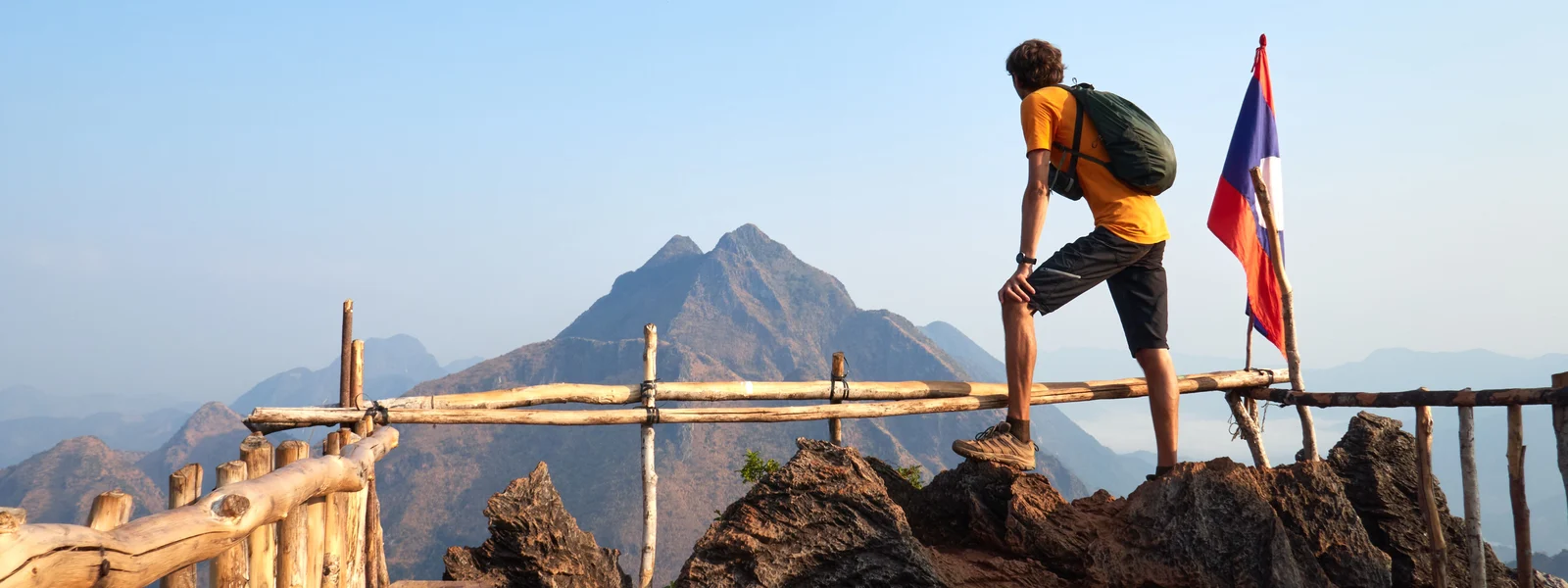
Vang Vieng sits in one of the most dramatic landscapes in Southeast Asia -- a flat river valley surrounded by vertical limestone karst formations that turn orange at sunset and dissolve into morning fog. The town has good 4G coverage and a dense backpacker infrastructure. Everything outside the town -- the river, the caves, the karst countryside -- treats connectivity as a bonus rather than a given.
Vang Vieng town: better connected than its reputation suggests
Vang Vieng's reputation as a chaotic backpacker party town has evolved significantly since the late 2000s and early 2010s. The town in 2026 is more balanced -- popular with a wider range of travelers including adventure sports enthusiasts, cyclists, and visitors using Vang Vieng as a stepping stone on the Vientiane-Luang Prabang route via the Laos-China Railway. The mobile network has kept pace with this development. Main streets in Vang Vieng town -- the riverside road, the main restaurant strip, and the guesthouse areas -- have reliable 4G on ETL and Lao Telecom. Download speeds of 10 to 20 Mbps are typical in the town center, adequate for navigation, messaging, and social media use without frustration.
The Laos-China Railway has a Vang Vieng station about 10 kilometers north of the town center. The station area and the road connecting it to town have coverage, though the road itself passes through karst countryside where signal varies. Tuk-tuks and minivans meet arriving trains at the station for the transfer to town. The arrival experience by train from Vientiane is seamless for eSIM users -- coverage is consistent throughout the railway journey and the station area is covered.
| Area | Coverage | Notes |
|---|---|---|
| Main town (riverside road) | Good 4G | Restaurant and guesthouse strip fully covered |
| Nam Song River (tubing start) | Good 4G at departure | Signal weakens as you drift north toward the bars |
| Tham Phu Kham cave | 4G at entrance, none inside | Blue lagoon area has signal; cave interior none |
| Tham Chang cave | 4G at entrance | Town-adjacent cave; entrance area covered |
| Karst cycling routes | Variable -- some roads, absent in fields | Follow main roads for coverage; off-road routes are offline |
| Railway station (10km north) | Good 4G | Station area covered for arrival logistics |
Tubing on the Nam Song: connectivity on the water
The Nam Song River tubing experience -- floating downstream in an inflatable tube from the tubing company departure point back to town -- is Vang Vieng's most famous activity. The tubing route runs roughly north to south, from the departure point several kilometers upstream back to the town. Coverage exists at the departure point, where you will want to have your return accommodation confirmed and your tube rental logistics sorted before getting in the water. Coverage then becomes intermittent -- present near the riverside bars and restaurants that dot the upper tubing route, absent in the stretches of open river between them. By the time you approach the town, coverage has returned.
The practical implication is that a phone taken tubing should be in a waterproof case or dry bag regardless of connectivity considerations, and the connectivity reality reinforces the recommendation to have everything organized before you leave the departure point. Restaurant recommendations for the evening, guesthouse return instructions, and any post-tubing logistics should be sorted while you are on dry land with good coverage, not attempted mid-river. The tubing experience is better experienced with the phone in the dry bag for most of the journey anyway -- the Nam Song karst scenery rewards looking at the landscape more than the screen.
Caves and karst: the offline adventure zones
Vang Vieng's karst landscape is riddled with caves, many of which are accessible by bicycle or motorbike from the town. Tham Phu Kham, the most popular cave, sits above a blue lagoon about 7 kilometers west of town across a wooden bridge. The cave interior has no mobile signal -- this is physics rather than network quality, as radio waves do not penetrate limestone effectively. The blue lagoon below the cave has coverage. Tham Chang, closer to town, has coverage at the entrance and in the parts of the cave open to natural light. The cave interiors used for spelunking or adventure caving tours are offline throughout.
Cycling and motorbike routes through the karst countryside have coverage on main roads and variable coverage when tracks lead into agricultural land between the formations. The rock climbing areas on the karst walls -- Vang Vieng has developed a genuine climbing scene over the past decade -- have variable coverage depending on the specific wall location. The climbing crags closer to town have better coverage than those further into the karst. For climbing safety purposes, ensuring emergency contact details are saved offline and that a guide or partner knows your location is more important than connectivity status on any specific route.
Hot air ballooning: connectivity at altitude
Hot air balloon flights over the Vang Vieng karst are a popular sunrise activity. Coverage at balloon altitude over Vang Vieng is variable -- higher than ground level means the phone can potentially see more cell towers, which can improve signal or produce more antenna-switching instability. In practice, coverage in a balloon at 200 to 500 meters over Vang Vieng is often adequate for data in the calm early morning conditions when balloon flights operate. The main data use during a balloon flight is photography and the temptation to immediately post the karst dawn views from above -- both of which work when coverage cooperates. The flight is typically 45 to 60 minutes at dawn, returning to the launch field where town coverage is reliable. Batch-upload on the ground after landing rather than attempting continuous posting from the basket.
Data needs for a Vang Vieng stay
A three to four day Vang Vieng stay has a lower data consumption profile than the same time in Vientiane or Luang Prabang, because a significant portion of the days is spent in offline adventure territory. A day of tubing, caving, and karst cycling might consume 400 to 800 MB of eSIM data -- compared to 1 to 1.5 GB for a city day -- because the active portions of the day have limited connectivity and the evening social media batch-posting happens over guesthouse wifi. The town's guesthouses and restaurants almost universally have wifi, which handles the evening data needs. Your eSIM allocation is primarily consumed during town navigation, Laos-China Railway journeys to and from Vang Vieng, and the moments at covered locations during adventure days. A 5 GB plan for a Vang Vieng stay within a larger Laos circuit is more than adequate.
The Laos-China Railway through Vang Vieng
The Laos-China Railway transformed the Vang Vieng connection to both Vientiane and Luang Prabang. What was previously a bumpy four to six hour road journey to Vientiane is now a 35-minute train ride. The journey to Luang Prabang, previously a mountain road nightmare, is now about an hour and fifteen minutes through mountain tunnels with in-tunnel mobile coverage. The railway experience from Vang Vieng is the most consistently connected overland travel available in Laos -- significantly better than any bus option on any Laos route. For travelers who arrived in Vang Vieng by bus and are departing by train, the train journey itself has reliable connectivity throughout, which is genuinely unusual by Laos standards and allows the onward destination logistics to be handled during the train journey rather than requiring offline preparation before boarding.
Cycling and motorbike routes: the connectivity gradient leaving town
Vang Vieng's most popular self-guided activity is cycling or riding a motorbike through the karst countryside, visiting blue lagoons, farms, and smaller cave systems on unpaved roads between the limestone formations. These routes leave the town's 4G coverage within about two kilometers of the main street and enter territory where signal is intermittent on tracks and absent in the karst interior. The blue lagoon at Tham Phu Kham (the most popular, about 7 km from town) sits below a cave and has Smart Axiata equivalent coverage at the lagoon itself -- adequate for basic navigation and messaging. The return road along the river toward town picks up coverage intermittently where it approaches village clusters.
For a full day of karst exploration by bicycle or motorbike, the practical preparation mirrors any Laos offline day: download the route to your destination before leaving the main street, save any booking or contact information locally, and treat the countryside as offline territory with occasional signal windows at villages. The cycling experience benefits from this approach anyway -- looking at limestone formations and rice paddies is more rewarding than looking at a phone hunting for signal. Batch the day's photos for upload over guesthouse wifi on return, which delivers the same result with less frustration and no data wasted on failed upload attempts during the rural sections.
Accommodation and connectivity in Vang Vieng
Vang Vieng's accommodation has evolved significantly from the basic bamboo guesthouses of its early backpacker era. The main strip now has a range of options from budget dormitories to riverside bungalows and mid-range hotels with reliable broadband wifi. Guesthouse wifi quality in Vang Vieng is generally adequate for messaging and light use, with the better-established places offering 10 to 20 Mbps -- functional for video calls from the guesthouse. Budget accommodation on the quieter east bank of the Nam Song River, away from the main strip, has more variable wifi connectivity reflecting smaller operators with basic internet setups. For travelers who need reliable evening connectivity for work or communication, staying on the main strip rather than the quieter east bank makes a practical difference. The eSIM covers all daytime navigation and activity logistics; the guesthouse wifi handles the evening data needs.
The evolving Vang Vieng experience and its data use
Vang Vieng in 2026 is a more multifaceted destination than its reputation as a backpacker party town suggests. The introduction of the Laos-China Railway station nearby has brought a different demographic -- day-trippers from Vientiane, domestic Lao tourists, and Chinese visitors arriving on direct train from Kunming through Boten. This has expanded the town's hospitality infrastructure and, incidentally, its mobile network investment. The town center's 4G coverage is stronger than it was even a few years ago, and new hotels and cafes have higher-quality wifi as a competitive requirement for the more diverse visitor base. The adventure tourism infrastructure -- hot air balloon operators, kayaking companies, rock climbing guides -- all communicate primarily via Facebook Messenger for booking and logistics, which requires a functional data connection for coordination but is not bandwidth-intensive once communication is established.
Plans for Laos
Laos eSIM plans
Prices in USD. Instant QR activation. Pick your data, land connected.
FAQ
Does eSIM work in Vang Vieng?
Yes, in the town. Main streets, riverside restaurants, and guesthouse areas have reliable 4G with 10 to 20 Mbps speeds. Signal weakens on tubing routes, in cave interiors, and on rural tracks through the karst countryside.
Is there signal while tubing on the Nam Song River?
Partial. Coverage at the departure point, intermittent near riverside bars along the route, and returning near the town. Put your phone in a dry bag and organize all logistics before getting in the water.
Do caves in Vang Vieng have mobile signal?
No. Cave interiors have no mobile signal -- radio waves do not penetrate limestone. Entrance areas and outdoor locations near caves have coverage. Tham Phu Kham's blue lagoon area is covered; the cave itself is not.
How do I get from Vientiane to Vang Vieng with connectivity?
The Laos-China Railway is the best option: 35 minutes versus four to six hours by bus, with mobile coverage throughout including mountain tunnels. Coverage on the bus route has gaps through mountain sections.
How much data do I need for three days in Vang Vieng?
2 to 3 GB is sufficient. Adventure activities in offline territory keep daily consumption low, and guesthouse wifi handles evening uploads. Vang Vieng is not a data-intensive destination.