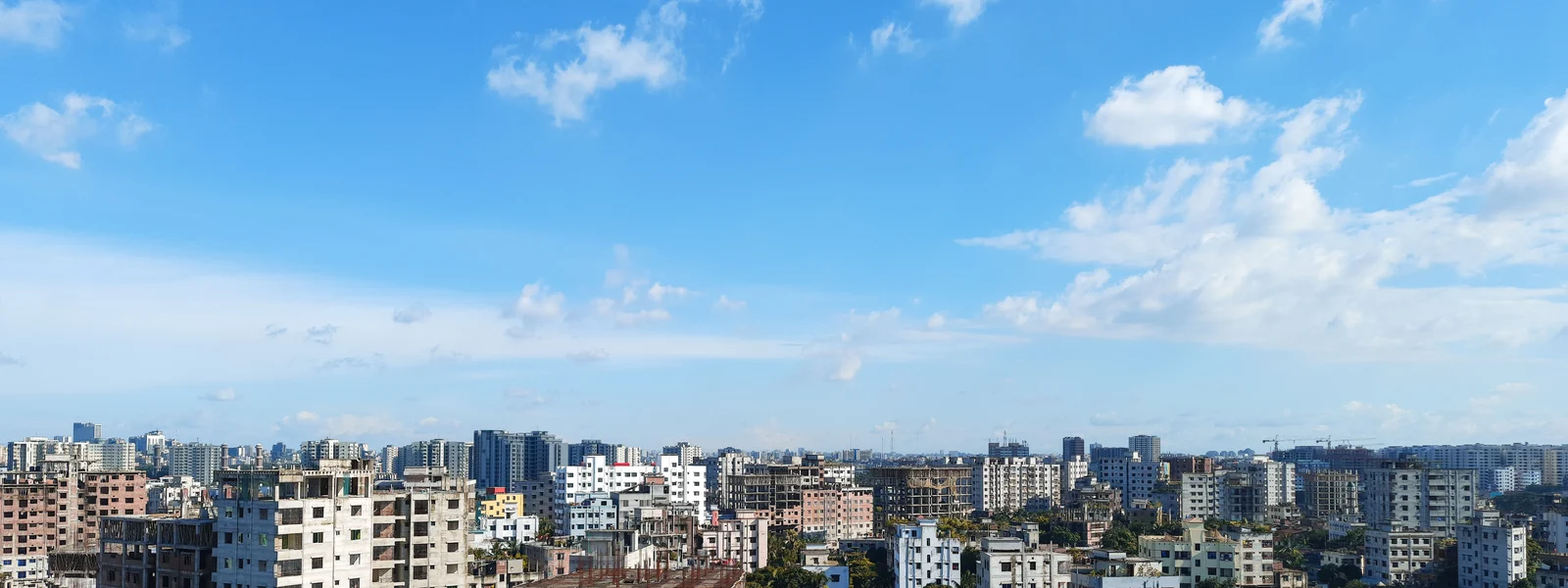
How Much Data Do You Need in Bangladesh? 2026 Usage Guide
Bangladesh presents a data planning challenge that is simpler than Nepal but more nuanced than a straightforward urban destination. The country's connectivity is strong in its cities and main tourist destinations, meaning data consumption can occur at urban rates for much of a typical itinerary. The Sundarbans provides the main offline period, but this typically lasts one to three days on a tourist boat tour rather than the week-plus offline sections that Himalayan trekking creates. Cox's Bazar is well-connected along its main beach and tourist infrastructure. The result is a data budget calculation that is primarily driven by how many Dhaka days your itinerary includes and how much social media and video calling you do, with the Sundarbans creating a brief offline interruption that reduces total consumption modestly but does not fundamentally change the plan size decision.
Dhaka Data Consumption: The Main Driver
Dhaka is one of the world's densest and most chaotic cities, and navigating it by phone consumes data at a higher rate than many other Asian capitals because the street layout, the traffic conditions, and the need to frequently recalculate routes due to congestion and road closures mean navigation apps are in active use for longer periods per journey. Google Maps in Dhaka typically consumes 15 to 25MB per hour of active navigation, somewhat higher than the typical Asian city figure due to the frequent route recalculation. Ride-hailing through Pathao or Shohoz, the two dominant apps in Dhaka, requires continuous data connection for location tracking and fare calculation. A typical Dhaka day involving three to four ride-hailing trips and two to three hours of active navigation consumes 60 to 120MB in navigation and transport apps alone, before any social media, messaging, or streaming is accounted for.
Social media and messaging are the second major consumption category. WhatsApp is the universal communication tool in Bangladesh, used extensively by tour operators, guesthouses, and local contacts. A day of active WhatsApp messaging with photo sharing consumes 50 to 100MB. Instagram browsing with video autoplay, increasingly common for travellers documenting their Bangladesh experience, can consume 150 to 300MB per hour. A 30-minute WhatsApp video call home uses 150 to 175MB. Adding these to navigation consumption, a typical active Dhaka day generates 400MB to 1.5GB of eSIM data consumption depending on video call frequency and social media habits.
Cox's Bazar Data Consumption
Cox's Bazar, the beach destination three hours by domestic flight or eight to twelve hours by bus from Dhaka, has Grameenphone 4G throughout the main tourist strip. Data consumption at Cox's Bazar is typically lower than in Dhaka because the activities are less navigation-intensive: walking the beach, visiting local seafood restaurants, and watching the sunset from the Himchori waterfall area do not require active turn-by-turn navigation. The main data consumers at Cox's Bazar are social media posting of the photogenic beach scenery, video calls with family using the extended beach time productively, and streaming or music during beach relaxation time. A typical Cox's Bazar day consumes 300MB to 800MB, lower than a Dhaka day for most travellers. The exception is travellers who make video calls home from the beach specifically because the environment is pleasant for that communication style, which can add 300 to 400MB per call session.
| Trip Type | Duration | Recommended Plan | Main Data Drivers |
|---|---|---|---|
| Dhaka only (business/city) | 5-7 days | 5-8GB | Navigation, ride apps, messaging daily |
| Dhaka plus Cox's Bazar | 8-12 days | 8-10GB | Dhaka days dominant; beach lower |
| Dhaka plus Sundarbans | 8-12 days | 5-8GB | Sundarbans offline reduces total |
| Full Bangladesh circuit | 14-21 days | 10-15GB | Multiple city days; Sundarbans offline |
| Digital nomad (Dhaka based) | 30+ days | 20GB+ | Video calls, cloud work, daily streaming |
| Short visit (transit or meeting) | 2-3 days | 3-5GB | Navigation and messaging only |
Sundarbans Data Consumption: The Offline Period
A Sundarbans tour typically involves travelling from Dhaka or Khulna to the Mongla entry point, boarding a covered boat for one to three days of forest exploration, and returning to the entry point for transport back to Dhaka. The Mongla town and Khulna city both have Grameenphone 4G, meaning the journey to and from the forest is connected. The forest itself is offline on all networks, and this offline period is the main connectivity planning consideration for Sundarbans visitors. Unlike the Nepal trekking context where lodge WiFi provides a supplementary connection for heavy tasks, Sundarbans tour boats typically offer no internet connectivity whatsoever. All offline preparation, including maps, translation resources, bird and wildlife identification apps, and any downloaded entertainment for evening boat time, must be completed before boarding in Mongla.
The return to signal in Mongla or Khulna after a Sundarbans tour triggers the standard reconnection sync burst. Photo backup for wildlife photographs taken over two to three days, incoming WhatsApp messages from family following the tour progress, and background app updates all attempt to execute simultaneously. For a traveller who took 200 wildlife photos over a three-day boat tour, the Google Photos or iCloud backup of that content can consume 2 to 4GB in a single sync event if unrestricted. Pre-empt this by enabling WiFi-only backup for photos before the Sundarbans departure and allowing the backup to run on the Khulna hotel WiFi rather than mobile data after return. This single action can save 2 to 3GB of eSIM allowance on a typical Sundarbans itinerary.
Activity-Specific Data Consumption
| Activity | Data Per Session | Bangladesh-Specific Note |
|---|---|---|
| Pathao/Shohoz ride-hailing (per trip) | 5-15 MB | Essential for Dhaka transport; 3-4 trips daily typical |
| Google Maps active navigation (per hour) | 15-25 MB | Higher than average due to Dhaka route recalculation |
| WhatsApp messaging (per day) | 50-100 MB | Primary contact for operators and guesthouses |
| WhatsApp video call (per hour) | 300-400 MB | Use hotel WiFi when available |
| Instagram browsing (per hour, autoplay on) | 150-300 MB | Disable autoplay to reduce significantly |
| Google Photos backup (100 photos) | 500 MB to 2 GB | Always route through hotel WiFi |
| Translation app camera mode (per session) | 10-30 MB | Useful for Bengali script menus and signs |
| Weather app sync | 5-10 MB | Cyclone monitoring during October-November season |
Weather Data: A Safety Consideration in Bangladesh
Bangladesh's position in the Bay of Bengal cyclone belt makes weather monitoring a genuine safety consideration rather than merely a convenience, particularly for visitors arriving between October and November or April and May when cyclone risk is highest. Having a working data connection to receive cyclone warning alerts, check the Bangladesh Meteorological Department app or Windy, and stay informed about evacuation advisories is not a luxury during these months. The cyclone warning system in Bangladesh has improved dramatically since the devastating cyclones of the 1990s, and digital alerts through government warning systems reach mobile users automatically in affected areas. A live data connection on either Grameenphone or Robi ensures these alerts reach your device. Including adequate data for continuous weather monitoring throughout a Bangladesh trip during cyclone season is worth factoring into plan size decisions alongside the standard navigation and communication consumption.
The Pre-Departure Dhaka Download Protocol
Before leaving Dhaka for any destination with limited connectivity, Cox's Bazar's southern sections, the Chittagong Hill Tracts, or the Sundarbans, a thirty-minute offline preparation session from hotel WiFi saves multiple gigabytes of mobile data during the trip. The protocol covers: Google Maps offline area for Cox's Bazar district, offline translation packs for Bengali in Google Translate's camera function, wildlife identification apps downloaded with offline databases for Sundarbans bird and animal identification, any tour permit PDFs, and contact details for guides and accommodation saved locally. Entertainment downloads for the Sundarbans boat evenings, where there is no entertainment infrastructure and data connection, are also worth considering: a podcast season or downloaded Netflix series provides evening engagement on a three-day boat tour without any connectivity requirement.
Seasonal Factors in Bangladesh Data Consumption
Bangladesh's climate creates seasonal travel patterns with data consumption implications. The peak tourist season from November to February coincides with the most comfortable weather, the busiest Cox's Bazar beach conditions, and the best Sundarbans wildlife visibility as drier conditions concentrate animals around water sources. This is also the period when domestic tourist volumes are highest, creating occasional network congestion on popular beach and tourist area networks. The monsoon season from June through September brings the Sundarbans' most dramatic flooding, which some specialist nature visitors seek specifically, but also the most challenging travel conditions and occasional connectivity disruptions in flood-affected areas. The hot season from April to June is the least visited by international tourists and has the most comfortable network performance per user given lower visitor density. Planning data budgets around seasonal network quality is a refinement that most travellers need not worry about, but it is relevant for visitors specifically targeting the most network-congested peak periods at Cox's Bazar.
Data Across Bangladesh's Diverse Itinerary Types
Bangladesh accommodates a wider variety of travel purposes than most South Asian destinations of similar international visitor volume. Religious tourism to Islamic heritage sites, development sector research visits, textile industry business trips, and diaspora family visits each produce different data consumption profiles. Religious visitors to the Baitul Mukarram mosque complex in Dhaka and the Atia Mosque in Tangail use data primarily for navigation and messaging with lower social media intensity than leisure tourists. Business visitors to Dhaka's garment sector, concentrated in the Ashulia and Gazipur industrial areas outside the city centre, use data heavily for communication and cloud document access on commutes between the city and factories. Diaspora visitors reconnecting with family in provincial towns outside Dhaka use data less intensively on a per-day basis than city-focused international tourists but over longer stays, making smaller monthly plan sizes viable for extended stays in family homes with resident WiFi rather than hotel connections. All of these use cases are served by Grameenphone 4G in the areas where each primarily operates.
WhatsApp as a Data Driver in Bangladesh
WhatsApp is the primary communication and coordination tool for Bangladesh travel, used by tour operators, guesthouses, guides, and local service providers as their standard client contact channel. A day of active Bangladesh trip coordination involving three to five WhatsApp exchanges with operators, two to three photo shares for documentation or recommendations, and one to two voice notes replacing typed messages consumes 30 to 80MB in WhatsApp alone, before any personal communication with family or friends is included. For travellers who use WhatsApp voice calls for family check-ins rather than standard calls, adding two 15-minute WhatsApp voice calls daily adds 240 to 360MB, bringing the WhatsApp daily total to 300 to 450MB on an active coordination day. Across a ten-day Bangladesh itinerary, WhatsApp alone accounts for 3 to 4.5GB on this usage pattern, a significant portion of a 5GB plan and less than half of an 8GB plan. Sizing the plan to accommodate WhatsApp's outsized role in Bangladesh travel coordination is specific advice for this destination and reflects the degree to which the operator communication ecosystem runs on WhatsApp in a way that destinations with more formalised booking infrastructure do not.
Find Your Bangladesh Data Plan
Compare eSIM plans sized for Dhaka city stays, Cox's Bazar trips, and Sundarbans tours.
FAQ
How much data for a week in Dhaka?
Plan for 5 to 8GB for a seven-day Dhaka stay with active navigation, ride-hailing, daily WhatsApp messaging, and moderate social media. Add more if daily video calls are planned.
Does the Sundarbans have any mobile signal?
Mongla and Khulna (entry points) have Grameenphone 4G. The forest waterways and boat routes are offline on all networks. Prepare offline maps and download entertainment before boarding the boat.
What drains data fastest in Bangladesh?
Instagram and social media with video autoplay, WhatsApp video calls, and the photo backup sync burst after returning from offline Sundarbans tours. Routing photo backup through hotel WiFi and disabling autoplay reduce consumption significantly.
Is 5GB enough for Bangladesh?
For short Dhaka-only visits of three to four days with moderate use, yes. For any itinerary exceeding five days or including Cox's Bazar, plan for 8GB to be comfortable without rationing.