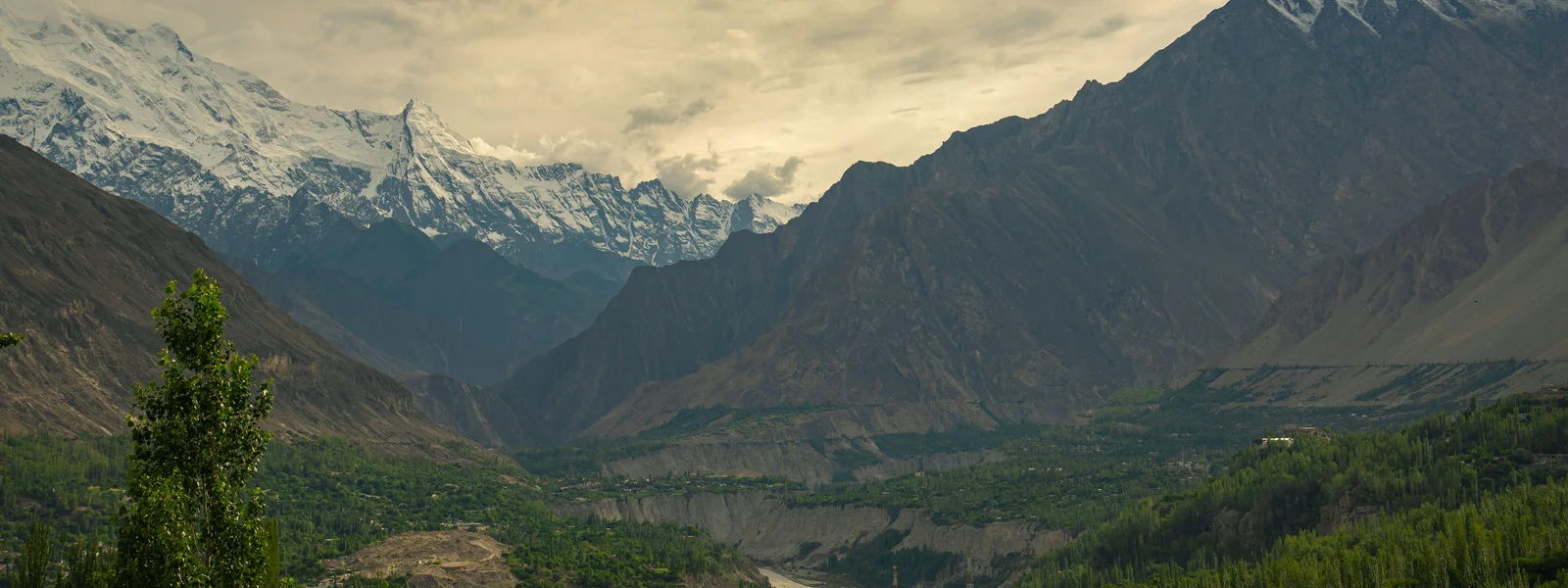
How Much Data Do You Need in Pakistan? 2026 Usage Guide
Pakistan's data planning question has an unusual structure compared to most Asian destinations, because the most dramatic and internationally famous parts of the country, the Karakoram Highway and the northern mountain regions, consume the least data due to their offline nature, while the less internationally famous urban portions, Lahore, Islamabad, and Karachi, consume data at normal South Asian city rates. A two-week Pakistan circuit that combines a week in the cities with a week in the north will consume more data during the city week than during the Hunza and KKH week, and the plan size calculation should reflect this counterintuitive distribution.
City Data Consumption: Lahore and Islamabad
Lahore and Islamabad have well-developed 4G infrastructure on Jazz and Zong, and data consumption in both cities follows the standard South Asian urban pattern. Careem ride-hailing for city transport, Google Maps navigation through Lahore's complex road network including the Walled City area, WhatsApp communication with guesthouses and tour operators, and social media documentation of the Mughal architecture combine to produce 400MB to 1.2GB per active city day. Lahore specifically drives higher navigation data consumption than some comparably sized cities because the dense medieval street plan of the Walled City and the multiple heritage sites spread across a large urban area require more active navigation than cities with more rational modern planning. A four-day Lahore stay consuming 600MB per day contributes 2.4GB to the total trip data budget.
Islamabad, by contrast, is one of South Asia's most planned capital cities, with a grid-based sector system that is genuinely easy to navigate and reduces navigation data consumption below the Lahore equivalent. Business areas including the Blue Area and F-6 Sector have excellent Jazz and Zong 4G. Navigation to Faisal Mosque, the Margalla Hills hiking trailheads, and the Pakistan Monument is straightforward on Google Maps with low per-session data consumption. A three-day Islamabad stay generates 1.2 to 2.4GB depending on social media habits.
KKH Road Trip: The Low-Consumption Journey
A KKH road trip from Islamabad to Hunza consumes surprisingly little data despite its long duration, because the most dramatic sections of the highway pass through the deep gorges, tunnels, and uninhabited mountain terrain where signal is absent on all operators. A two-day drive from Islamabad to Karimabad via Besham and Chilas, the most common pacing for this route, generates 150 to 400MB of eSIM data consumption, primarily during the inhabited town sections where brief connectivity windows enable WhatsApp check-ins and Google Maps confirmation of the next waypoint. The offline preparation done in Islamabad before departure, downloading the full KKH route in Maps.me, eliminates any navigation dependency on live data during the offline gorge sections. Jeep transfer journeys in the northern valleys, where local guides navigate by experience rather than app, generate zero data consumption regardless of trip duration.
| Activity / Location | Data Per Day / Session | Pakistan-Specific Note |
|---|---|---|
| Careem ride-hailing (per trip) | 5-15 MB | Primary city transport; 3-4 trips daily |
| Navigation in Lahore Walled City (per hour) | 20-30 MB | Higher than average due to complex lane network |
| WhatsApp messaging (per day) | 50-100 MB | Primary contact for operators and guesthouses |
| KKH drive (inhabited sections) | 50-150 MB per day | Offline between towns; connectivity only in villages |
| Hunza Valley day in Karimabad | 200-400 MB | Town has Jazz 4G; above town variable |
| Instagram with autoplay (per hour) | 150-300 MB | Disable during city stays to reduce significantly |
| WhatsApp video call (per hour) | 300-400 MB | Use hotel WiFi whenever available |
| High-altitude trekking day | 0-50 MB | Effectively offline above 3500m |
Hunza Valley Data Consumption
Hunza Valley has Jazz 3G to 4G in the main towns of Karimabad, Aliabad, and Ganish. Data consumption in these towns is modest by city standards but meaningful for the travel tasks it enables: navigation between the old fort, the Baltit Fort, the Altit Fort, and the apricot orchard areas; WhatsApp coordination with guesthouses and local guides; and photography sharing from the extraordinary viewpoints above the valley. A typical Hunza town day generates 200 to 400MB of eSIM data, significantly less than a Lahore city day due to the lower navigation complexity and slower social media posting pace typical of mountain town travel. Above Karimabad, toward Passu Glacier and the Passu Cones, signal weakens to 2G and below and effectively disappears in the glacier approach sections. The offline preparation done in Islamabad covers these sections.
Plan Size Recommendations
| Trip Type | Duration | Recommended Plan | Main Data Drivers |
|---|---|---|---|
| Cities only (Lahore + Islamabad) | 5-7 days | 5-7GB | Navigation, Careem, WhatsApp, social media |
| Cities plus Hunza circuit | 10-14 days | 7-10GB | Cities dominant; KKH and Hunza low consumption |
| Full Pakistan circuit (south to north) | 18-25 days | 10-14GB | Multiple city days; long mountain offline sections |
| Trekking-focused (north heavy) | 14-21 days | 6-8GB | Short city stays; extended offline mountain days |
| Digital nomad (Islamabad based) | 30+ days | 20GB+ | Video calls, cloud work, daily streaming |
| Short visit / business | 3-5 days | 3-5GB | Navigation and meetings only |
The Photo Backup Question for Northern Pakistan
Northern Pakistan is one of Asia's most photographically extraordinary environments: the K2 and Rakaposhi massifs, the turquoise Attabad Lake, the Passu Cones, the Hunza Valley terraced orchards, and the KKH itself through the Indus Gorge all produce photography volumes that rival any wildlife or festival destination. A serious photographer in northern Pakistan may accumulate 300 to 700 images per day during the active mountain sections, generating 3 to 10GB of local storage per day. Cloud backup of this volume on return to Jazz 4G in the valley towns, or on hotel WiFi in Karimabad, represents the largest single data event of the Pakistan trip. Setting Google Photos or iCloud to WiFi-only backup before departing Islamabad for the north, and conducting all photo backup from guesthouse WiFi in Karimabad and Gilgit, eliminates the risk of an uncontrolled sync event consuming the eSIM plan's remaining allowance in a single reconnection burst.
Photography and the Data Budget
Pakistan generates some of the highest photography volumes of any Asian travel circuit due to the combination of Mughal heritage site grandeur in Lahore and Multan, the dramatic mountain landscapes of the KKH and Hunza Valley, and the visual richness of the bazaars and local culture throughout the country. A two-week Pakistan circuit may generate 2,000 to 4,000 photographs across the diverse environments, accumulating 10 to 40GB of local storage. Cloud backup of this volume represents the largest single data demand of the trip, and managing it through hotel and guesthouse WiFi rather than mobile data is the most important data conservation action available. Setting Google Photos or iCloud to WiFi-only backup before departing for the KKH eliminates the risk of a post-offline-section sync burst consuming gigabytes of eSIM data when Jazz signal resumes at the next inhabited town.
Social Media and Pakistan's Visual Content
Pakistan has emerged as one of Instagram and YouTube's most visually compelling destinations as international visitor numbers have grown, with the combination of Hunza Valley's dramatic mountain backdrops, Lahore's Mughal architecture, and the KKH's extraordinary road scenery generating strong social engagement for travellers who document their circuits. The data consumption for this social documentation, primarily Instagram photo and Reel uploads and WhatsApp video sharing, is most efficiently managed from guesthouse or hotel WiFi rather than mobile data. A single Instagram Reel of KKH footage, compressed from 4K source, runs 50 to 150MB in upload size; uploading three to five such videos from hotel WiFi in Islamabad rather than from Jazz 4G in Karimabad saves 150 to 750MB of eSIM data per social media posting session. The connectivity exists for in-the-moment sharing from Karimabad, but the data economy of WiFi-deferred sharing is meaningful for plan management over a two to three week circuit.
Offline Entertainment for Long Pakistan Journeys
The Pakistan circuit involves some of the longest road journeys of any tourist itinerary in Asia: the Islamabad to Lahore motorway at three to four hours, the Islamabad to Gilgit KKH at ten to twelve hours over two days, and the Gilgit to Skardu road at five to six hours. The offline sections of these journeys, particularly the Indus Gorge between Besham and Chilas, create extended periods where streaming is impossible and pre-downloaded content becomes the entertainment infrastructure. A Spotify Premium offline playlist, downloaded Netflix episodes for the gorge section, and an audiobook for the post-Chilas afternoon section provide the entertainment architecture for the KKH journey without consuming any mobile data during the offline mountain sections. The data saving from not streaming during these journeys compared to a trip where live streaming was expected throughout would be meaningful, but the more relevant point is that the offline content makes the offline sections of the journey fully comfortable rather than connectivity-dependent.
Managing offline content from Islamabad hotel WiFi before departure is the most efficient approach: download everything needed for the KKH and Hunza sections in one hotel WiFi session, avoiding the slower guesthouse WiFi and intermittent Jazz connectivity that characterise the northern sections where the content is actually consumed.
The Data Budget in Practice
The practical data budget for a Pakistan circuit consolidates the per-environment consumption estimates described throughout this guide. City days in Lahore and Islamabad at 500 to 800MB per day contribute the majority of a two-week circuit's data consumption. KKH and mountain days at 100 to 300MB per active connectivity day contribute modestly. The city-to-mountain consumption ratio makes the city portion the planning anchor, and an 8 to 10GB plan serves the standard two-week Pakistan circuit that combines four to five city days with seven to ten mountain and highway days. The offline sections of the mountain portion save data by structural necessity; the connected sections of the cities consume data at the same rate as any South Asian urban environment. Understanding this structure makes the plan size decision straightforward: size for the city days, treat the mountain offline sections as a bonus savings, and the 8 to 10GB plan provides a comfortable margin throughout.
The Pakistani rupee's continued depreciation relative to USD and EUR in 2025-2026 has made local data even cheaper in international currency terms, widening the gap between local SIM data prices and travel eSIM prices while keeping the travel eSIM option still clearly preferable to home carrier roaming.The data consumption picture for Pakistan in 2026 is ultimately an optimistic one for eSIM users: the combination of improving Jazz and Zong 4G coverage in the cities, the predictable offline sections in the mountains that are managed through preparation rather than disappointment, and the extraordinary photographic and social documentation opportunities that Pakistan's circuit provides, all suggest that a well-sized 8 to 10GB Jazz eSIM plan provides genuinely adequate coverage for the full Pakistan experience without the rationing anxiety that an undersized plan creates. The preparation investment of downloading offline maps and setting WiFi-only photo backup is modest relative to the circuit's overall planning demands, and the result is a data plan that serves the circuit's needs without constraint.
Pakistan's data market trajectory, with local prices among the lowest in Asia and international travel eSIM prices declining as competition among providers increases, means the data cost of a Pakistan visit will represent an increasingly small fraction of the total trip budget in future years, further reducing the financial salience of the eSIM versus local SIM decision. Visitors who plan their Pakistan data budget around the city consumption figures described in this guide, then discover that the mountain sections consume far less than anticipated, often find themselves with more remaining plan data than expected at the trip's end, which serves as the ideal buffer for the post-circuit photography backup and social media catch-up session from the Lahore or Islamabad departure hotel. Pakistan in 2026 is a country where the data budget, once correctly sized for the city days that drive consumption and adjusted for the mountain offline sections that provide natural conservation, comfortably fits within an 8 to 10GB Jazz plan that serves the full circuit without rationing or upgrade anxiety.Find Your Pakistan Data Plan
Compare Jazz-based Pakistan eSIM plans sized for city and mountain travel.
FAQ
How much data for a two-week Pakistan trip with Hunza?
8 to 10GB is the comfortable recommendation for a circuit combining Islamabad, Lahore, the KKH, and Hunza. The northern mountain sections consume very little data due to offline sections, making the city days the primary driver.
Does the Karakoram Highway have mobile signal?
Jazz provides coverage in most inhabited town sections. The deep gorges, tunnels, and uninhabited mountain terrain between towns are offline on all operators. Download the full KKH route in Maps.me before departing Islamabad.
What is the main data drain in Pakistan cities?
Careem ride-hailing, navigation through Lahore's complex Walled City lane network, WhatsApp messaging with operators and guesthouses, and Instagram posting of the Mughal architecture and bazaar photography.
Is 5GB enough for a Pakistan trip?
For a short five-day city visit to Islamabad and Lahore with moderate use, yes. For any itinerary that includes a week or more, plan for 8GB minimum.