Israel 4G and 5G Coverage 2026: Partner vs Cellcom vs Hot Mobile
Israel's competitive mobile market
Israel's mobile market has four major operators -- Partner, Cellcom, Hot Mobile, and Pelephone -- competing in a country of 9 million people and 22,000 square kilometers. This intense competition has produced infrastructure quality and pricing that ranks favorably against much larger European markets. Israel consistently scores highly in international mobile speed benchmarks, with Ookla and nPerf data placing Israeli urban networks among the top performers in the Eastern Mediterranean.
The competition is particularly visible in data pricing. Israeli consumers pay some of the lowest per-GB rates in the OECD, with unlimited data plans available for 50-80 ILS (14-22 USD) per month. This local pricing context helps explain why international eSIM providers can offer competitive Jordan or Egypt pricing while Israel plans remain relatively affordable -- the underlying wholesale rates from Israeli operators are low.
| Operator | 4G coverage | 5G status | Geographic strength |
|---|---|---|---|
| Partner (Orange) | Nationwide, strong | Active, expanding | Tel Aviv, central Israel |
| Cellcom | Widest geographic | Active, urban focus | Negev, northern Israel, rural |
| Hot Mobile | Good urban/suburban | Developing | City centers, Tel Aviv metro |
| Pelephone | Strong nationwide | Active | Balanced nationwide coverage |
5G in Israel: current reality
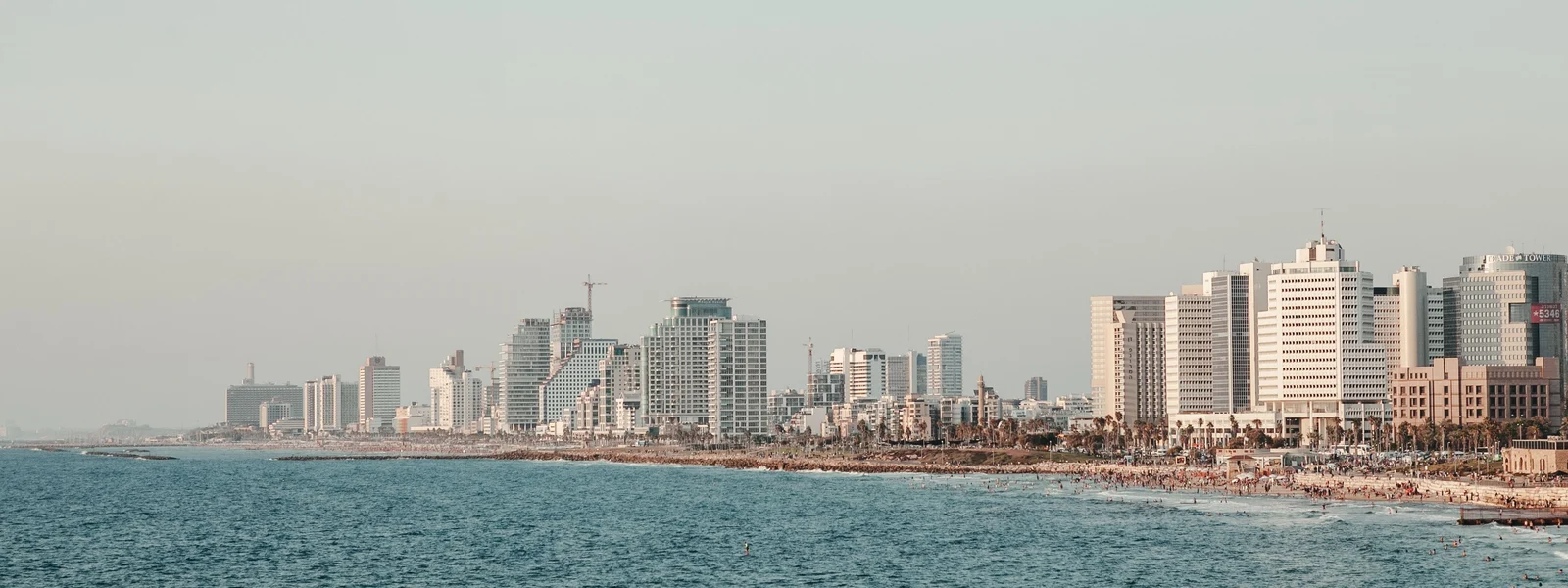
Israel's 5G rollout began in earnest in 2021-2022 and has expanded significantly since. Tel Aviv is the primary 5G coverage area, with genuine deployed 5G delivering 100-400 Mbps in the city center, the port area, and the northern neighborhoods. Real-world Speedtest data from Tel Aviv shows median 5G download speeds of 150-250 Mbps -- fast enough to stream multiple 4K streams simultaneously and make large file transfers near-instant.
Jerusalem has 5G coverage in select areas of the new city, particularly the technology parks and government district in the west. The Old City of Jerusalem, with its historic stone architecture and narrow alleys, has 4G coverage -- the physical environment limits but does not eliminate mobile signal inside the ancient walls. Haifa and Beersheba have partial 5G coverage. The Negev and rural north operate on 4G LTE as the practical standard.
Coverage by destination
| Destination | Coverage quality | Best network | Notes |
|---|---|---|---|
| Tel Aviv city center | Excellent 5G/4G | Partner or Pelephone | 50-400 Mbps. Beach to Rothschild all strong. |
| Jerusalem new city | Excellent 4G | Any operator | Modern neighborhoods consistently fast. |
| Jerusalem Old City | Good 4G | Partner or Cellcom | Signal navigates the ancient stone corridors. |
| Western Wall / Temple Mount | Good 4G | Any operator | Religious sites have consistent coverage. |
| Dead Sea (Israeli side) | Good 4G | Cellcom or Partner | Resort strip well covered. Shore access adequate. |
| Masada | Good 4G | Cellcom | Hilltop fortress has clear signal. Cable car area covered. |
| Ramon Crater (Mitzpe Ramon) | Good 4G | Cellcom | Town center good. Crater rim adequate. Crater floor variable. |
| Negev desert trails | Variable 4G/3G | Cellcom | Main routes covered. Remote hiking trails can drop out. |
| Eilat | Excellent 4G | Any operator | Small city, all operators strong. Red Sea diving area covered. |
| Galilee / Sea of Galilee | Good 4G | Cellcom or Partner | Tiberias and Nazareth well covered. Rural roads variable. |
| Haifa | Good 4G/5G partial | Any operator | Port city well covered. Carmel mountain area adequate. |
Choosing the right operator for your Israel itinerary
For Tel Aviv and coastal Israel focus: Partner or Pelephone deliver the best 5G speeds in the city. Hot Mobile is competitive for urban stays and typically routes its eSIM plans at slightly lower price points. The speed difference between operators in Tel Aviv is marginal -- any plan works well.
For Jerusalem and central Israel: all four operators perform similarly in Jerusalem's urban areas. Cellcom edges out for the Judaean Desert east of Jerusalem toward the Dead Sea. Partner is strong in the modern western neighborhoods and tech parks.
For Negev, Dead Sea, and southern Israel: Cellcom is the clear choice. Its geographic coverage in the Negev exceeds the other operators. For Ramon Crater hiking and Negev desert roads, Cellcom-routed eSIMs are the conservative recommendation.
Signal at religious and archaeological sites
Israel's religious and archaeological sites span the full range from hyperconnected to offline. The Western Wall Plaza in Jerusalem has strong 4G from multiple operators. The Church of the Holy Sepulchre has good indoor signal despite its ancient stone construction. Yad Vashem Holocaust memorial in west Jerusalem has strong 4G throughout the open-air and indoor sections.
Masada National Park has reliable Cellcom 4G at the cable car station and fortress top -- the elevated, open hilltop position helps signal significantly. Qumran (Dead Sea Scrolls site) has moderate signal at the visitor center. Archaeological sites in the Negev (Avdat, Shivta) have variable signal depending on Cellcom coverage at that specific location.
Israel connectivity in the regional context
Israel stands apart from its Middle Eastern neighbors on mobile connectivity. Where UAE and Qatar run world-class networks with VoIP restrictions, and Jordan runs good networks with full VoIP freedom, Israel combines fast networks with open internet and some of the lowest data prices in the OECD -- a result of aggressive multi-operator competition that has continuously driven down pricing while improving infrastructure quality.
| Country | 5G available | VoIP free | Data cost | eSIM support |
|---|---|---|---|---|
| Israel | Yes (Tel Aviv+) | Yes | Very low (OECD competitive) | Yes |
| UAE | Yes (nationwide) | No (BOTIM required) | High | Yes |
| Jordan | Limited (Amman) | Yes | Medium | Yes |
| Egypt | Limited | Yes | Low | Limited |
For travelers on a broader Middle East or Eastern Mediterranean circuit, Israel typically offers the best connectivity experience of the countries in the region. The combination of fast speeds, open internet, and competitive pricing makes Israel a reference point rather than a concern on any regional itinerary.
Pre-departure device preparation for Israel
- Install and activate your Israel eSIM profile over home Wi-Fi before departure
- Configure dual-SIM: Israel eSIM for data, home SIM for voice
- Download Google Maps offline for Israel (Tel Aviv, Jerusalem, Negev, Eilat)
- Install Gett (ride-hailing) and link payment method
- Install Moovit for public transport navigation in Tel Aviv and Jerusalem
- Save accommodation contacts in WhatsApp -- Israeli businesses use WhatsApp for all communication
- Set Google Photos to Wi-Fi-only backup mode
- Download Waze for driving -- the dominant navigation app in Israel
- Note your eSIM provider customer support contact in case of connection issues
- If crossing land borders (Jordan or Egypt), install eSIM profiles for those countries too
Frequency bands and device compatibility
Israel's networks operate on bands universally compatible with modern international smartphones. Key 4G LTE bands include Band 1 (2100MHz), Band 3 (1800MHz), Band 7 (2600MHz), and Band 20 (800MHz) -- all supported by iPhone 7 onward and equivalent Android devices. 5G in Israel uses n78 (3500MHz), supported by iPhone 12 and flagship Android devices from 2020 onward. Travelers with unlocked international devices will have no compatibility issues with Israeli networks.
Coverage at Israel's religious and archaeological sites
Israel's remarkable density of historical sites creates varied coverage environments. The Western Wall Plaza has strong 4G from all operators -- the open-air plaza allows clear signal. The Western Wall Tunnels beneath have variable coverage. The Church of the Holy Sepulchre in Jerusalem's Christian Quarter has usable indoor 4G despite its ancient stone construction. Masada's hilltop fortress benefits from its elevated, open position -- Cellcom delivers good 4G at the summit. Qumran near the Dead Sea has moderate coverage at the visitor center. Yad Vashem in west Jerusalem has strong 4G throughout its open-air and indoor sections.
Coverage planning for Negev desert itineraries
The Negev covers more than half of Israel's land area and has Cellcom as its dominant operator. Main routes (Route 40 through Beersheba and Mitzpe Ramon, Route 90 along the Jordan Valley and Dead Sea) have continuous Cellcom 4G coverage. Secondary desert routes and hiking trails in the backcountry are less reliably covered. The Makhtesh Ramon (Ramon Crater) town of Mitzpe Ramon has good coverage; the crater interior has Cellcom signal along main trails but gaps in remote sections.
- Download offline maps covering the entire Negev before leaving Beersheba or Jerusalem
- Confirm Cellcom routing for your eSIM if the Negev is a significant part of your itinerary
- Route 90 (Dead Sea highway) has consistent coverage -- one of Israel's best-covered scenic drives
- Eilat is excellently covered by all operators despite being Israel's southernmost city
- The Arava Valley road between Eilat and Dead Sea has good Cellcom coverage throughout
Israel connectivity: practical summary for travelers
Israel delivers one of the best mobile connectivity experiences in the Middle East. The combination of four competing operators, aggressive pricing, genuine 5G in Tel Aviv, and fully open internet creates an environment where connectivity is rarely a constraint on your travel experience. The main preparation steps are activating your eSIM before Ben Gurion, downloading offline maps for the Negev and any areas south of Jerusalem, and confirming Cellcom routing if desert travel is a significant part of your itinerary.
For travelers arriving from UAE or Qatar where VoIP restrictions apply, Israel is an immediate return to normal digital life. WhatsApp calls, FaceTime, Zoom, and all your standard communication tools work freely from the moment you land. No BOTIM, no VPN, no workarounds -- Israel's internet environment is as open as your home country for all practical purposes.
| Connectivity need | Israel solution | Quality |
|---|---|---|
| Fast urban data | Partner or Pelephone 5G (Tel Aviv) | World-class |
| Desert and rural coverage | Cellcom 4G | Good on main routes |
| WhatsApp calls | Works freely, no restriction | Full quality |
| Video conferencing | Zoom, Teams, Meet -- all unrestricted | Excellent |
| Navigation | Waze (dominant), Google Maps, Moovit (transit) | Excellent |
| Ride hailing | Gett (dominant), Uber | Good in Tel Aviv and Jerusalem |
Connectivity gaps and offline preparation
Even in Israel's well-covered network environment, a few specific situations create connectivity gaps worth preparing for. Understanding these in advance prevents the frustration of needing information precisely when signal is unavailable.
Hezekiah's Tunnel in Jerusalem is a 533-meter underground water channel from the 8th century BCE, still filled with knee-deep water and walkable with a torch. The underground tunnel has no signal throughout. Download your return route and accommodation details before entering.
Ramon Crater (Makhtesh Ramon) interior has Cellcom coverage on main access points but trail sections drop out. The crater is 40 km long and 12 km wide -- a significant wilderness area where offline preparation matters for longer hikes.
Dead Sea underwater: The Dead Sea's hyper-saline water creates a floating experience that makes phone use impractical anyway. Signal is present at the shoreline and resort areas. This is a naturally offline experience.
Underground sections of Jerusalem's Old City (Western Wall Tunnels, various cisterns) have variable coverage. Surface-level Old City has good 4G throughout.
Get your Israel eSIM
Choose the right operator routing for your Israel itinerary.
FAQ
Which network is best for travel in Israel?
Partner and Cellcom are the top choices. Partner leads in Tel Aviv 5G performance. Cellcom has the widest geographic coverage including the Negev desert and rural areas. For mixed itineraries covering both city and desert, Cellcom-routed eSIMs provide the safer coverage guarantee.
Is 5G actually usable for travelers in Israel?
Yes, in Tel Aviv. Genuine 5G speeds of 100-400 Mbps are available in Tel Aviv's main areas. For Jerusalem and the rest of Israel, 4G LTE is the practical standard. If your trip is primarily Tel Aviv, a 5G-capable eSIM on Partner or Pelephone delivers noticeably faster performance.
Does coverage extend into the West Bank?
Israeli operators have variable coverage in the West Bank, primarily in Area C. Palestinian operators (Jawwal, Ooredoo Palestine) cover Palestinian cities. International Israel eSIMs typically do not guarantee West Bank coverage -- verify with your provider before planning visits to Ramallah, Bethlehem, or Jericho.