Israel Digital Nomad eSIM Guide 2026: Remote Work in the Start-Up Nation
Why Tel Aviv works for digital nomads
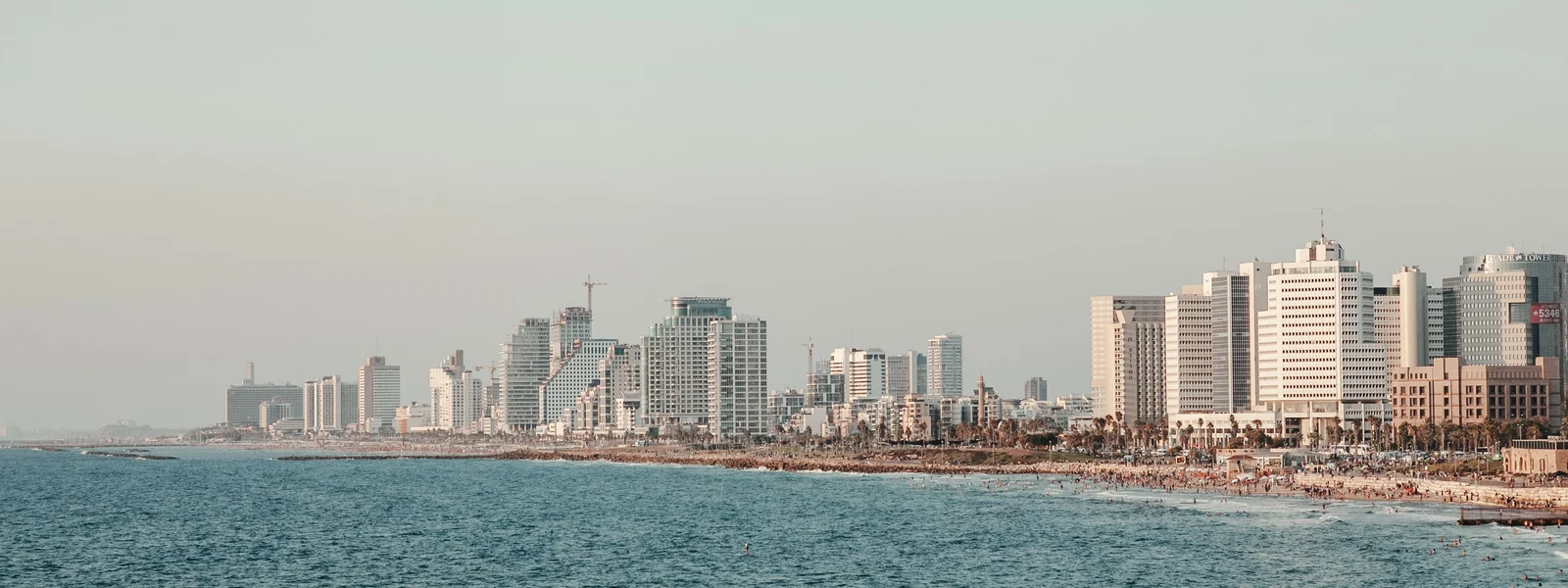
Tel Aviv has developed into one of the most compelling digital nomad destinations in the world, not just in the Middle East. The city's "Start-Up Nation" ecosystem -- the world's highest concentration of startups per capita, major tech company offices, and one of the most active venture capital scenes outside Silicon Valley -- creates an infrastructure of connectivity, coworking, and tech-culture that directly benefits remote workers.
The practical advantages: 5G network that delivers 100-400 Mbps in the city center, fully open internet with no app or service restrictions, English as a functional professional language throughout the city, a UTC+2 (UTC+3 in summer) time zone that creates viable overlap with European morning hours and US East Coast afternoon hours, and a Mediterranean urban lifestyle -- beach, cafes, and culture -- that makes the city genuinely enjoyable to live and work in.
Tel Aviv coworking ecosystem
Tel Aviv has one of the densest coworking ecosystems in the Middle East. Major brands (WeWork, Mindspace, Labs) operate multiple locations throughout the city, supplemented by dozens of independent coworking spaces in different neighborhoods. The concentration of tech companies creates a coworking culture where the other people at the desk next to you are genuinely interesting -- startup founders, engineers from major tech companies, investors, and international remote workers.
| Area | Coworking density | Character |
|---|---|---|
| Rothschild Boulevard | Very high | Startup-focused, high-energy, expensive |
| Sarona Tech Park | High | Corporate tech, international companies, structured |
| Florentin | Medium | Creative, startup, more relaxed atmosphere |
| HaKirya area | Medium-high | Business district, mixed corporate and startup |
| Tel Aviv Port (Namal) | Low-medium | Premium spaces, views, higher price points |
Day passes at Tel Aviv coworking spaces run 50-150 ILS (14-42 USD). Monthly memberships for hot desks start at 800-1500 ILS (220-415 USD) per month. Compare this to London (USD 300-600/month) or New York (USD 400-700/month) -- Tel Aviv coworking is genuinely affordable for the network quality and city experience it provides.
Mobile data vs fixed internet for work in Tel Aviv
Tel Aviv's 5G network is fast enough to serve as a primary work connection for most remote work tasks. Video calls, file transfers, cloud collaboration tools, and web browsing all run at full speed on Tel Aviv's 5G. The question of eSIM data as a primary work connection versus hotel or coworking Wi-Fi as primary depends on your work intensity and the type of tasks involved.
For most remote workers: use coworking or hotel fiber for primary work sessions (video calls, large file transfers, continuous cloud sync), and rely on eSIM 5G for mobile work (cafes, transit, beach working, meetings in different locations). The 5G is fast enough to be a seamless backup and primary connection for lighter work moments.
Visa and legal considerations for nomads
Israel does not currently have a digital nomad visa. Most Western passport holders receive 90 days on arrival -- the standard tourist entry. This 90-day window accommodates most nomad visits and can typically be extended at an Interior Ministry office in Tel Aviv with documented reason for continued stay. Extensions are processed case-by-case and are not guaranteed.
For nomads planning to make Tel Aviv a regular base, the standard approach is the 90-day tourist entry with periodic exits and re-entries. Israel does not stamp passports (paper entry card instead) and does not typically count specific previous visits -- many nomads cycle through Israel multiple times per year on tourist entries. However, the legal status of extended stay on tourist entries is ambiguous, and professional legal advice is recommended for anyone planning regular extended stays.
Cost of living in Tel Aviv for nomads
Tel Aviv is not cheap by regional standards -- it is consistently ranked as one of the world's more expensive cities. Accommodation is the main cost pressure: a furnished apartment in Tel Aviv's attractive neighborhoods (Florentin, Neve Tzedek, Rothschild area) costs USD 1,500-3,000+ per month. Short-term furnished accommodation through Airbnb or local agencies runs higher. Budget nomads typically find the middle neighborhoods (Lewinsky area, southern Tel Aviv) more affordable at USD 1,000-1,800 per month.
Food is more manageable: the Shuk HaCarmel (Carmel Market) fresh food, excellent falafel and hummus at shuk-adjacent spots, and the abundant cafe scene make eating affordably feasible. A mid-range restaurant meal costs USD 20-35. Cafe working with a laptop and coffee runs USD 5-15 per session. Mobile data (local SIM, unlimited) costs USD 17-22 per month -- among the cheaper city expenses.
Israel connectivity: summary for travelers
Israel delivers fast speeds, fully open internet, no VoIP restrictions, and competitive eSIM pricing. Pre-activate your eSIM at home, configure dual-SIM, download Gett and Waze, and land at Ben Gurion with everything ready. For desert itineraries choose Cellcom routing; for Tel Aviv 5G, choose Partner. WhatsApp calls work freely -- no workarounds needed anywhere in Israel.
Pre-departure checklist
- Install Israel eSIM at home over Wi-Fi, verify it appears in SIM settings
- Set as data SIM, home SIM for voice -- enable data roaming on Israel eSIM
- Download Google Maps offline for all planned Israel destinations
- Install Gett, Moovit, Waze, and your eSIM provider app before departure
- Save accommodation and guide contacts in WhatsApp -- Israeli standard communication
- No VPN needed -- all apps work freely including WhatsApp calls and FaceTime
- If visiting Jordan or Egypt: install those eSIM profiles before departure too
Israel in the Middle East connectivity context
Israel has the most open internet environment in the Middle East with OECD-competitive local data pricing and genuine 5G in Tel Aviv. Unlike UAE and Qatar where VoIP apps are blocked, Israel imposes no restrictions on calling apps or internet services. If arriving from Gulf countries, re-enable your standard calling apps -- everything works freely in Israel. The network quality and openness make Israel one of the easiest countries to be digitally connected in across the entire Middle East and Eastern Mediterranean region.
| Need | Israel solution | Quality |
|---|---|---|
| Urban data | Partner / Pelephone 5G (Tel Aviv) | World-class |
| Desert coverage | Cellcom 4G | Good on main routes |
| WhatsApp calls | Unrestricted | Full quality |
| Navigation | Waze + Google Maps offline | Excellent |
| Ride-hailing | Gett (dominant in Israel) | Good in Tel Aviv and Jerusalem |
Israel connectivity in the Middle East context
Israel occupies a unique connectivity position in the Middle East: fast urban networks comparable to Western Europe, fully open internet with no VoIP restrictions, and domestic mobile pricing among the lowest in the OECD. For travelers arriving from UAE or Qatar where WhatsApp calls are blocked and BOTIM is required, Israel is an immediate reset to normal digital life. For travelers arriving from Jordan where VoIP is also free, Israel adds faster speeds and 5G in Tel Aviv to the already-open environment.
The practical difference for daily travel: every app works, at full speed, everywhere in Israel's main destinations. WhatsApp calls home are free and unrestricted. Google Maps loads satellite imagery instantly on 5G. Instagram uploads in seconds. Gett books a car in under two minutes. This is the connectivity baseline you can expect throughout your Israel trip -- a baseline that is genuinely higher than most other Middle East destinations.
| Need | Israel | UAE | Jordan |
|---|---|---|---|
| WhatsApp voice calls | Free, unrestricted | Blocked | Free, unrestricted |
| 5G available | Yes (Tel Aviv+) | Yes (nationwide) | Limited (Amman) |
| Local data pricing | Very low (OECD) | High | Medium |
| App restrictions | None | VoIP blocked | None |
| eSIM available | Yes, good selection | Yes | Yes |
Connectivity preparation: the complete pre-departure checklist
Thorough pre-departure preparation eliminates the most common Israel connectivity frustrations. The steps below apply to all Israel travelers regardless of which specific itinerary or destinations they are following.
- eSIM installation: Install and activate your Israel eSIM profile over home Wi-Fi. Verify it appears in your SIM settings and connect to a test network if possible before departure.
- Dual-SIM setup: Set Israel eSIM as data SIM, home SIM for voice and SMS. Enable data roaming on Israel eSIM. Disable data roaming on home SIM to prevent unexpected charges.
- Offline maps: Download Google Maps offline for Israel. The Israel offline map covers the entire country. If Negev hiking is planned, download AllTrails maps for specific trail sections.
- Essential apps: Gett (ride-hailing), Moovit (transit), Waze (driving), your eSIM provider app (data monitoring). Install and verify before departure.
- Contacts: Save all accommodation, tour operator, and activity contacts in WhatsApp. Israeli businesses communicate exclusively via WhatsApp.
- No VPN needed: Israel's internet is fully open. Remove any Gulf-country VPN configurations or workaround apps if arriving from UAE or Qatar.
- Multi-country: If combining Israel with Jordan or Egypt, install those eSIM profiles before departure. Plan which profile to switch to at each land border.
- Documents offline: Save accommodation confirmations, booking references, and travel insurance information in offline notes or screenshots.
This 30-45 minute pre-departure routine prevents the frustration of discovering issues at Ben Gurion Airport after a long flight when you simply want to get to your hotel.
Final connectivity tips for Israel travel
Israel rewards connected travelers who prepare before arrival. The network is excellent but offline preparation for specific sites -- Negev trails, Old City covered souqs, underground archaeological sections -- prevents the frustration of needing information precisely when signal is unavailable. Download offline maps, save your key contacts, and configure your dual-SIM setup before departure. Everything else Israel's fast, open network handles automatically.
For border crossings: install all country eSIM profiles before departure, switch profiles at borders rather than downloading new ones in variable-signal crossing zones, and treat the crossing processing time as an offline window requiring preparation on both sides. The connectivity transition between Israel and Jordan (or Egypt) is instant once you switch profiles -- within 60 seconds of crossing, you are on the new country's network with full data access.
The bottom line: Israel is one of the most connectivity-friendly travel destinations in the Middle East. A well-configured eSIM, pre-downloaded offline maps, and the right navigation apps installed turn Israel's fast network into a genuine travel advantage -- helping you navigate complex religious sites, book rides in unfamiliar neighborhoods, stay in touch with family back home via free WhatsApp calls, and share extraordinary experiences in real time from some of the most historically significant locations in the world.
Get your Israel eSIM
World-class 5G and open internet -- Israel is built for remote work.
FAQ
Is Tel Aviv good for digital nomads?
Yes -- possibly the best destination in the Middle East and Eastern Mediterranean for remote workers. World-class 5G, no internet restrictions, a mature coworking ecosystem, English widely spoken in professional contexts, a UTC+2/UTC+3 time zone workable for European and US East Coast hours, and a vibrant urban lifestyle.
Does Zoom work in Israel?
Yes, fully. Zoom, Microsoft Teams, Google Meet, Slack video, WhatsApp video calls, FaceTime -- all work freely in Israel on both mobile data and Wi-Fi. No VPN required. Israel has no restrictions on any business communication or collaboration platform.
Can I get a long-term visa for Israel as a nomad?
Israel does not currently have a dedicated digital nomad visa. Most Western passport holders receive 90 days on arrival. Extensions are possible but require engagement with the Interior Ministry. For longer stays, a tourist entry with the standard 90-day allowance is the typical nomad approach.