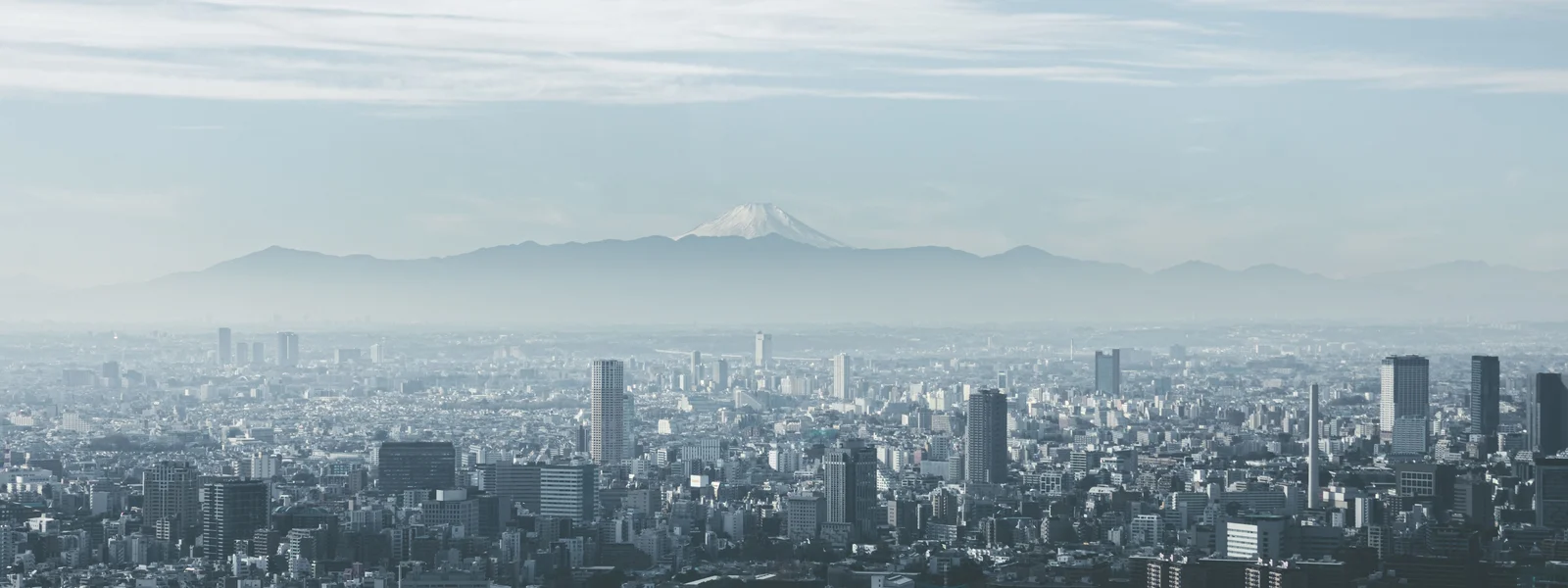
Japan 5G & 4G coverage in 2026
Japan has one of the most sophisticated mobile networks in the world and one of the most geographically challenging deployment environments. The combination of dense urban cores, mountainous terrain covering 73% of the land area, and over 6,800 inhabited islands has pushed its three main operators, NTT Docomo, au by KDDI, and SoftBank, to build infrastructure that reaches further into difficult terrain than almost any network in Asia.
In Japan's cities, every operator delivers excellent performance. The operator choice becomes decisive the moment you leave the main corridors and venture into the Japan Alps, northern Hokkaido, or the more remote island prefectures.
The three operators: what the data shows
Japan's mobile market is dominated by three established operators with NTT Docomo holding the largest subscriber base at approximately 84 million, KDDI at 63 million, and SoftBank at 51 million. Rakuten Mobile, the fourth entrant with 9 million subscribers, operates a hybrid network that relies partially on KDDI roaming in areas without its own infrastructure. International eSIM plans almost never route through Rakuten and the operator is not recommended for visitors.
NTT Docomo operates approximately 290,000 active cellular sites across Japan, including 60,000 5G Sub-6 GHz sites and 4,200 5G mmWave sites. This infrastructure density makes it Japan's rural coverage leader by a significant margin. The Opensignal October 2025 report awards Docomo both Coverage Experience and 5G Coverage Experience awards outright, with 5G availability leadership at 38.4% of time on 5G. Its median overall download speed of 50.5 Mbps reflects its presence in both high-speed urban and lower-speed rural environments. KDDI wins all of Opensignal's experiential awards in the April 2025 report, with the best 5G Video Experience, Live Video Experience, and Games Experience, indicating superior consistency and low latency in addition to speed. Its average overall download speed of 55.8 Mbps leads the market. SoftBank leads on raw median download speed at 62 Mbps, performing exceptionally in Tokyo and Osaka's dense urban environments, with mmWave 5G in select city zones reaching peak speeds measured in gigabits per second. Its rural performance is the weakest of the three major operators.
| Operator | 4G coverage | 5G availability | Best for |
|---|---|---|---|
| NTT Docomo | 99.4% population, all 47 prefectures | 38.4% (leader) | Rural Japan, mountains, Hokkaido, Shikoku, remote islands. Gold standard for coverage-first travel. |
| KDDI (au) | Strong nationwide, second to Docomo in rural depth | Strong in urban and suburban | Best all-around experience. Urban and regional travel. Starlink-backed remote base stations. |
| SoftBank | Good urban and suburban, weaker in mountains and deep rural | Urban-concentrated 5G | Tokyo, Osaka, Kyoto focused trips. Fastest speeds in dense urban zones. |
Tokyo: where all three operators excel
Tokyo is Japan's most connected city and a showcase for all three operators' 5G capabilities. The dense urban environment of central Tokyo, from Shibuya and Shinjuku to Roppongi, Ginza, and the waterfront districts, has 5G coverage from all three operators with peak speeds reaching 300 to 500 Mbps on Sub-6 GHz 5G and above 1 Gbps in SoftBank and Docomo mmWave zones. The Tokyo Metro and Toei subway systems have 4G coverage throughout most stations, with 5G progressively deployed at busier station platforms. JR Yamanote Line, which circles the city, maintains signal throughout including brief gaps in some cutting sections.
Choosing between operators in Tokyo is essentially an exercise in speed test preferences rather than coverage differences. Every neighbourhood a tourist visits has strong 4G or 5G from all three. Shinjuku Golden Gai, Senso-ji Temple in Asakusa, Akihabara's electronics district, the teamLab digital art venues, and every shopping centre in Shibuya all have consistent multi-operator coverage. The only scenario where operator choice matters in Tokyo is if you prioritise MRT connectivity during commutes, where Docomo's more aggressive tunnel infrastructure investment may produce marginally more consistent signal during underground train journeys.
Kyoto and the Kansai region
Kyoto has Docomo and au 4G throughout the city, with 5G in the central commercial areas and progressively expanding into the heritage zones. The main tourist sites, Arashiyama bamboo grove, Fushimi Inari, Kinkakuji, Gion, and the Philosopher's Path, all have reliable 4G. Moving into the Higashiyama mountain trails above the city, coverage weakens and eventually thins in the forested sections. The area around Kurama and Kibune, north of Kyoto in the mountains, has Docomo coverage along the main valley roads with gaps on the hiking trails above.
Osaka, Nara, and Kobe all have strong multi-operator coverage in their tourist areas. Nara's deer park and the main temple precinct around Todaiji have consistent 4G. Himeji Castle and its surroundings have excellent coverage. The Osaka Castle area, Dotonbori, and Shinsaibashi all have 5G from multiple operators. The Kansai region's flat terrain and dense infrastructure make it one of the most reliably covered areas in Japan for all three operators.
The Shinkansen bullet train: signal along the main lines
Japan's Shinkansen bullet train network is a critical connectivity environment for visitors covering long distances between cities. Japan's bullet train network has good 4G coverage along all major routes. The Tokaido Shinkansen between Tokyo and Osaka has strong coverage throughout with minor tunnel interruptions. The Sanyo Shinkansen from Osaka to Hakata has good coverage with more tunnels in the western sections. The Tohoku Shinkansen from Tokyo toward Shin-Aomori has generally good coverage with increasing gaps as it moves into Tohoku's rural terrain.
The Hokkaido Shinkansen, connecting Shin-Aomori to Hakodate and Shin-Hakodate-Hokuto, passes through the Seikan Tunnel under the Tsugaru Strait. The tunnel section, at 53.85 km the world's longest underwater tunnel, has coverage infrastructure inside but signal quality can be variable. The approach sections through Aomori and Hokkaido have Docomo coverage along the rail corridor with gaps in the most mountainous sections. For Shinkansen travel, Docomo and au provide the most consistent signal across the full route network including the longer and more rural lines. SoftBank is adequate on the Tokaido and Sanyo main lines but may show more gaps on the Tohoku and Hokuriku lines.
Hokkaido: Japan's northern frontier
Hokkaido is Japan's northernmost and second-largest island, covering 83,000 km2 with a population of approximately 5 million people concentrated in Sapporo and a handful of coastal cities. The island's vast interior, including the protected wilderness of Daisetsuzan National Park and the agricultural plains of the Tokachi and Kushiro regions, is exactly the environment where Docomo's rural infrastructure advantage over SoftBank becomes pronounced. In the Japan Alps or Hokkaido, operator choice is critical, with NTT Docomo having the most extensive network of base stations on mountain ridges and in national parks.
Sapporo, Hokkaido's capital, has full 4G and 5G coverage from all operators. Niseko, the internationally famous ski resort area in southwestern Hokkaido, has Docomo and au coverage throughout the main resort villages of Hirafu, Niseko, and Annupuri. The ski slopes themselves have coverage at the base and mid-mountain stations, with signal weakening on exposed ridgelines. Furano and Biei, known for lavender fields and flower gardens, have Docomo 4G throughout the valley areas. Moving into the Daisetsuzan interior, coverage thins to Docomo only in the mountain hut approaches, and disappears on the high ridge routes. The remote Shiretoko Peninsula, a UNESCO World Heritage site in eastern Hokkaido, has Docomo coverage in the visitor areas and along the main road, with minimal coverage on the coastal hiking routes beyond the road terminus.
The Japan Alps and mountain regions
The Japanese Alps, running through the centre of Honshu island, present the most variable mobile coverage environment in Japan for tourists. The major valley towns, Matsumoto, Takayama, Shirakawa-go, and Nagano, all have strong Docomo and au 4G coverage. Moving up into the mountain villages and alpine zones, coverage becomes Docomo-dependent and then altitude-dependent. The Kamikochi alpine valley in the North Alps has Docomo coverage at the bus terminal and main walking routes along the Azusa River, with gaps on the trail sections above the valley floor. The mountain huts at higher elevations on routes including the Yarigatake and Hotaka ridge often have satellite communication for emergencies but no regular mobile signal.
Mount Fuji, Japan's highest peak and most recognisable symbol, has Docomo and au 4G at the 5th station, which is the standard starting point for summit climbs at approximately 2,300 metres. The climb above the 5th station has Docomo signal at regular intervals between mountain huts, with gaps on exposed sections. The summit at 3,776 metres has Docomo signal from specific positions. SoftBank has coverage at the 5th station but is less consistent on the upper mountain routes. For any Fuji climb, Docomo provides the most reliable coverage from bottom to summit.
Okinawa and the southern islands
Okinawa's main island has strong coverage from all three operators in Naha and the main tourist areas. The American Village at Chatan, the northern forests, and the coastal resort strips all have reliable 4G. The smaller islands of the Okinawa archipelago have Docomo coverage in their main settlement areas, with gaps on more remote sections of each island. The Yaeyama Islands, including Ishigaki and Iriomote, have Docomo and au coverage in Ishigaki town and along the main roads. Iriomote, which is 90% national park jungle, has very limited coverage in the mangrove river zone and no coverage deep in the forest interior. The underwater marine areas around the Kerama Islands and the coral reefs are naturally beyond mobile coverage.
Docomo for rural Japan, mountains, Hokkaido, Shikoku, and Tohoku. Au by KDDI for the best balanced experience on urban plus regional travel. SoftBank for Tokyo and Osaka speed when the itinerary stays in the main cities. For any itinerary that goes off the beaten tourist path into Japan's genuine countryside, choose a provider that includes NTT Docomo, which has the strongest signal in mountainous areas, remote islands, and along rural train routes. Most international eSIM plans for Japan route through Docomo or a dual Docomo and SoftBank arrangement. Confirm before purchase.
Plans for Japan
Japan eSIM plans
Prices in USD. Instant QR activation. Pick your data, land connected.
FAQ
Which Japanese operator has the best coverage for tourists?
NTT Docomo for any itinerary beyond major cities. It covers 99.4% of Japan's population, operates 290,000 cellular sites, and leads in rural mountains, Hokkaido, Shikoku, and remote islands. Au by KDDI is the best balanced option for urban and regional travel. SoftBank is the fastest in Tokyo and Osaka but the weakest in rural and mountain areas.
Is there signal on the Shinkansen bullet train?
Yes on all major lines, with brief interruptions in tunnel sections. The Tokaido Shinkansen between Tokyo and Osaka has strong coverage throughout. The Tohoku and Hokkaido lines have more gaps in mountain sections. Docomo and au provide the most consistent signal across the full Shinkansen network.
Is there mobile coverage in the Japan Alps?
In valley towns like Matsumoto, Takayama, and Kamikochi's bus terminal area, yes. On mountain trails above the valley floor, Docomo provides intermittent coverage at regular intervals. Above 2,500 metres on exposed ridges, coverage becomes very limited or absent regardless of operator. Docomo is the essential operator for any mountain itinerary.
How is coverage in Hokkaido?
Sapporo and main towns have full 4G from all operators. Niseko and Furano resort areas have Docomo and au coverage. The Daisetsuzan interior and Shiretoko remote coastal routes have Docomo only, thinning significantly. SoftBank has notable coverage gaps in rural Hokkaido. Choose Docomo for any Hokkaido itinerary beyond Sapporo.
What is the 5G situation in Japan?
5G is deployed in major cities by all three operators. Docomo leads on 5G availability at 38.4% of time on 5G. Urban 5G speeds reach 168 Mbps median on Docomo, 300 to 500 Mbps in optimal conditions. SoftBank has mmWave 5G in select Tokyo and Osaka zones reaching 1 Gbps peak. For tourist use, 4G LTE is fast enough everywhere.