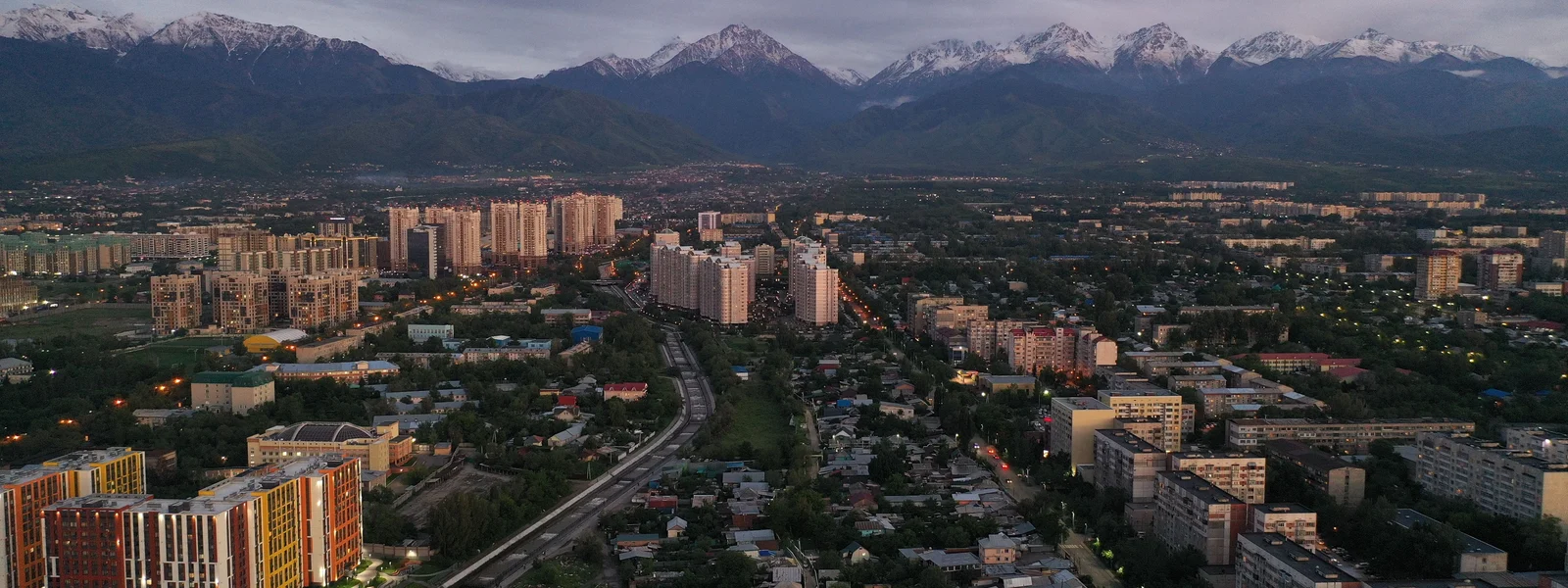
Kazakhstan's 4G landscape in 2026 is defined by strong urban performance in its major cities and a coverage tapering that directly reflects the country's geographic reality as the world's largest landlocked nation, a territory where population concentrates in cities and along main transport corridors while the vast steppe interior remains sparsely inhabited and correspondingly lightly covered. For travellers on the standard Kazakhstan tourist circuit, this reality creates a well-connected urban and mountain experience supported by three competitive operators, with the steppe and remote landscapes requiring the offline preparation protocols that experienced Central Asia travellers apply throughout the region.
Tele2: Kazakhstan's Speed Leader
Tele2 Kazakhstan consistently leads independent speed benchmarks, with city averages of 35 to 40 Mbps in Almaty and Astana and peak speeds approaching 100 Mbps in prime central locations. Tele2's 4G network covers over 85% of Kazakhstan's population and the operator has positioned itself as the premium performance choice for urban users. For digital nomads and business travellers prioritising video conferencing quality and fast data in Almaty and Astana, Tele2's urban performance is the strongest of the three operators. However, Tele2 is less commonly available as a travel eSIM network partner, with most international providers using Kcell or Beeline for their Kazakhstan plans. Local Tele2 SIM acquisition from a Kazakhstani franchise store is the route to Tele2's urban speed advantage for visitors who prioritise it.
Kcell and Beeline: The Travel eSIM Networks
Kcell and Beeline are the two operators that international travel eSIM providers use as Kazakhstan network partners, each providing solid urban 4G at 15 to 20 Mbps averages and meaningful rural and highway coverage. The key differentiator for travellers is Beeline's performance in the mountain and canyon areas around Almaty, where traveller reports and community feedback consistently rate Beeline above Kcell for connectivity in the Tian Shan foothills, Charyn Canyon approaches, and the routes to Big Almaty Lake and Kolsai Lakes. For the standard Kazakhstan tourist circuit combining Almaty, the Tian Shan mountains, Charyn Canyon, and Astana, a Beeline-based travel eSIM provides the most consistent experience across all destination types. Kcell provides comparable urban performance to Beeline and is an equally valid choice for city-focused visits.
| Location | Beeline | Kcell | Tele2 | Best for Travel eSIM |
|---|---|---|---|---|
| Almaty city centre | 4G strong, 5G emerging | 4G strong, 5G emerging | 4G excellent, 5G | Beeline or Kcell equal |
| Astana Left Bank | 4G/5G excellent | 4G/5G excellent | 4G/5G excellent | All three equal |
| Shymbulak (base area) | 4G good | 3G/4G variable | 3G/4G | Beeline clearly |
| Big Almaty Lake area | 2G/3G variable | 2G limited | 2G limited | Beeline best available |
| Charyn Canyon | 3G/4G improving | 3G variable | 2G/3G | Beeline |
| Kolsai Lakes | 2G limited | Minimal | Minimal | Offline prep essential |
| Steppe between cities | 2G/3G in towns | 2G/3G in towns | 2G/3G in towns | All offline between settlements |
| Almaty Airport (ALA) | 4G strong | 4G strong | 4G strong | Any; activate on landing |
5G Status in Kazakhstan
Kazakhstan launched 5G in Almaty and Astana city centres in 2023 to 2024, making it one of the first Central Asian countries to commercial 5G deployment. All three major operators have 5G present in the central business districts of both cities, though coverage remains concentrated in commercial and government zones rather than spread across residential and peripheral areas. Travel eSIM profiles accessing Kcell or Beeline 5G-capable plans will connect to 5G where it is available in Almaty and Astana centres, providing speeds that significantly exceed the 4G baseline in those specific locations. For the mountain and steppe destinations outside the cities, 4G remains the practical standard and 5G has no relevance to the rural coverage picture.
The Trans-Siberian and Kazakhstan Train Routes
Kazakhstan's extensive rail network, connecting Almaty to Astana and onward to Russian and Chinese border points, provides a major domestic travel mode with a specific connectivity character. Beeline and Kcell 4G follows the rail routes through populated areas, providing connectivity in and around stations and towns while the steppe sections between settlements reduce to 2G or absent coverage. The Almaty to Astana train journey of approximately 12 to 14 hours by standard service, passing through the Kazakh steppe, exemplifies this pattern: strong 4G at departure and arrival, intermittent 2G to 3G or offline through the steppe midsection. Pre-downloading entertainment for the steppe sections from Almaty hotel WiFi before the journey is the practical preparation for the offline steppe hours.
Kazakhstan in the Central Asia Connectivity Context
Compared to its Central Asian neighbours, Kazakhstan has the strongest mobile connectivity infrastructure. Uzbekistan's operators are improving but still lag Kazakhstan's urban performance. Kyrgyzstan's mountain geography creates more severe coverage limitations than Kazakhstan's urban-accessible mountains. Tajikistan and Turkmenistan have the weakest connectivity in the region. For travellers planning multi-country Central Asian circuits that include Kazakhstan as a hub, Kazakhstan's Kcell and Beeline 4G in Almaty and Astana provides the best digital base in the region, making it the ideal country to complete heavy data tasks such as photo backup, route planning research, and accommodation booking before or after visits to neighbouring countries with more limited infrastructure.
Frequency Bands and Device Compatibility
Beeline Kazakhstan operates 4G LTE on Bands 3, 7, and 28. Band 28 at 700 MHz provides the rural and mountain penetration advantage in the Tian Shan foothills that gives Beeline its edge in the mountain areas around Almaty. Kcell uses Bands 3, 7, and 20 for 4G. All modern internationally purchased smartphones support these bands without issue. US carrier-locked devices may have Band 28 limitations that reduce Beeline mountain coverage relative to internationally unlocked equivalents. Kazakhstan's network bands are standard across Asia and Europe, and the vast majority of travel eSIM users will experience full compatibility without any band-related limitations.
Almaty Mountain Coverage: The Beeline Advantage in Detail
Beeline's edge in the Almaty mountain zone stems from its Band 28 at 700 MHz investment, which provides better signal penetration into the Tian Shan valley terrain than higher-frequency bands used by Kcell in the same area. Multiple traveller reports from the Shymbulak hiking community on Reddit and dedicated Kazakhstan travel forums consistently document Beeline providing signal at altitudes and in valley configurations where Kcell signals cannot propagate. This pattern is consistent with Band 28's physics: the 700 MHz frequency penetrates terrain features and propagates further from towers than the 1800 MHz and 2600 MHz frequencies that both Beeline and Kcell use in urban environments. For the Ile-Alatau National Park above Almaty, Charyn Canyon's gorge terrain, and the approach roads to Big Almaty Lake, the Band 28 advantage translates to meaningful practical connectivity improvement over the alternatives.
The Steppe: Understanding Offline Sections
Kazakhstan's vast steppe interior, covering millions of square kilometres between the major population centres, is covered where population and infrastructure justify tower investment and offline where the sparse settlement density does not support commercial tower placement. The critical planning insight is that offline steppe sections are not failures of the network but accurate reflections of the geographic reality of one of the world's most sparsely populated regions. The Aral Sea region, the Ustyurt Plateau, and the deep steppe between Aktobe and the Russian border are genuinely remote environments where offline travel is the expected experience. Visitors to these areas, primarily serious off-road adventurers, use satellite communication devices as standard equipment alongside downloaded offline maps for the route navigation.
Kazakhstan Coverage vs Regional Competitors
Comparing Kazakhstan's mobile coverage to that of its Central Asian neighbours reveals the significant infrastructure gap that positions Kazakhstan as the regional connectivity leader. Uzbekistan, with a comparable urban population in Tashkent and Samarkand, provides 4G in city centres but with less extensive mountain and steppe coverage than Kazakhstan's three-operator competitive market produces. Kyrgyzstan's operators serve the Bishkek urban area well but have limited coverage in the high mountain zones of the Tian Shan and Pamir that are Kyrgyzstan's primary tourism attraction. Tajikistan's coverage is the most limited in the region, with minimal rural and mountain coverage outside Dushanbe. Kazakhstan's combination of three competitive operators, 4G throughout all major cities, and improving highway coverage makes it the most connectivity-reliable country for the multi-country Central Asia circuit, and Almaty's position as the region's most internationally connected city reinforces its role as the digital hub for Central Asia itineraries.
For travellers who include both Kazakhstan and Kyrgyzstan in their itinerary, the combination of a Kazakhstan Beeline-based eSIM for the Kazakhstan portion and a separate Kyrgyzstan eSIM (using MegaCom or Beeline Kyrgyzstan, a separate operator) for the Kyrgyzstan section provides the best coverage across both countries. The Almaty to Bishkek border crossing at Korday is approximately 220 kilometres from Almaty, with Beeline Kazakhstan 4G to the border and the Kyrgyz operator network beginning on the Kyrgyz side. A Kyrgyzstan eSIM installed before the border crossing activates automatically on the Kyrgyz network, providing seamless connectivity across the border without any manual switching.
Practical Coverage Summary for Kazakhstan Travellers
The Kazakhstan 4G coverage picture in 2026 resolves to a practical set of expectations that matches the country's geographic reality without requiring detailed operator knowledge for standard tourist itineraries. Almaty and Astana have excellent three-operator 4G competition producing urban speeds of 15 to 40 Mbps depending on network choice and time of day. Mountain destinations above Almaty are best served by Beeline on Band 28, with signal present in lower valley sections and absent above approximately 2,500 metres. Charyn Canyon has improving Beeline coverage at rim viewpoints and variable signal within the gorge. Steppe and remote areas between cities are offline between settlements regardless of operator. This predictable coverage geography, managed through the offline preparation protocol described throughout this guide, provides a complete connectivity framework for the Kazakhstan tourist circuit without surprises. Prepare the offline maps in Almaty hotel WiFi, choose a Beeline-based eSIM for mountain and canyon visits, and the Kazakhstan connectivity infrastructure is ready for the extraordinary natural and urban experiences the country provides.
What to Expect on a First Kazakhstan Visit
First-time Kazakhstan visitors typically arrive with lower connectivity expectations than the country delivers. The post-Soviet Central Asia reputation, often associated with limited infrastructure, does not match the 2026 reality in Almaty and Astana. Beeline and Kcell 4G in both cities performs comparably to major Southeast Asian capitals, with the urban experience feeling digitally seamless throughout the standard tourist circuit. The genuine connectivity limitations, the steppe offline sections and the mountain altitude zones, occur in locations where the natural environment is the point of the experience and offline navigation from pre-downloaded maps handles the practical requirements without friction. Visitors who arrive with appropriate expectations and the offline preparation described throughout this guide encounter a connectivity environment that consistently exceeds their assumptions in the cities and matches their expectations in the mountains. Kazakhstan is a country where the connectivity story is better than the reputation, and the 2026 network investment by all three major operators has accelerated this improvement beyond what most pre-trip research suggests.
The consistent direction of Kazakhstan's mobile network investment, with all three operators expanding rural 4G and building 5G in the major cities, ensures that the 2026 coverage picture described here will be meaningfully better in 2027 and beyond, making Kazakhstan an increasingly reliable digital environment for the growing international visitor community that is discovering the country's extraordinary travel potential. Kazakhstan's 4G in 2026 is a network that consistently exceeds the expectations of first-time visitors, delivers exactly what the predictable offline geography of mountains and steppe requires in terms of preparation rather than limitation, and is improving with each year of operator investment toward a future where even the steppe sections between cities may have the connectivity that population growth and infrastructure development will eventually justify.Kazakhstan's connectivity infrastructure in 2026 provides the digital foundation for one of the most rewarding and undervisited travel destinations in the world, and visitors who arrive with a Beeline eSIM installed, offline.Get Your Kazakhstan eSIM
Compare Beeline-based Kazakhstan plans for Almaty, Astana, and mountain travel.
FAQ
What coverage and network performance should travelers expect in Kazakhstan?
Beeline's edge in the Almaty mountain zone stems from its Band 28 at 700 MHz investment, which provides better signal penetration into the Tian Shan valley terrain than higher-frequency bands used by Kcell in the same area. Multiple traveller reports from the Shymbulak hiking community on Reddit and dedicated Kazakhstan travel forums consistently document Beeline providing signal at altitudes and in valley configurations where Kcell signals cannot propagate. This pattern is consistent with Band 28's physics: the 700 MHz frequency penetrates terrain features and propagates further from towers than the 1800 MHz and 2600 MHz frequencies that both Beeline and Kcell use in urban environments.
What should travelers prepare before entering low-coverage areas in Kazakhstan?
Kazakhstan's vast steppe interior, covering millions of square kilometres between the major population centres, is covered where population and infrastructure justify tower investment and offline where the sparse settlement density does not support commercial tower placement. The critical planning insight is that offline steppe sections are not failures of the network but accurate reflections of the geographic reality of one of the world's most sparsely populated regions. The Aral Sea region, the Ustyurt Plateau, and the deep steppe between Aktobe and the Russian border are genuinely remote environments where offline travel is the expected experience.
What should travelers know about the trans-siberian and kazakhstan train routes in Kazakhstan?
Kazakhstan's extensive rail network, connecting Almaty to Astana and onward to Russian and Chinese border points, provides a major domestic travel mode with a specific connectivity character. Beeline and Kcell 4G follows the rail routes through populated areas, providing connectivity in and around stations and towns while the steppe sections between settlements reduce to 2G or absent coverage. The Almaty to Astana train journey of approximately 12 to 14 hours by standard service, passing through the Kazakh steppe, exemplifies this pattern: strong 4G at departure and arrival, intermittent 2G to 3G or offline through the steppe midsection.
What to Expect on a First Kazakhstan Visit?
First-time Kazakhstan visitors typically arrive with lower connectivity expectations than the country delivers. The post-Soviet Central Asia reputation, often associated with limited infrastructure, does not match the 2026 reality in Almaty and Astana. Beeline and Kcell 4G in both cities performs comparably to major Southeast Asian capitals, with the urban experience feeling digitally seamless throughout the standard tourist circuit. The genuine connectivity limitations, the steppe offline sections and the mountain altitude zones, occur in locations where the natural environment is the point of the experience and offline navigation from pre-downloaded maps handles the practical requirements without friction.