eSIM Coverage in Sheki and Quba: Azerbaijan's Caucasus Heartland
Why Sheki and Quba Attract Travelers
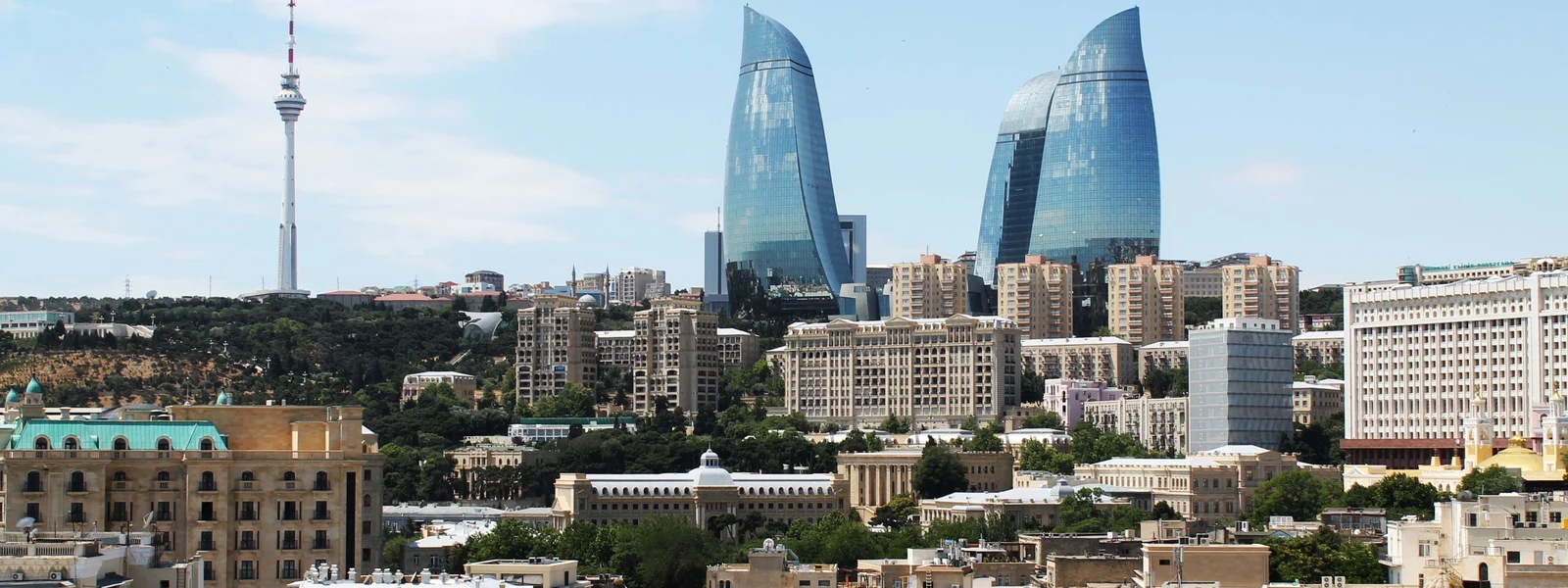
Beyond Baku's glittering modernism, Azerbaijan's real soul lives in places like Sheki and Quba. Sheki is the historic silk road city of the Kura River valley -- its 18th-century Khan's Palace, covered bazaar, and traditional Shebeke stained glass workshops draw visitors seeking genuine Azerbaijani culture rather than oil-funded skyscrapers. Quba, to the northeast, is famous for apple orchards, the nearby Jewish village of Qirmizi Qasaba, and access to the Greater Caucasus highlands. Both destinations require a road trip from Baku and, crucially, have different connectivity profiles from the capital.
Getting There: Coverage on the Road
Baku to Sheki (approximately 350 km, 4-5 hours)
The main route from Baku to Sheki follows the M1 highway west toward Ganja, then turns north at Yevlakh toward the Kish valley and Sheki. The Baku-Ganja-Yevlakh section is a major arterial road with solid 4G LTE coverage throughout from Azercell and Bakcell -- you can navigate, stream music, and take calls comfortably during this stretch. As the road climbs from Yevlakh toward Sheki, the terrain becomes more varied. Coverage remains mostly 4G through the foothills but with occasional brief 3G patches in gorge sections. By the time you reach Sheki's outskirts, coverage is back to solid 4G.
Baku to Quba (approximately 170 km, 2.5-3 hours)
The route north from Baku follows the Caspian coast initially before turning into the foothills. Coverage is 4G for most of this journey, including the approach to Quba city. The road is well-traveled and infrastructure-supported. Azercell has particularly good reach on this northern corridor -- travelers have noted that switching manual network selection to Azercell specifically (rather than automatic) can improve consistency on this route.
Sheki: Town Center and Main Sights
Sheki's historic core -- the Khan's Palace, the caravanserai (one of the best-preserved in the Caucasus, now a hotel), the old bazaar -- has reliable 4G LTE from Azercell and Bakcell. Navigation apps work for walking the winding streets. Upload speeds are adequate for photo sharing and Instagram stories, though slower than Baku's urban speeds -- expect 10-25 Mbps rather than 40-60 Mbps. WhatsApp and Telegram calls work cleanly.
The caravanserai itself, a large 18th-century stone trading post, has reasonable signal in its courtyard and surrounding areas. If your accommodations are within or adjacent to the historic center, you will have workable connectivity throughout your stay.
Kish Village and Surrounding Area
The ancient village of Kish, 5 km north of Sheki town and home to one of the oldest Christian churches in the Caucasus (dating to the 1st-2nd century AD), sits at a modest elevation above the valley. 4G coverage exists in the village itself, though speeds are more variable than in central Sheki. A brief signal gap occasionally appears on the road between Sheki and Kish -- this is normal and resolves within seconds as you move.
Higher Altitude Villages Near Sheki
If you venture into villages above Sheki -- places like Bash Layski or Bash Goynyuk at elevations approaching 1,500+ meters -- cellular coverage becomes patchy. Azercell reaches further than Bakcell at altitude in this region, but even Azercell has gaps in the highest inhabited areas near the Georgian border. For hiking or village exploration above 1,200 meters, download offline maps over hotel Wi-Fi the night before. Do not rely on real-time navigation in these areas.
Quba: Town and Immediate Surroundings
Quba city has good 4G coverage from all three operators. The main bazaar, the apple orchards on the town's outskirts, and the road south to Qirmizi Qasaba (the all-Jewish village, approximately 5 km from Quba) are covered. Qirmizi Qasaba itself has mobile signal at the town level -- an important note for travelers visiting this unique cultural site who may want to post or communicate during their visit.
Xinaliq: The High Village
Xinaliq is one of the highest permanently inhabited settlements in the entire Caucasus range, at approximately 2,350 meters above sea level in the mountains north of Quba. Reaching it requires a winding mountain road of about 55 km from Quba, taking 2-3 hours. Mobile coverage exists in Xinaliq itself -- Azercell's signal reportedly reaches the village, though it can be 3G rather than 4G -- but large sections of the approach road through the canyon have poor or no signal. Download offline maps for the full route before leaving Quba. The drive itself is spectacular; the connectivity gaps are an acceptable trade-off for one of the Caucasus's most dramatic mountain journeys.
Practical Tips for Regional Travel
Based on the coverage landscape in northern Azerbaijan, these habits will prevent connectivity frustration:
- Download offline maps before leaving Baku for your entire itinerary -- Google Maps offline works excellently in areas without signal.
- Manually select Azercell in your phone's network settings (Settings > Mobile Data > Network Selection > Manual) if you experience coverage issues on secondary operators. Azercell's rural footprint is wider than Bakcell and Nar in these northern regions. Switch back to automatic after returning to Baku.
- Communicate your itinerary with your accommodation ahead of time via Telegram or WhatsApp before entering low-coverage areas, particularly if you plan to arrive at irregular hours.
- Charge devices in your hotel before mountain day trips -- searching for signal drains battery faster than a connected device with strong signal.
What Works Reliably Everywhere
Even in areas with only 3G coverage (common above 1,000 m in northern Azerbaijan), these use cases remain functional: WhatsApp text messaging, Telegram messaging, phone calls over cellular, basic Google Maps navigation (with downloaded offline data), and weather app updates. What degrades noticeably at 3G: Instagram/social media browsing, YouTube, video calls, and large file uploads. Plan your social media posting for evenings back at the hotel on a decent 4G or Wi-Fi connection, and use road time for offline content (downloaded podcasts, music, saved articles). This is the practical rhythm for any regional travel in the South Caucasus.
Apps to Download Before Leaving Baku for the North
Before departing Baku for Sheki or Quba, a standard offline preparation routine makes your regional travel significantly smoother. In Google Maps, search "Sheki" and download the offline map for the Sheki-Oguz area; repeat for "Quba" to get the northern coverage zone. In Maps.me, download the full Azerbaijan offline pack (covers the entire country including all mountain areas at high detail). If you use Spotify, download your playlists while on hotel Wi-Fi -- the 5-6 hour round trip to Sheki has both strong 4G stretches (where streaming works) and occasional signal gaps (where downloaded content plays without interruption).
Download the weather app data for your destinations -- mountain weather in the Caucasus can change quickly, and having an offline forecast cached can influence decisions about which day to attempt the higher-altitude excursions. Windy.com is particularly good for mountain weather in the Caucasus and works on your eSIM connection throughout the lowland sections of your journey.
Finding Accommodation in Sheki and Quba
Booking accommodation in Sheki and Quba is straightforward on Booking.com or Airbnb, both of which work on your eSIM connection. Sheki's caravanserai -- the Sheki Caravanserai Hotel, a restored 18th-century trading post right in the historic center -- is one of the most atmospheric accommodation options in the entire Caucasus and books up well in advance during summer. Search and reserve before arriving in Azerbaijan. In Quba, guesthouse options are more numerous and less likely to be full with short notice, though summer weekends can be busy with domestic Azerbaijani tourists.
Communication with guesthouses in both towns often happens via WhatsApp or Telegram rather than email -- have both apps ready. Some smaller guesthouses respond more reliably to Telegram than to Booking.com messaging, particularly in Quba.
Regional Transport and Connectivity During Transit
Getting between Baku and Sheki or Quba typically involves a private taxi (negotiated in Baku), a marshrutka (shared minibus from Baku's Avtovagzal station), or a rental car. During the journey, your eSIM provides navigation throughout the lowland sections and most of the foothills. Download the route offline before departure so that any high-altitude signal gaps -- typically lasting 5-15 minutes on the mountain approaches -- do not leave you without navigation at critical junctions. The offline maps continue to track your GPS position even without a data connection, so navigation remains accurate even when the mobile data indicator disappears.
Local Currency and Connectivity at Markets
Sheki's covered bazaar and Quba's market areas are cash-oriented environments. ATMs exist in both town centers -- check their locations on Google Maps before arriving and withdraw what you need while you have strong 4G. In the bazaar itself, mobile signal is present but can fluctuate inside covered sections of the market due to the roof construction. Payment at market stalls is cash-only; your eSIM and digital payment apps are irrelevant for market shopping. Keep your phone for navigation and communication tasks and bring sufficient AZN cash for purchases.
Safety and Communication in Remote Areas
For travelers venturing beyond Sheki and Quba into higher mountain terrain -- whether hiking trails near Ilisu or the approach to Xinaliq -- communication planning is important. Azerbaijan is generally a safe country for tourists, and mountain trails near these northern destinations are not particularly remote by global standards. However, the combination of altitude, narrow roads, and variable mobile coverage means basic safety precautions are appropriate. Share your itinerary with someone at home before entering low-coverage areas, carry a power bank for your phone, and download emergency contact information for local hospitals and the nearest embassies offline. These precautions take ten minutes and significantly reduce risk in the unlikely event of a problem in a connectivity gap.
Making the Most of Connectivity in the North
The pattern for successful connectivity across Sheki, Quba, and the northern Caucasus foothills is consistent: prepare offline resources in Baku, use your eSIM actively in town centers and on main roads, accept gracefully that mountain villages above a certain elevation return you to an earlier era of travel where the next view matters more than the upload speed. This rhythm -- connected in civilization, offline in wilderness -- is precisely what makes the Caucasus rewarding for travelers tired of destinations that are merely extensions of home. Your eSIM keeps you connected where it matters and lets the mountains do the rest.
Northern Azerbaijan's most enduring appeal -- its unchanged Silk Road character, mountain-village architecture, and traditional crafts culture -- is also what makes its connectivity profile distinctive. The places that have preserved their character across centuries have naturally developed outside the infrastructure corridors that carry 4G signal. Embrace the offline intervals as part of the experience, prepare adequately for navigating them, and let the genuine remoteness of Xinaliq or the cool air above Sheki remind you why you chose the Caucasus over a more predictable destination. Your eSIM is a tool; these landscapes are the destination.
FAQ
What should travelers know about baku to sheki (approximately 350 km, 4-5 hours) in Azerbaijan?
The main route from Baku to Sheki follows the M1 highway west toward Ganja, then turns north at Yevlakh toward the Kish valley and Sheki. The Baku-Ganja-Yevlakh section is a major arterial road with solid 4G LTE coverage throughout from Azercell and Bakcell -- you can navigate, stream music, and take calls comfortably during this stretch. As the road climbs from Yevlakh toward Sheki, the terrain becomes more varied. Coverage remains mostly 4G through the foothills but with occasional brief 3G patches in gorge sections. By the time you reach Sheki's outskirts, coverage is back to solid 4G.
What should travelers know about apps to download before leaving baku for the north in Azerbaijan?
Before departing Baku for Sheki or Quba, a standard offline preparation routine makes your regional travel significantly smoother. In Google Maps, search "Sheki" and download the offline map for the Sheki-Oguz area; repeat for "Quba" to get the northern coverage zone. In Maps.me, download the full Azerbaijan offline pack (covers the entire country including all mountain areas at high detail). If you use Spotify, download your playlists while on hotel Wi-Fi -- the 5-6 hour round trip to Sheki has both strong 4G stretches (where streaming works) and occasional signal gaps (where downloaded content plays without interruption).
What should travelers know about baku to quba (approximately 170 km, 2.5-3 hours) in Azerbaijan?
The route north from Baku follows the Caspian coast initially before turning into the foothills. Coverage is 4G for most of this journey, including the approach to Quba city. The road is well-traveled and infrastructure-supported. Azercell has particularly good reach on this northern corridor -- travelers have noted that switching manual network selection to Azercell specifically (rather than automatic) can improve consistency on this route.
Why Sheki and Quba Attract Travelers?
Beyond Baku's glittering modernism, Azerbaijan's real soul lives in places like Sheki and Quba. Sheki is the historic silk road city of the Kura River valley -- its 18th-century Khan's Palace, covered bazaar, and traditional Shebeke stained glass workshops draw visitors seeking genuine Azerbaijani culture rather than oil-funded skyscrapers. Quba, to the northeast, is famous for apple orchards, the nearby Jewish village of Qirmizi Qasaba, and access to the Greater Caucasus highlands. Both destinations require a road trip from Baku and, crucially, have different connectivity profiles from the capital.
Can I cancel an eSIM purchase if I do not use it?
Yes. An unused eSIM can be cancelled within 30 days as long as it has not been used on the destination network. Once it has connected and been used, this condition no longer applies.