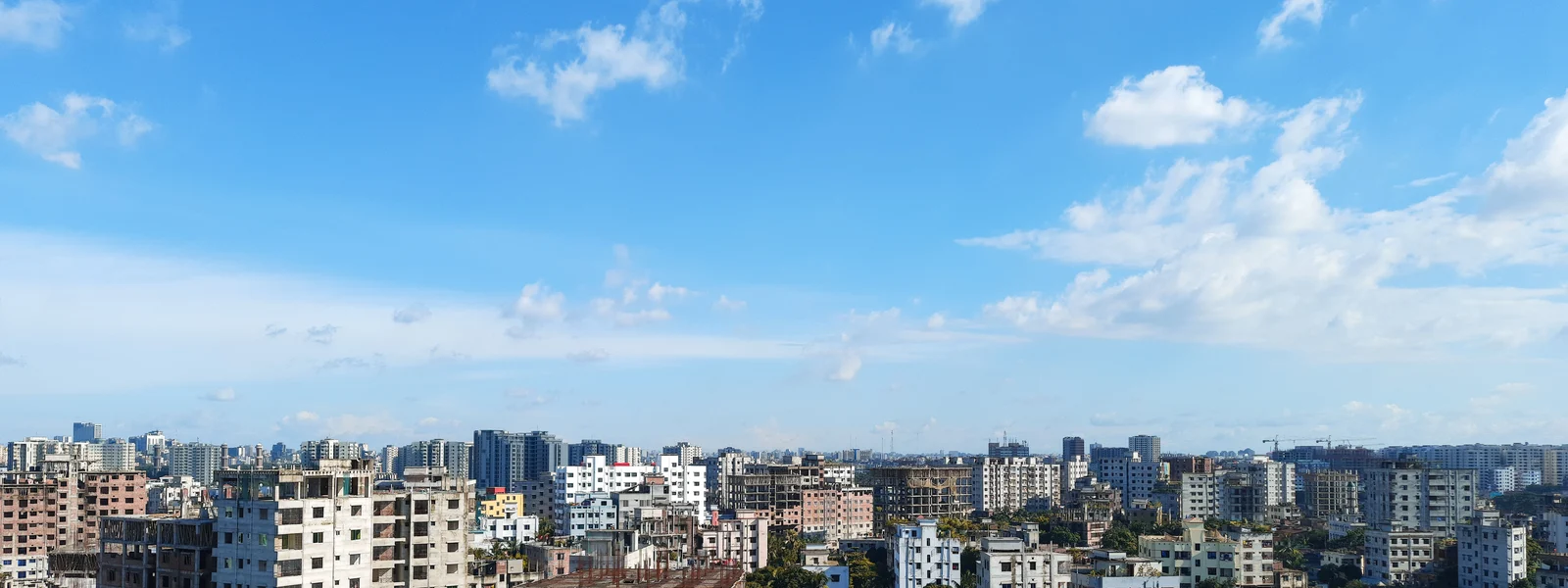
Digital Nomad in Bangladesh 2026: Working Remotely from Dhaka
Bangladesh is not among the first countries that enter the conversation when digital nomads discuss their Asian base options. But a growing community of remote workers, primarily researchers, development sector professionals, and location-independent workers with existing Bangladesh connections, has been using Dhaka as a working base and finding it more functional than its reputation suggests. The city is intense, and not for travellers who prioritise comfort above stimulation. But the internet infrastructure is solid, the cost of living is among the lowest in Asia, and the cultural density of one of the world's most ancient river civilisations provides intellectual engagement that generic nomad hub cafes rarely match.
Internet Infrastructure in Dhaka
Dhaka's fixed internet infrastructure has improved substantially over the past decade. Fibre broadband is available in commercial and middle-class residential districts, with providers including BDCOM, Link3, and Fiber@Home offering residential packages with speeds of 20 to 100 Mbps at costs lower than comparable speeds in most South Asian capitals. Hotels in the Gulshan and Dhanmondi tourist zones connect on business-grade broadband with speeds adequate for video conferencing and cloud work. Power outages have reduced significantly since the completion of multiple power generation projects, though UPS backup for laptops remains standard equipment for anyone working from an apartment without generator backup.
Grameenphone 4G in Gulshan and Banani provides 35 to 60 Mbps for video conferencing and cloud work from cafes and during between-location movement. The combination of fibre hotel WiFi for primary work and Grameenphone 4G for supplementary and mobile use covers all standard remote work scenarios in Dhaka without meaningful limitation.
Coworking Spaces in Dhaka
Dhaka's coworking scene has developed over the past five years, driven by the growth of Bangladesh's technology sector, the startup ecosystem around Dhaka's engineering universities, and the significant NGO and development sector presence creating demand for international-standard workspace. The most relevant coworking spaces for international remote workers are concentrated in Gulshan and Banani. BD Hub in Gulshan provides dedicated desks, meeting rooms, and fibre WiFi at day pass rates of approximately BDT 500 to 800 (USD 4.50 to 7.25) and monthly memberships around BDT 8,000 to 15,000 (USD 73 to 135). Impact Hub Dhaka, connected to the global Impact Hub network, serves the social enterprise and development sector community with similar facilities.
Cafe working is viable in the Gulshan-2 and Banani areas, where multiple coffee shops offer laptop-friendly environments with reliable WiFi. The concentration of development organisation offices creates a social environment where international-style cafe working is normalised. The Bangladesh heat, reaching 35 to 40 degrees Celsius from April through June, makes air-conditioned cafe environments not just comfortable but practically necessary for afternoon work sessions during the hot season.
eSIM Strategy for Dhaka Nomads
The optimal eSIM strategy treats mobile data as supplementary to the coworking or hotel fibre WiFi that handles primary work. A 20GB monthly Grameenphone-based plan covers commuting between accommodation and coworking, cafe work sessions on venues with slow WiFi, video calls when mobile 4G provides a more private or reliable connection than shared cafe WiFi, and weekend travel to Cox's Bazar or other destinations where mobile data is the primary connectivity option. At Dhaka coworking speeds, heavy work tasks route through the fixed connection, while mobile data covers the 200 to 500MB typical of a commuting day.
| Work Pattern | Primary Connection | Mobile Data Role | Monthly Plan |
|---|---|---|---|
| Coworking-based (daily) | Coworking fibre | Commute and cafe overflow | 15-20GB |
| Hotel-based (good WiFi) | Hotel WiFi | Backup and movement | 10-15GB |
| Apartment (no fixed internet) | Mobile data primary | Full workday use | 40GB or unlimited |
| Mixed Dhaka plus travel | Coworking plus mobile | Primary on travel days | 20-25GB |
Living Costs for Dhaka Nomads
The financial context for Dhaka as a nomad base is among the most attractive in Asia for anyone who can manage the city's intensity. A comfortable guesthouse room in Gulshan or Dhanmondi costs USD 25 to 50 per night, with monthly rates for a furnished apartment running USD 400 to 800. Excellent Bangladeshi rice and curry meals cost BDT 80 to 200 (USD 0.70 to 1.80). International cuisine in Gulshan and Banani runs USD 4 to 12 per meal. Monthly total costs for a comfortable Dhaka nomad lifestyle run USD 700 to 1,400 including accommodation, food, coworking, and connectivity, placing it among the most affordable viable working bases in Asia.
Video Call Quality in Dhaka
Video call quality in Dhaka on both fixed WiFi and Grameenphone 4G is reliable for professional use. Zoom at 720p, Google Meet, and Microsoft Teams all perform without meaningful degradation on coworking fibre and on Grameenphone 4G in Gulshan and Banani. The practical risk is WiFi congestion in busy cafe environments during lunch hours, where shared connections degrade below video call quality thresholds. Using Grameenphone 4G directly for important calls eliminates this risk. The Dhaka time zone of UTC plus six hours creates a communication window with Western Europe from 2pm to 6pm Dhaka time reaching the European afternoon, and with the US East Coast from 8pm to 11pm Dhaka time reaching the New York morning. Many Dhaka nomads work partially in the evening to overlap with Western clients and use mornings for asynchronous tasks and local exploration.
Community and Social Life
The expatriate community in Dhaka is substantial, driven by the large NGO and development sector presence, diplomatic missions, and the international business community serving Bangladesh's significant garment and textile industry. The Dhaka Expats Facebook group is the primary digital hub for this community, active with housing listings, local recommendations, and practical information sharing. For a remote worker arriving without a pre-existing network, this community provides the fastest route to functioning comfortably in a city that rewards local knowledge more than most Asian nomad destinations. Regular expat meetups, sports communities, and informal networks allow new arrivals to quickly access practical guidance that no guidebook or review site fully captures.
Banking and Financial Access
ATMs from NIC Asia, Nabil Bank, and Standard Chartered are distributed throughout Thamel, Patan, and Lazimpat, accepting international Visa and Mastercard with withdrawal limits of approximately BDT 20,000 to 40,000 per transaction (USD 180 to 365). Foreign card fees apply, and the Wise multi-currency card consistently provides the best BDT exchange rate with the lowest per-transaction fees. For income receipt and international transfers, maintaining a home-country bank account with international wire capability and using Wise for BDT conversion is the standard approach. The Dhaka WiFi and Grameenphone 4G connectivity needed to manage these financial tools is reliably available across the city's commercial districts.
Dhaka Apartment Internet: Options and Speeds
For nomads staying in Dhaka apartments for one month or longer, arranging fixed internet access provides both speed and cost advantages over relying entirely on mobile data. BDCOM and Link3 are the dominant consumer fibre providers in Gulshan, Banani, and Dhanmondi, offering 20 to 100 Mbps plans at BDT 700 to 2,500 (USD 6.50 to 23) per month. Installation typically takes two to five business days and requires a local contact or landlord who can facilitate the connection contract. For nomads arriving for a one to two month stay in a furnished apartment, asking the landlord whether the apartment has existing internet service or arranging installation in the first week is standard practice. Month-to-month service is generally available without long-term contract commitment. The combination of 50 Mbps apartment fibre at BDT 1,200 per month (USD 11) and a 15GB Grameenphone eSIM for mobile and supplement use represents a complete connectivity stack for Dhaka nomad life at costs dramatically below equivalent setups in Bangkok, Bali, or Lisbon.
Dhaka as a Gateway to Regional Travel
One underappreciated advantage of Dhaka as a nomad base is its position as a gateway to broader regional travel during breaks from work. Direct flights from Dhaka connect to Kolkata in 45 minutes, Bangkok in three hours, Kuala Lumpur in three and a half hours, and Singapore in four hours. Domestic flights reach Cox's Bazar, Chittagong, and Sylhet in 45 minutes each. The relatively low cost of living in Dhaka during work periods subsidises travel to higher-cost regional destinations during breaks, allowing a combined Dhaka nomad base and regional exploration strategy that produces lower total monthly costs than basing in the regional destinations themselves. The eSIM strategy for this pattern involves a Bangladesh plan with adequate data for Dhaka work periods, supplemented by separate country plans for India, Thailand, Malaysia, or Singapore when those destinations are visited. Providers who offer regional multi-country plans covering Bangladesh and neighbouring destinations provide the simplest solution for this travel pattern.
Health and Medical Access in Dhaka
International-standard medical care in Dhaka is available at several private hospitals in the Gulshan and Banani areas, including United Hospital, Square Hospital, and Labaid Hospital, all of which have English-speaking doctors and accept international health insurance with appropriate documentation. The connectivity needed to access these facilities, including locating the nearest appropriate hospital during a medical situation, communicating with home country insurance providers, and reaching the relevant embassy or consulate for emergency travel documentation if needed, is reliably available throughout the Gulshan and Banani areas where most international visitors and nomads are based. Having the addresses and WhatsApp numbers of these hospitals saved locally in the phone, downloadable from their websites on Dhaka WiFi during the first day, ensures that medical access is a one-tap navigation rather than a data-dependent search during a stressful situation.
Bangladesh as a nomad base is a contrarian choice that makes more practical sense than the global nomad community's current attention to it suggests. The connectivity infrastructure is solid, the cost is genuinely low, and Dhaka's intensity produces a stimulating working environment for those who engage with rather than resist the city's character. The eSIM strategy described here, treating mobile data as coworking fibre supplementation rather than primary connection, works effectively with any reputable Grameenphone-based provider at the plan sizes recommended for each usage pattern. Arrive with expectations calibrated to the city rather than to a polished nomad hub, and Dhaka delivers a working base that is more capable than its reputation suggests.
Time Zone and Scheduling for Dhaka-Based Nomads
Bangladesh Standard Time at UTC plus six positions Dhaka in a useful midpoint for nomads with clients or employers in both Western Europe and Southeast Asia. The European business day from 9am to 6pm CET corresponds to 1pm to 10pm Dhaka time, meaning European meetings fall in Dhaka's afternoon and evening hours, leaving Dhaka mornings free for asynchronous work, local exploration, and self-directed tasks. The Singapore and Kuala Lumpur time zone, two hours ahead of Dhaka at UTC plus eight, means Southeast Asia business hours from 9am to 6pm SGT correspond to 7am to 4pm Dhaka time, overlapping comfortably with standard Dhaka working hours. Australian Eastern Standard Time at UTC plus ten provides a similar early afternoon overlap for Australia-facing nomads. The only major market that creates scheduling difficulty from Dhaka is the US East Coast, where the 10.5 hour difference means US business hours from 9am to 6pm EST correspond to 7:30pm to 4:30am Dhaka time, requiring either late evening or very early morning sessions for live US client calls. Most Dhaka nomads serving US clients work asynchronously with live overlap limited to a single late evening session per week rather than treating Dhaka as a viable base for continuous US market coverage.
Get Your Dhaka Nomad eSIM
Compare 20GB and unlimited Bangladesh plans for remote workers in Dhaka.
FAQ
Is internet reliable for remote work in Dhaka?
Yes. Coworking spaces in Gulshan and Banani have fibre WiFi for video conferencing. Grameenphone 4G provides 35 to 60 Mbps supplementary connectivity. Power cuts are less frequent than a decade ago but a laptop UPS remains standard equipment.
How much does it cost to live as a nomad in Dhaka?
USD 700 to 1,400 per month for a comfortable lifestyle including accommodation in Gulshan or Dhanmondi, meals, coworking, and connectivity. Among the lowest costs for a viable working base in Asia.
What coworking spaces are in Dhaka?
BD Hub in Gulshan and Impact Hub Dhaka are the most internationally oriented. Day passes run USD 4.50 to 7.25, monthly memberships USD 73 to 135.
Is Bangladesh safe for remote workers?
Dhaka's commercial and diplomatic districts including Gulshan and Banani are safe for international visitors and residents. General travel awareness and avoiding political gatherings during sensitive periods are the standard precautions.