Hong Kong 5G coverage for travelers 2026
Hong Kong has four competing operators delivering 5G in one of the world's most dense urban environments. CMHK leads on speed at 177 Mbps median 5G download, 3HK leads on coverage at 99% population including all road tunnels. For a traveler, any carrier delivers excellent connectivity throughout the urban core. The interesting coverage questions are about tunnels, hiking trails, and the ferry crossings to outer islands.
The four operators and what they deliver
Hong Kong's mobile market is unique in Asia for its combination of extreme urban density, fierce operator competition, and a regulatory environment that has driven consistently high investment in network quality. CMHK leads on download speed with 177.96 Mbps median on 5G. SmarTone ranks second at 156.36 Mbps. csl delivers 132.87 Mbps. 3HK leads on coverage depth at 99% 5G population coverage including all cross-harbour tunnels -- a milestone achieved in 2025. The practical implication for travelers: CMHK gives the fastest speeds, 3HK gives the most consistent coverage in unusual locations. For standard tourist use, any of the four carriers delivers performance that exceeds what any tourist application requires.
| Operator | 5G median speed | 5G coverage | Best for travelers |
|---|---|---|---|
| CMHK | 177.96 Mbps | High | Speed priority; mainland China access |
| SmarTone | 156.36 Mbps | High | Indoor penetration; shopping centers |
| csl/HKT | 132.87 Mbps | High | Premium service; business districts |
| 3HK | ~100 Mbps | 99% population | Coverage consistency; all tunnels |
Urban coverage: Central, Kowloon, and the tourist core
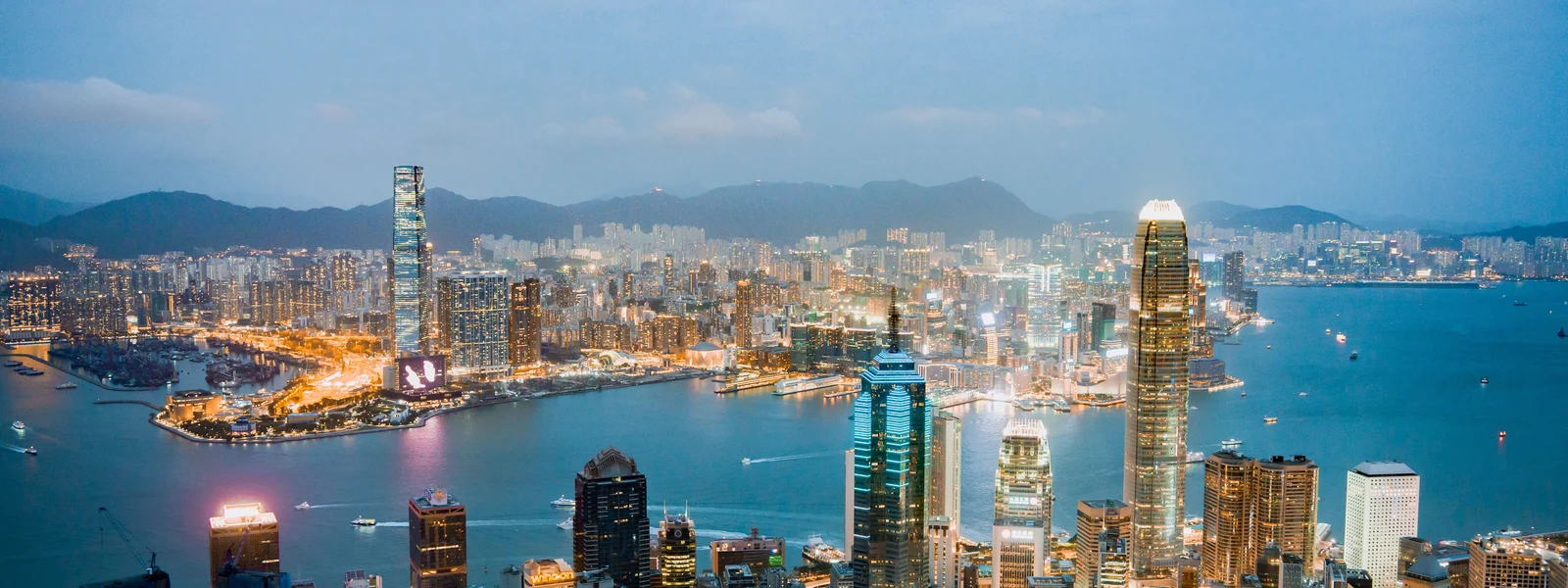
Hong Kong's urban core has dense 5G infrastructure from all four operators. The financial district in Central has some of the highest cell tower density in Asia. Victoria Harbour waterfront on both sides has excellent signal at open-air viewing areas, making live streaming from one of the world's most photographed skylines technically straightforward. The Temple Street Night Market in Kowloon, the Ladies Market in Mong Kok, and the streets around Jordan and Yau Ma Tei all have strong coverage. Shopping malls -- Times Square in Causeway Bay, Pacific Place in Admiralty, IFC Mall in Central -- have 5G extending from lobby level through basement food courts, reflecting deliberate investment by SmarTone and 3HK for the dense indoor population that uses malls as pedestrian infrastructure connecting MTR exits to street destinations.
MTR: full coverage in every tunnel
The MTR's mobile coverage is a point of deliberate investment in Hong Kong's network infrastructure. All MTR platforms, concourses, and tunnel sections between stations have 4G coverage from repeater systems throughout the network. 3HK has extended 5G into tunnel sections on select lines. The practical experience is continuous data throughout any MTR journey -- maps loading, messages sending, and social media updating without the tunnel-gap interruptions that affect subway systems in Bangkok, Manila, or even parts of Seoul. The Airport Express from HKIA to Hong Kong Station runs 24 minutes through subsea and underground tunnel sections with coverage maintained throughout by repeaters.
Cross-harbour tunnels: the 3HK 5G distinction
Three road tunnels connect Hong Kong Island to Kowloon. 3HK extended 5G to all three -- the Cross-Harbour Tunnel, Western Harbour Tunnel, and Eastern Harbour Crossing -- in 2025, making it the only operator with 5G throughout the tunnel journey. CMHK, SmarTone, and csl maintain 4G in the tunnels. For a traveler in a taxi or bus crossing the harbour, 3HK provides a perceptibly better experience though the practical difference for a 5-minute tunnel crossing is primarily download speed rather than reliability. All four operators provide usable data throughout the crossing on either 4G or 5G.
New Territories hiking trails and rural coverage
| Trail / area | Coverage | Notes |
|---|---|---|
| Dragon's Back (Shek O) | Good 4G throughout | Popular ridge trail; line-of-sight to HK Island towers |
| MacLehose Trail Stage 1-2 (Sai Kung coast) | Good 4G | Coastal sections covered; inland sections variable |
| MacLehose Trail Stage 8-10 (remote west) | Variable to minimal | Remote western New Territories; offline preparation required |
| Lion Rock ridge | Good 4G at summit | Exposed ridge with line-of-sight to multiple urban tower clusters |
| Lantau Peak / Ngong Ping | Good 4G at Ngong Ping; variable on trails | Cable car area fully covered; remote peak sections weak |
Outer islands: Cheung Chau, Lamma, and Peng Chau
Hong Kong's outer islands are accessible by Star Ferry and New World First Ferry from Central Pier. Each island has 4G coverage in the main village and settlement areas from towers serving the permanent resident population. Cheung Chau's main waterfront and seafood restaurant strip have strong 4G. Lamma Island's Yung Shue Wan fishing village has adequate coverage throughout the main settlement. The ferry crossings between Central Pier and the outer islands have coverage near both ports and variable signal in the open harbour water between them. For day trips to the outer islands, download offline maps before boarding the ferry. Island interiors and hiking trails away from settlements have weaker coverage on all operators.
What to expect at specific tourist locations
Victoria Peak (The Peak) at 552 meters has strong signal from multiple directions -- towers on both the Hong Kong Island urban side and the Kowloon side create overlapping coverage at the exposed summit. The Peak Tram funicular has coverage throughout its 8-minute ascent via repeaters in the tunnel. The Avenue of Stars waterfront promenade in Tsim Sha Tsui has excellent coverage from the dense urban towers on both sides of the harbour. The Ladies Market on Tung Choi Street in Mong Kok has strong signal throughout. Stanley Market on Hong Kong Island's south coast has good 4G coverage at the market and beach areas. Repulse Bay beach on the south coast has strong coverage from nearby residential towers. The coverage picture across tourist locations is consistently excellent -- Hong Kong's unusual combination of dense urban investment and compact territory means the blind spots are genuinely rare and confined to the most remote hiking territory.
Speed in context: what Hong Kong's 5G means for a tourist
The speed metrics for Hong Kong's operators -- CMHK at 177 Mbps, SmarTone at 156 Mbps, csl at 132 Mbps, 3HK at approximately 100 Mbps -- are extraordinary by global standards but require context for what they mean in practice. A tourist navigating Mong Kok, posting to Instagram from The Peak, or video calling home from a Star Ferry does not need 177 Mbps. They need enough throughput to load map tiles in under a second, upload a photo in under five seconds, and make a video call without buffering. All four operators provide this throughout Hong Kong's urban core without exception. The speed figures matter primarily for specific high-bandwidth use cases: downloading large offline map tiles for New Territories hiking before leaving a hotel (done in seconds on 5G, done in tens of seconds on 4G), video streaming at 4K quality, or laptop tethering for remote work during a nomad stay. For these use cases, CMHK's speed lead is perceptible. For standard tourist use, any carrier delivers a genuinely excellent experience.
Coverage gaps: the specific locations where Hong Kong's network is not perfect
Acknowledging Hong Kong's coverage gaps honestly is important even when the overall picture is exceptional. The most significant gaps for travelers are on the remote stages of the MacLehose Trail in the western New Territories -- stages 8 through 10 pass through genuinely wild country park terrain away from residential infrastructure, and coverage becomes weak or absent in the valley sections between ridges. The Lantau Peak summit at 934 meters has coverage from its exposed position but is variable depending on atmospheric conditions and which slope you are approaching from. The sea crossing to Macau -- approximately 60 kilometers across the Pearl River Delta -- has absent coverage for the middle portion of the one-hour ferry journey. These gaps are specific, predictable, and manageable with offline preparation. They are not representative of the general Hong Kong experience, which is one of the world's most consistently covered urban territories.
Plans for Hong Kong
Hong Kong eSIM plans
Prices in USD. Instant QR activation. Pick your data, land connected.
FAQ
Which is the best 5G operator in Hong Kong?
CMHK for fastest speeds at 177 Mbps median 5G download. 3HK for widest coverage including all road tunnels and 99% population coverage. SmarTone for strong indoor coverage in shopping centers. csl for premium business district performance. For standard tourist use, any of the four delivers excellent connectivity throughout Hong Kong.
Does the MTR have mobile coverage in tunnels?
Yes, throughout the entire network. All MTR platforms, concourses, and tunnel sections between stations have 4G coverage from repeaters. 3HK provides 5G in select tunnel sections. Coverage never drops on any MTR journey -- continuous from first station to last.
Is there signal in the cross-harbour tunnels?
Yes. 3HK provides 5G in all three cross-harbour tunnels as of 2025 -- the Cross-Harbour Tunnel, Western Harbour Tunnel, and Eastern Harbour Crossing. CMHK, SmarTone, and csl maintain 4G in the tunnels. Coverage is continuous throughout the crossing.
Does eSIM work on Hong Kong hiking trails?
On popular trails like Dragon's Back and MacLehose Stage 1-2 near Sai Kung, yes -- good 4G from adjacent residential area towers. Remote western MacLehose stages and certain Lantau trails have variable to weak coverage. Download offline trail maps for any remote hiking excursion.
What coverage is there on ferries to the outer islands?
Coverage near both departure and arrival ports, variable in open harbour between. Main village areas on Cheung Chau, Lamma, and Peng Chau all have adequate 4G. Remote island interiors and trails have weaker signal. Download island maps before boarding the ferry at Central Pier.