eSIM for Hong Kong Island and Kowloon 2026
Hong Kong's tourist core divides across the harbour between Hong Kong Island (Central, Admiralty, Wan Chai, Causeway Bay) and Kowloon (Tsim Sha Tsui, Mong Kok, Jordan). Both sides have exceptional 5G coverage on all four operators. The Star Ferry, trams, and MTR connections are covered throughout. What follows is the detail that makes navigation seamless in one of the world's most vertical cities.
Hong Kong Island: Central to Causeway Bay
Hong Kong Island's northern coastline from Sheung Wan to Causeway Bay is the city's historical, commercial, and cultural spine. Central is the financial district -- gleaming towers, the HSBC and Standard Chartered headquarters, the Court of Final Appeal in the old French Mission building, and Lan Kwai Fong's bar district ascending the hillside. Admiralty connects Central to the government districts and Pacific Place. Wan Chai is the neighborhood of contradictions -- the Hong Kong Convention and Exhibition Centre, the Lockhart Road bar scene, old tong lau tenement buildings, and Johnston Road leading to the tram depot. Causeway Bay concentrates the highest shopping density on the island, centered on Times Square and Victoria Park. Coverage throughout this corridor is exceptional -- all four operators maintain dense 5G infrastructure, and the MTR running underneath the entire route (Island Line from Sheung Wan to Chai Wan) maintains coverage in its tunnels.
The historic trams running along the surface of the northern shore are covered throughout their route from Kennedy Town to Shau Kei Wan. Taking the tram from Wan Chai to Causeway Bay -- a leisurely double-decker journey through 19th-century street layouts -- with functioning data for map confirmation and social posting is characteristic of Hong Kong's connectivity standard. Old tong lau buildings in the narrow streets between Wan Chai's market area and the more modern zones have variable coverage at street level due to building density, but the main roads and tram route are consistently covered.
| District | Coverage | Notes |
|---|---|---|
| Central (IFC, Landmark) | Excellent 5G | Financial district; densest 5G coverage in Hong Kong |
| Admiralty / Pacific Place | Excellent 5G | Government and luxury retail; strong indoor coverage |
| Wan Chai (convention to old market) | Excellent 5G | Both new and old Wan Chai fully covered |
| Causeway Bay (Times Square area) | Excellent 5G | Times Square and Victoria Park surroundings strong |
| Victoria Peak (The Peak) | Strong 5G at summit | Line-of-sight to towers on both sides of harbour |
Victoria Peak: coverage at Hong Kong's most visited viewpoint
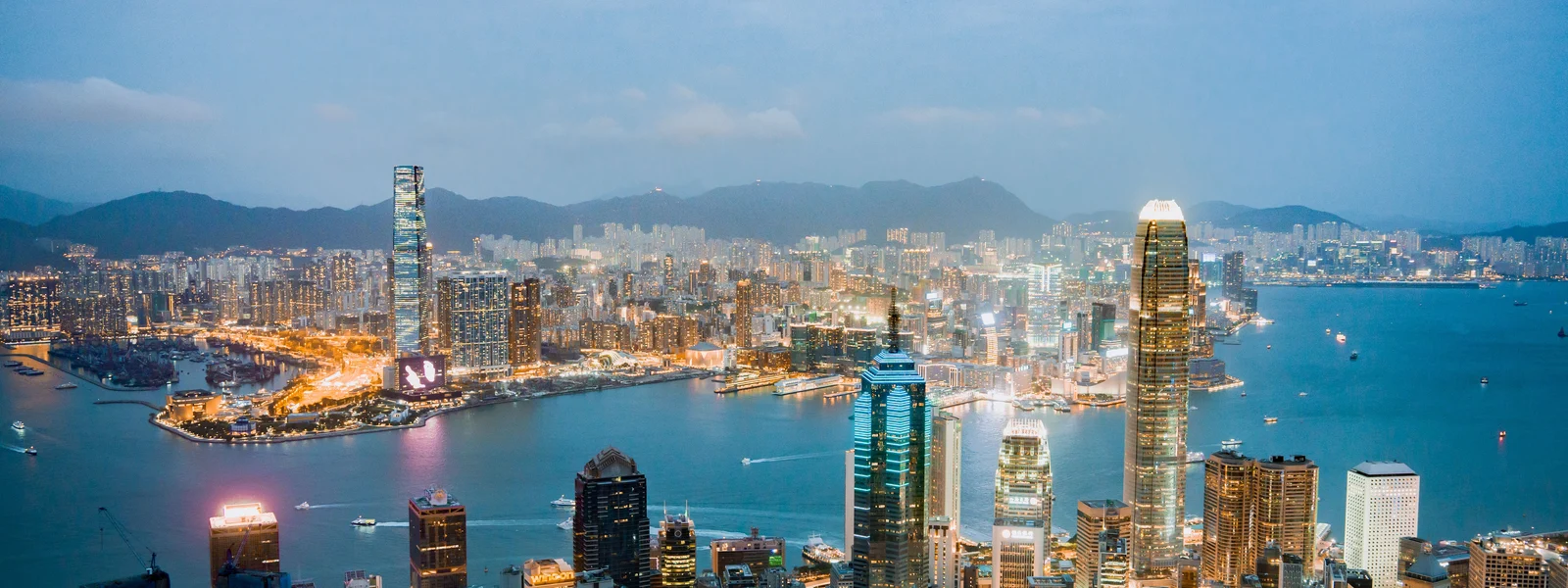
Victoria Peak at 552 meters is Hong Kong's most-visited tourist attraction. The Peak Tram funicular railway ascends from Garden Road in Central to the Peak Tower, and coverage is maintained throughout the 8-minute ascent by repeaters installed in the tram tunnel. At the summit, the combination of Hong Kong Island towers to the north and Kowloon towers visible across the harbour to the south creates overlapping coverage from multiple directions -- the result is strong 5G at one of the highest accessible points in the territory. The Peak Tower, Peak Galleria, and the Lugard Road circular walking route around the summit all have strong coverage. Live streaming from The Peak's harbour panorama is not just technically possible but routinely done by the thousands of visitors who gather at dusk for the skyline photography session that has become a defining Hong Kong experience.
Kowloon: the tourist core from TST to Mong Kok
Kowloon's tourist strip concentrates an extraordinary density of activity along the Nathan Road corridor from the southern Tsim Sha Tsui waterfront north through Jordan and Yau Ma Tei to Mong Kok. Tsim Sha Tsui's Avenue of Stars promenade along the Victoria Harbour waterfront is covered with strong signal from both the Kowloon towers behind it and line-of-sight to Hong Kong Island across the water. The Space Museum, Hong Kong Museum of Art, and InterContinental Hotel waterfront area are all fully covered. Temple Street Night Market operates in the evenings in Yau Ma Tei with full coverage throughout -- bargaining with jade vendors while checking prices online is standard behavior in this market. Mong Kok's extraordinary density of specialized shopping streets -- Ladies Market, sneaker street, electronics lanes, flower market, goldfish market -- are all covered throughout the main pedestrian areas.
Star Ferry: coverage on one of the world's iconic short journeys
The Star Ferry across Victoria Harbour -- 8 minutes, HKD 3.4 to 4.2, operated since 1888 -- is one of Hong Kong's defining experiences. Coverage is present throughout the crossing because both Victoria Harbour shores are close enough that cell towers on both sides provide overlapping coverage on the water. The Star Ferry decks are open, and both the Hong Kong Island and Kowloon shorelines remain visible for the entire crossing, meaning signal is maintained from multiple directions. Live posting from the Star Ferry's harbour crossing is genuinely possible rather than aspirational -- the view from the lower deck as the Kowloon skyline recedes and the Hong Kong Island towers approach is one of the most photographed perspectives in the city. Unlike ferry crossings in the Philippines or Cambodia where the open water creates genuine dead zones, the Star Ferry operates within Victoria Harbour's limited width and remains covered throughout.
Data consumption in Hong Kong's urban core
Hong Kong's compact urban core generates a specific data consumption pattern for tourists. Navigation overhead is lower than in sprawling Indian cities -- the MTR covers most tourist movements (payment via Octopus card, not data), and the street grids of Central and Tsim Sha Tsui are legible after brief orientation. Restaurant finding via OpenRice is moderately data-intensive when browsing with photos but settles once a destination is chosen. WhatsApp for hotel and booking communication is present but less operationally total than in India. Social media posting from photogenic locations -- The Peak, Star Ferry, Temple Street -- drives meaningful data use in concentrated bursts. Total daily consumption for an active Hong Kong tourist runs 1 to 2 GB, lower than Manila or Delhi, higher than Luang Prabang. A 5 GB plan covers a standard 4 to 5 day visit without monitoring or rationing.
The Mid-Levels escalator: coverage on the world's longest outdoor escalator
The Central-Mid-Levels Escalator is a 800-meter covered escalator and walkway system connecting Central's business district to the Mid-Levels residential neighborhoods above. It operates downhill from 6am to 10am and uphill from 10:20am to midnight. For travelers, the escalator provides a slow-moving transit through one of Hong Kong's most photogenic streetscapes -- the SoHo restaurant and bar area (south of Hollywood Road), the antique shops of Hollywood Road, and the heritage temples of Tai Kwai Tsz and Man Mo Temple are all accessible from the escalator system. Coverage throughout the entire escalator route is excellent from the dense urban tower infrastructure of the Mid-Levels. The escalator's covered nature does not affect signal -- coverage is from surrounding buildings rather than sky access. This makes it one of the few slow-transit experiences in Asia where continuous map browsing, restaurant checking, and social posting are straightforward throughout the journey.
Data for specific Kowloon experiences: Temple Street at night
Temple Street Night Market in Yau Ma Tei operates from approximately 4pm to midnight, though the peak activity is from 7pm onwards. The market concentrates fortune tellers, Cantonese opera performances, jade vendors, food stalls, and the compressed energy of Kowloon at night in a few hundred meters of Jordan Road and Temple Street. Coverage throughout the market is strong from the surrounding residential and commercial towers. For a traveler using data at Temple Street: Google Translate's camera function handles Cantonese text on signs, stall pricing, and menu items that are not translated for English speakers; Google Maps identifies the market's location within the broader Jordan neighborhood; WhatsApp facilitates the late-night accommodation communication that a night market visit often requires. The market's cash economy -- very little accepts cards -- means no payment app dependency, and the Octopus card is not useful for market stall transactions. Your eSIM serves orientation and translation rather than payment.
Plans for Hong Kong
Hong Kong eSIM plans
Prices in USD. Instant QR activation. Pick your data, land connected.
FAQ
What is the coverage like in Central and Tsim Sha Tsui?
Exceptional. All four operators maintain dense 5G in Hong Kong's financial district and Kowloon tourist core. Indoor coverage in office towers, shopping malls, and the MTR is comprehensive. Among the best-covered urban environments anywhere in Asia.
Does the Hong Kong tram have mobile coverage?
Yes. The trams on Hong Kong Island's northern shore have 4G and 5G coverage throughout their route from Kennedy Town to Shau Kei Wan, passing through Sheung Wan, Central, Wan Chai, and Causeway Bay. Continuous signal on the entire tram network.
Is there signal on the Peak Tram?
Yes. Repeaters in the Peak Tram tunnel maintain coverage throughout the 8-minute ascent. The summit has strong 5G from line-of-sight to towers on both sides of the harbour. Live streaming from The Peak is technically straightforward.
Does the Star Ferry have mobile coverage?
Yes, throughout most of the 8-minute crossing. Both harbour shores are close enough that towers on both sides provide overlapping coverage on the water. Real-time posting from the Star Ferry deck is feasible -- unusual for a ferry crossing in Asia.
How much data does a day in Hong Kong's tourist core use?
1 to 2 GB for standard tourist use. Lower than Manila or Delhi because the city is compact, the MTR is payment-independent via Octopus card, and navigation overhead is reduced. Hotel wifi handles evenings. A 5 GB plan covers a full Hong Kong visit comfortably.