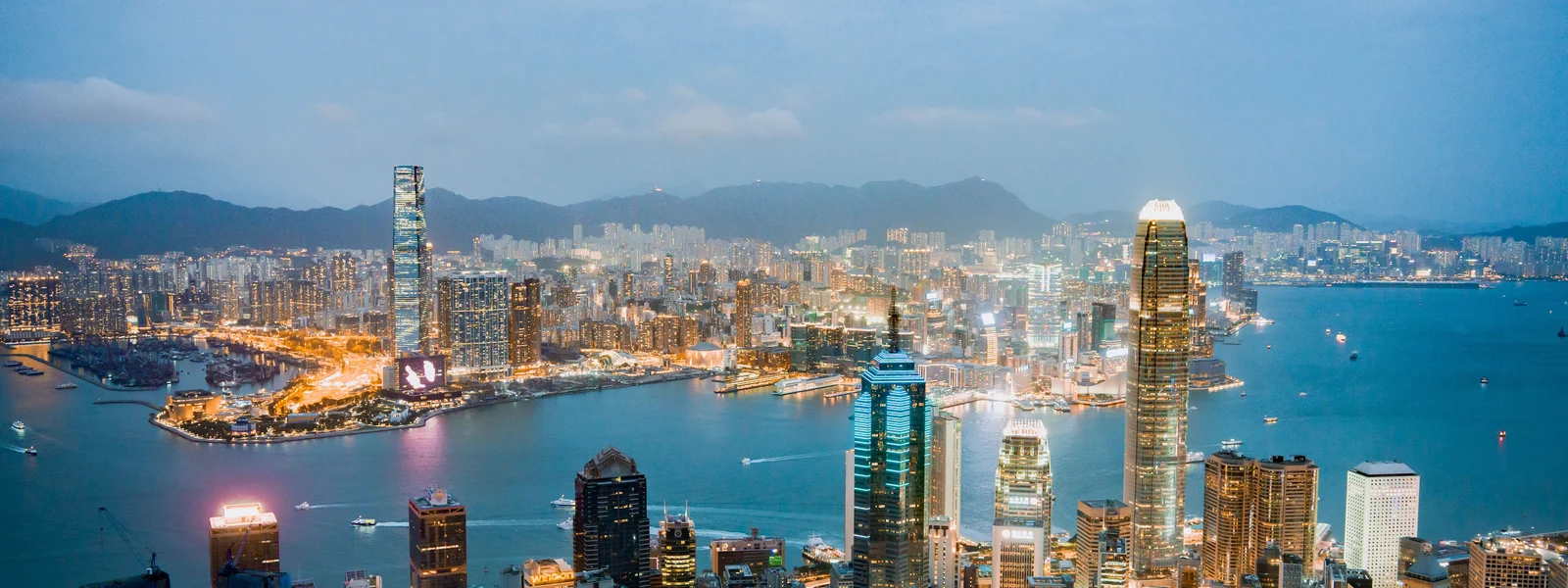
Digital nomad in Hong Kong 2026
Hong Kong has world-class 5G, professional coworking at competitive prices, and the most open internet in Greater China. The barriers are accommodation cost and limited visa extension options.
Overview
Hong Kong has world-class 5G, professional coworking at competitive prices, and the most open internet in Greater China. The barriers are accommodation cost and limited visa extension options. This guide covers the specific connectivity considerations for this part of a Hong Kong itinerary.
Key decisions
For most travelers, the carrier choice for Hong Kong is less important than the plan size and whether Macau or mainland China coverage is required. All four operators -- CMHK, 3HK, SmarTone, and csl -- deliver excellent 5G throughout Hong Kong's urban core. The practical differences emerge at the margins: tunnels (3HK leads), speed (CMHK leads), mainland access (CMHK leads), indoor coverage (SmarTone strong).
| Scenario | Recommendation | Reason |
|---|---|---|
| HK only, standard visit | Any operator, 5 GB plan | All operators excellent; 5 GB covers 4-5 days comfortably |
| HK + Macau | CMHK or 3HK tourist package | Better Macau data inclusion; verify before purchase |
| HK + mainland China | CMHK plan with China data | China Mobile domestic access for mainland portion |
| Short layover (under 6 hours) | HKIA free wifi | No eSIM needed for terminal transit |
Coverage and connectivity
Hong Kong's network coverage is uniformly excellent throughout the urban core. 5G availability on all four operators exceeds 90% of the territory's population. MTR coverage extends into tunnels and between stations. The Airport Express from HKIA to Central is covered throughout. The cross-harbour tunnels have 4G on all operators and 5G on 3HK. Outer islands and remote hiking trails are the only areas where coverage becomes variable -- main village areas are covered, open water and mountain ridges are not.
Data consumption guidance
Hong Kong's daily data consumption for tourists runs 1 to 2 GB -- lower than Manila, Delhi, or Mumbai because the Octopus card handles transit payment without apps, the city's compact geography reduces navigation intensity, and the extensive free wifi network (HKFREE, 7-Eleven, McDonald's, shopping malls) supplements eSIM data for static activities. A 5 GB plan covers a standard 4 to 5 day Hong Kong visit comfortably. A 10 GB plan covers a week with no monitoring required. The most common mistake is buying a plan sized for a Southeast Asian city visit when Hong Kong's specific consumption pattern requires less.
Practical tips
Install the eSIM before departure. Configure data routing before boarding the flight. The eSIM activates at HKIA within 60 seconds of landing. The Airport Express provides connected transit to the city center in 24 minutes. Octopus card from any MTR station handles all transit payment. OpenRice for restaurants, Citymapper or Google Maps for transit, Uber or traditional taxis for road transport -- all work reliably on any Hong Kong operator eSIM throughout the urban core.
BGC equivalent in Hong Kong: the coworking ecosystem
Hong Kong's coworking scene has matured significantly since 2020, driven by the tech sector's adoption of flexible working arrangements and the startup community's preference for shared infrastructure over dedicated offices. The main coworking concentration is in Central and Sheung Wan, where WeWork, Spaces, The Hive, Campfire, and specialist tech coworkings serve the startup and financial tech community. Monthly shared desk rates run HKD 2,000 to 5,000 ($256 to $641 USD) -- competitive with Singapore for equivalent quality space. Day passes average HKD 200 to 400 ($26 to $51 USD). Wan Chai has additional coworking options at slightly lower prices than Central. Kwun Tong, Hong Kong's developing creative and tech district in East Kowloon, has newer coworking facilities at lower prices than Central with strong 4G and 5G coverage from the Kowloon network. The standard at established spaces is gigabit fiber -- the same as Singapore equivalents. CMHK's 5G as mobile backup to coworking wifi delivers 177 Mbps, which exceeds actual wifi speeds at most cafe coworkings. The combination creates a genuinely resilient professional connectivity environment.
The open internet advantage: no Great Firewall friction
Hong Kong's most significant practical advantage for nomad work over mainland China-based options -- Shenzhen, Guangzhou, Shanghai -- is the open internet. Every tool a global knowledge worker uses runs without restriction or configuration overhead. Google Workspace, Slack, GitHub, Figma, Notion, Zoom, all international news sites, LinkedIn, Twitter/X -- all work exactly as at home. This seems obvious but is genuinely valuable when the alternative is managing VPN reliability as a daily work concern. Nomads who have worked from mainland China describe the cognitive overhead of Great Firewall management -- keeping VPNs updated, working around slow international routing even with VPN, occasionally losing access to critical tools during enforcement crackdowns -- as a real productivity tax that compounds over weeks. Hong Kong eliminates this entirely. The city's CMHK 5G network provides 177 Mbps downloads, but the open internet access is arguably the more valuable connectivity feature for professional nomad use.
Visa reality and the Hong Kong nomad timeline
The visa situation shapes how long a nomad stay in Hong Kong is practically feasible. Most nationalities receive 30 to 90 days visa-free depending on passport -- British nationals receive 180 days, US nationals 90 days, EU nationals vary. Extension options within Hong Kong are limited -- the Immigration Department grants short extensions on a discretionary basis but does not have a systematic tourist extension program like Cambodia or Thailand. The approach used by some long-term nomads is periodic exits -- a day trip to Macau or Shenzhen resets the entry clock -- but this is not guaranteed and immigration officers can decline re-entry if the travel pattern suggests residence rather than tourism. Hong Kong works best as a nomad base for one to three month engagements rather than as a permanent home. For nomads planning longer Asia stays, combining Hong Kong with Thailand or Southeast Asian destinations with more flexible visa extension options is the common multi-base approach.
Hong Kong versus Singapore: the nomad comparison
Hong Kong and Singapore are Asia's two financial city-state equivalents, and nomads frequently compare them as potential bases. Both have excellent 5G and completely open internet. Singapore has a dedicated Employment Pass for skilled workers and a more systematic long-term stay framework. Hong Kong has a marginally cheaper coworking market and the cultural energy of a more complex, historically layered city. Singapore's accommodation costs are similar or slightly lower than Hong Kong's. Both cities operate primarily in English. Hong Kong provides easier access to mainland China (a feature or a complication depending on the nomad's work context). Singapore provides better regional connectivity to Southeast Asia. The choice between them often comes down to which regional ecosystem is more relevant to the nomad's clients and collaborators, rather than a decisive advantage on any single connectivity or lifestyle metric.
Plans for Hong Kong
Hong Kong eSIM plans
Prices in USD. Instant QR activation. Pick your data, land connected.
FAQ
What is the connectivity picture in Hong Kong?
Hong Kong's network coverage is uniformly excellent throughout the urban core. 5G availability on all four operators exceeds 90% of the territory's population. MTR coverage extends into tunnels and between stations. The Airport Express from HKIA to Central is covered throughout. The cross-harbour tunnels have 4G on all operators and 5G on 3HK. Outer islands and remote hiking trails are the only areas where coverage becomes variable -- main village areas are covered, open water and mountain ridges are not.
How much data and what kind of plan do travelers need in Hong Kong?
Hong Kong's daily data consumption for tourists runs 1 to 2 GB -- lower than Manila, Delhi, or Mumbai because the Octopus card handles transit payment without apps, the city's compact geography reduces navigation intensity, and the extensive free wifi network (HKFREE, 7-Eleven, McDonald's, shopping malls) supplements eSIM data for static activities. A 5 GB plan covers a standard 4 to 5 day Hong Kong visit comfortably. A 10 GB plan covers a week with no monitoring required. The most common mistake is buying a plan sized for a Southeast Asian city visit when Hong Kong's specific consumption pattern requires less.
What should travelers know about bgc equivalent in hong kong: the coworking ecosystem in Hong Kong?
Hong Kong's coworking scene has matured significantly since 2020, driven by the tech sector's adoption of flexible working arrangements and the startup community's preference for shared infrastructure over dedicated offices. The main coworking concentration is in Central and Sheung Wan, where WeWork, Spaces, The Hive, Campfire, and specialist tech coworkings serve the startup and financial tech community. Monthly shared desk rates run HKD 2,000 to 5,000 ($256 to $641 USD) -- competitive with Singapore for equivalent quality space. Day passes average HKD 200 to 400 ($26 to $51 USD). Wan Chai has additional coworking options at slightly lower prices than Central.
What should travelers know about visa reality and the hong kong nomad timeline in Hong Kong?
The visa situation shapes how long a nomad stay in Hong Kong is practically feasible. Most nationalities receive 30 to 90 days visa-free depending on passport -- British nationals receive 180 days, US nationals 90 days, EU nationals vary. Extension options within Hong Kong are limited -- the Immigration Department grants short extensions on a discretionary basis but does not have a systematic tourist extension program like Cambodia or Thailand. The approach used by some long-term nomads is periodic exits -- a day trip to Macau or Shenzhen resets the entry clock -- but this is not guaranteed and immigration officers can decline re-entry if the travel pattern suggests residence rather than tourism.
Can I cancel an eSIM purchase if I do not use it?
Yes. An unused eSIM can be cancelled within 30 days as long as it has not been used on the destination network. Once it has connected and been used, this condition no longer applies.