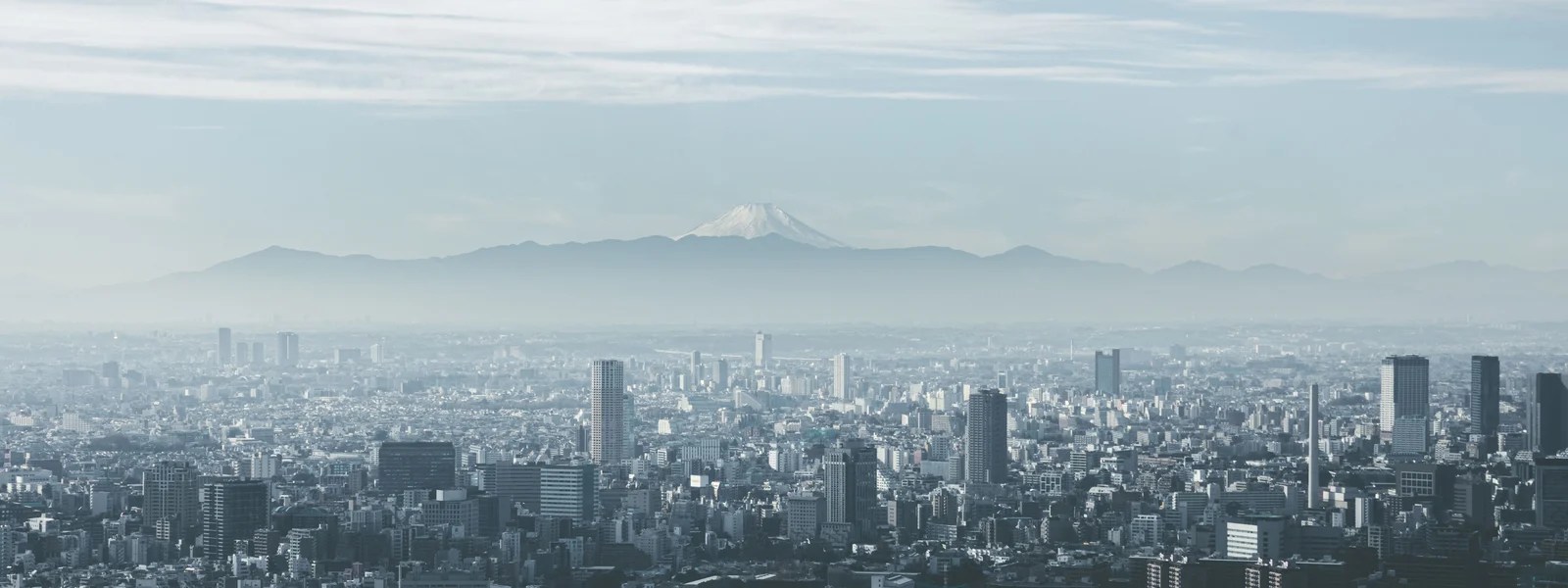
Japan as a digital nomad base: eSIM and connectivity guide
Japan launched a dedicated Digital Nomad Visa in March 2024, marking a formal shift in immigration policy toward welcoming remote workers. The visa allows stays of up to six months for qualifying remote workers with income from outside Japan. Combined with Japan's exceptional mobile network, dense co-working infrastructure in major cities, and the practical reality of some of the world's best food and public transit, Japan has become a more realistic nomad destination than its visa history suggested.
Japan's connectivity is excellent in cities and functional in rural areas. The nomad challenge here is not signal but cost of living, which in Tokyo runs significantly higher than other popular Asia nomad bases like Bali or Chiang Mai.
Japan's Digital Nomad Visa: the 2024 framework
Japan launched its Digital Nomad Visa in March 2024 after years of discussion about attracting remote workers. The visa allows nationals of eligible countries to stay in Japan for up to six months, working remotely for employers or clients based outside Japan. Eligibility requires proof of remote employment or business registration outside Japan, minimum annual income of approximately USD 70,000 (the exact threshold is in yen and subject to exchange rate variation), and health insurance coverage. The visa is not renewable in Japan and requires a six-month gap before reapplication, making it a medium-term rather than permanent base option.
The eligible nationality list at launch covered over 50 countries including most Western European nations, the United States, Canada, Australia, and many others. Check the current eligibility list on the Ministry of Foreign Affairs of Japan website before applying, as the list may have expanded since the March 2024 launch. The visa is processed through Japanese embassies and consulates in the applicant's home country rather than on arrival. Processing times vary by country but typically run two to four weeks.
| Japan Digital Nomad Visa | Details |
|---|---|
| Duration | Up to 6 months. Not renewable in Japan. 6-month gap required before reapplication. |
| Income requirement | Approximately USD 70,000 annual minimum (in yen, subject to exchange rate) |
| Work requirement | Remote work for employer or clients based outside Japan |
| Insurance requirement | Health insurance covering the full stay period |
| Application location | Japanese embassy or consulate in home country. Not available on arrival. |
Tokyo for nomads: connectivity and co-working
Tokyo is Japan's primary nomad hub and one of Asia's most connected cities. Docomo, au, and SoftBank all deliver 5G in central Tokyo, with median 5G speeds of 168 Mbps on Docomo, competitive figures from au, and SoftBank's fastest urban speeds reaching beyond 400 Mbps in optimal mmWave zones. The mobile network in Tokyo is not a limiting factor for any remote work task. The question is how to structure the eSIM plan around co-working and accommodation WiFi to minimise the amount of work done on mobile data.
Tokyo's co-working scene has matured significantly since 2020. Spaces including WeWork Tokyo, Regus across multiple central locations, and Japanese-operated spaces like Spaces and The Hive operate across the city's business districts of Shinjuku, Shibuya, Roppongi, Marunouchi, and Ginza. Day pass rates run JPY 1,500 to 5,000 (approximately USD 10 to 33), and monthly memberships range from JPY 20,000 to 80,000 (USD 133 to 533) depending on the space and desk type. Cafe-working, a significant practice in Tokyo with many cafes specifically tolerating or welcoming laptop workers, provides a lower-cost intermediate option between co-working membership and home working.
The co-working WiFi in Tokyo's established spaces is business-grade and handles sustained video calls without issue. This makes the mobile data plan primarily a commuting and mobility tool, which keeps consumption in the 10 to 20 GB per month range even for meeting-intensive remote workers using the hybrid structure of co-working WiFi for calls and mobile data for movement.
Kyoto for nomads: the cultural alternative
Kyoto has attracted a quieter category of nomad seeking Japan's cultural depth alongside remote work. The city has Docomo and au 4G throughout, with 5G in the commercial centre around Kyoto Station and the Karasuma business corridor. The co-working scene in Kyoto is smaller than Tokyo but includes established spaces like QUESTION, Impact Hub Kyoto, and a range of machiya (traditional townhouse) converted working spaces that offer a uniquely Japanese aesthetic work environment. Machiya co-working spaces in Kyoto's Nishijin and Kiyamachi neighbourhoods run JPY 3,000 to 8,000 per day or JPY 30,000 to 60,000 per month.
Kyoto's transport infrastructure, primarily bus-based rather than subway-focused, means nomads use Google Maps bus routing more heavily than in Tokyo, which adds to the daily mobile data consumption estimate. Bus routes in Kyoto change seasonally and require live data for accurate timing. Downloading Kyoto's bus route information offline is less complete than Tokyo's subway offline data, making live connectivity more important for Kyoto daily transit.
eSIM plan sizing for Japan nomads
The data calculation for nomads in Japan follows the same pattern as other Southeast Asian nomad hubs. Video calls dominate: an hour of Zoom at 720p uses approximately 540 MB, and two hours of daily calls consumes around 30 GB per month. Co-working WiFi covers these sessions in the hybrid model. Mobile data for the commute, lunch breaks, and post-work exploration runs 300 to 600 MB per day. Monthly mobile data consumption in the hybrid structure is 10 to 20 GB for a Tokyo-based nomad.
Japan's transit navigation data use, which is higher than in simpler cities, adds to this estimate compared to a Singapore or Bali nomad doing the same work schedule. A Japan nomad in Tokyo spending time moving between co-working spaces, client meetings at different locations, and the varied restaurants and cultural sites that make Japan an attractive base uses mobile data for navigation at a higher rate than a Bali nomad who rarely leaves Canggu's Grab-navigable streets. Budget an extra 20 to 30% on navigation data for Japan relative to other nomad bases. A 20 GB plan covers a month of active Tokyo nomad life in the hybrid model. A 30 GB plan provides comfortable buffer for heavier navigation and occasional mobile-primary work sessions.
Seasonal connectivity considerations
Japan's sakura season in late March and early April brings extreme tourist density to major cities and popular viewing sites. Network congestion at cherry blossom spots, particularly Ueno Park, Shinjuku Gyoen, and Chidorigafuchi in Tokyo, and Maruyama Park, Philosopher's Path, and Arashiyama in Kyoto, can slow upload speeds significantly during peak hanami hours. For nomads with scheduled client calls during sakura season, using co-working WiFi rather than mobile data for calls is particularly important during this period. Mobile data upload speeds at congested viewing sites can drop to the point where video calls degrade.
Typhoon season from July to October brings occasional weather disruptions that affect some network infrastructure in affected areas. Major city networks recover quickly from typhoon events due to redundant infrastructure. Rural areas in the path of strong typhoons may experience tower outages that take longer to restore. Japan's national disaster response infrastructure includes network restoration as a priority, and major disruptions are typically resolved within 24 to 48 hours of a typhoon passing. Nomads on Japan Rural itineraries during typhoon season should have offline content downloaded and expectations managed for potential short-term connectivity gaps.
Cost of living and eSIM as a budget line
Tokyo's cost of living for nomads is higher than Bali, Chiang Mai, or Kuala Lumpur but competitive with Singapore and significantly lower than London, New York, or Zurich. A room in a standard monthly rental apartment in Shinjuku or Shibuya runs JPY 80,000 to 150,000 per month, USD 530 to 1,000. Co-working membership adds JPY 20,000 to 80,000. Against this backdrop, a 20 GB eSIM plan at USD 25 to 35 or a local tourist SIM at USD 20 to 30 is a minor monthly expense. The connectivity cost in Japan is not a meaningful budget line for any nomad whose income qualifies for the Digital Nomad Visa threshold.
Excellent connectivity in cities, Japan's new Digital Nomad Visa for qualifying remote workers, extraordinary food and cultural environment, and a transit system that makes urban mobility effortless. Higher cost of living than most Southeast Asian nomad bases but competitive with Northeast Asia and European capitals. The connectivity is not the challenge. The cost is the honest tradeoff, and for nomads whose income qualifies for the visa, it is a manageable one.
Plans for Japan
Japan eSIM plans
Prices in USD. Instant QR activation. Pick your data, land connected.
FAQ
Does Japan have a digital nomad visa?
Yes. Japan launched its Digital Nomad Visa in March 2024. It allows stays of up to six months for remote workers with income from outside Japan, a minimum annual income of approximately USD 70,000, and health insurance coverage. The visa is processed through Japanese embassies abroad and is not renewable in Japan, requiring a six-month gap before reapplication.
Is Japan a good base for digital nomads?
Yes, particularly Tokyo and Kyoto. Exceptional mobile connectivity, dense co-working infrastructure, the Digital Nomad Visa framework, and one of the world's best food and cultural environments. Higher cost of living than Bali or Chiang Mai but competitive with Singapore. The connectivity is excellent. The cost is the honest tradeoff.
How much data does a nomad need per month in Japan?
20 GB in the hybrid model using co-working WiFi for video calls. 30 GB with buffer for heavier navigation and occasional mobile-primary work. Japan's transit navigation uses more data than simpler cities, adding 20 to 30% to the estimate compared to a Bali or Singapore nomad doing the same work schedule.
Which operator is best for remote work in Japan?
Docomo for overall coverage including any side trips beyond Tokyo and Kyoto. Au by KDDI for the best balanced experience in urban and regional travel. SoftBank is the fastest in central Tokyo but shows rural gaps that matter if the nomad itinerary includes destinations beyond the main cities.
Does cherry blossom season affect nomad connectivity in Japan?
Upload speeds at popular viewing sites slow significantly during peak hanami hours in late March and early April. For nomads with scheduled video calls during sakura season, use co-working WiFi rather than mobile data at congested outdoor locations. Download speeds and navigation are less affected than uploads.