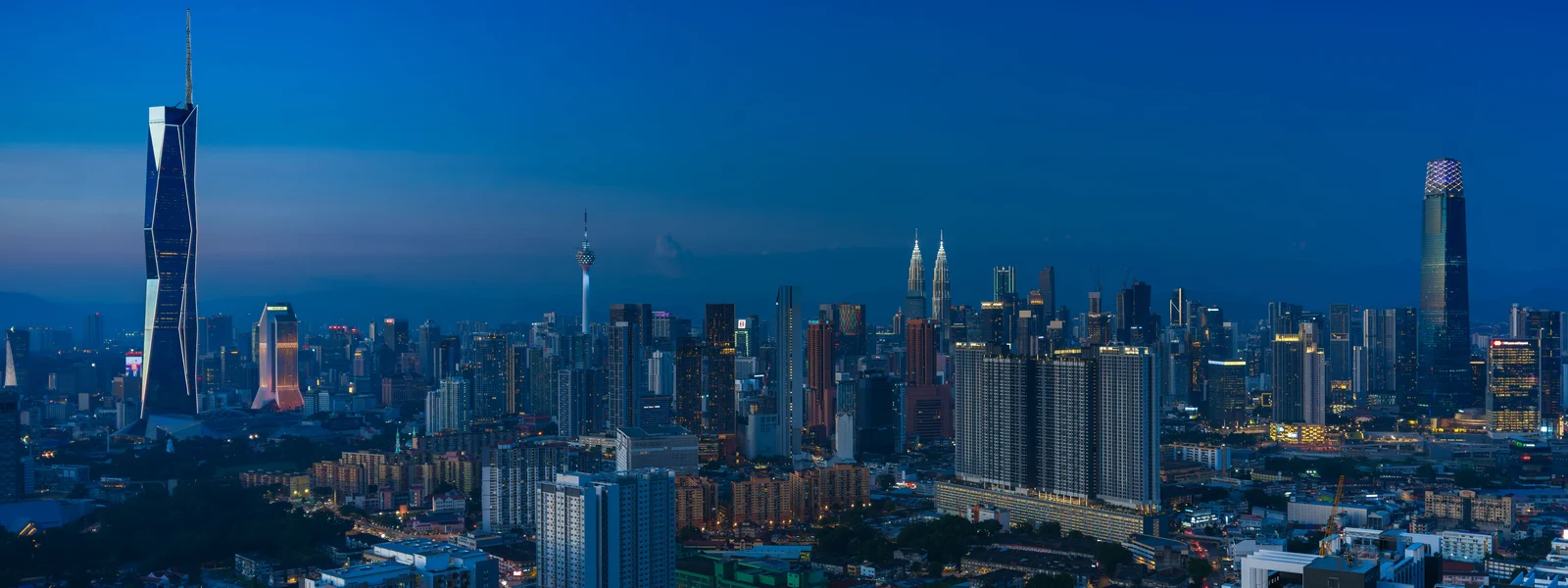
Malaysia eSIM Guide 2026
Malaysia in 2026 is one of the most connected countries in Southeast Asia on paper, and genuinely very good in practice. By late 2025, 5G had reached 82.4% of the population, 5G subscriptions hit 28.7 million, and U Mobile launched a full 5G Standalone network alongside the existing DNB infrastructure. For a traveler staying in Kuala Lumpur, Penang, Langkawi or the main resort islands, connectivity is essentially a non-issue. The interesting story is the contrast: peninsular Malaysia is excellent, East Malaysia Borneo is spectacular and significantly patchier, and the jungle interior of Sabah and Sarawak is as offline as Raja Ampat.
Visit Malaysia 2026 is the national tourism campaign. The government wants you here and has invested in airport infrastructure, digital arrival cards and improved connectivity in tourist corridors. The network reflects that investment.
The network picture in 2026
Malaysia has six mobile operators, which sounds complicated but simplifies quickly for a traveler. Three matter for a tourist: Maxis, CelcomDigi (the merged Celcom and Digi) and U Mobile. The other three (Unifi Mobile, Yes 5G) are secondary. A good travel eSIM connects to whichever of these three is strongest in your location, which in practice means you get the combined footprint.
Malaysia hit 82.4% population 5G coverage by late 2025, with 28.7 million 5G subscriptions. Two separate 5G networks now operate: Digital Nasional Berhad (DNB), serving CelcomDigi, Maxis, Unifi and Yes, delivering an average 218 Mbps download; and U Mobile's own 5G Standalone network, launched August 2025 under its ULTRA5G brand, targeting 80% population coverage by H2 2026. Average 4G speeds nationally exceed 30 Mbps. Major city 5G speeds exceed 400 Mbps.
| Operator | 5G network | Strength | Travel verdict |
|---|---|---|---|
| Maxis | DNB 5G | Best reliability (874 pts Opensignal Nov 2025). Strong download and upload experience. | Best all-round for KL, Penang, Johor Bahru. Reliable in Sabah and Sarawak main cities. |
| CelcomDigi | DNB 5G | Best consistent quality (71.7%, Opensignal Nov 2025). Widest 4G geographic footprint. | Strong across Peninsular Malaysia. Good East Malaysia presence including rural areas. |
| U Mobile | Own SA 5G (ULTRA5G) | Best 5G availability (57.8%, Opensignal Nov 2025). Fastest growing post-SA launch. | Strong 5G in urban centers. Coverage expanding rapidly through 2026. |
Peninsular Malaysia: where it is excellent
For the vast majority of a peninsular Malaysia trip, connectivity is simply not something you need to think about. The main tourist corridor from Johor Bahru through Kuala Lumpur, up to Penang and across to Langkawi is well covered by all operators.
| Destination | Coverage | Reality on the ground |
|---|---|---|
| Kuala Lumpur | 5G dense, all operators | Excellent everywhere, including the LRT, MRT and monorail. Full Grab and Touch 'n Go coverage. |
| Penang (George Town) | 5G strong | UNESCO old town and all main areas excellent. Good throughout the island. |
| Langkawi | 4G+, some 5G | Good in Kuah and main resort areas. Thinner on the quiet north coast and jungle interior. |
| Melaka | 4G+ strong | Reliable across the historic center and along the river. |
| Cameron Highlands | 4G, improving | Good in Brinchang and Tanah Rata. Weaker on remote tea plantation roads. |
| Perhentian Islands | Patchy 4G | Basic signal near the main chalets. Weak on the far beaches. Download maps before the speedboat. |
| Tioman Island | Limited 4G | Signal in main villages. Weak in jungle interior and remote dive sites. |
East Malaysia Borneo: the different story
Sabah and Sarawak are separate immigration zones from Peninsular Malaysia, accessible only by air, and their connectivity is a different world. The cities are modern and well covered. The jungle, the river routes and the wildlife areas are where signal drops away.
| Destination | Coverage | Reality |
|---|---|---|
| Kota Kinabalu (Sabah) | 4G+ strong | Good across the city and waterfront. Tunku Abdul Rahman Marine Park islands: patchy. |
| Sandakan / Sepilok | 4G, improving | Good in town. Orangutan sanctuary has Maxis and CelcomDigi signal near the center. |
| Kinabatangan River | Patchy Maxis/CelcomDigi | Basic signal at some lodges. River cruises through wildlife areas: often none. |
| Sipadan (diving) | None | Sipadan Island has no mobile coverage. Download everything at Semporna before the dive boat. |
| Kuching (Sarawak) | 4G+ good | Reliable across the city and waterfront. Good for Grab. |
| Bako / Mulu National Parks | None to patchy | No reliable signal inside the parks. Download offline maps at the park gate or in Kuching. |
Grab and Touch 'n Go: the two apps you need
Grab is Malaysia's dominant ride-hailing and food delivery super-app. In KL, Penang and Kota Kinabalu it is how you move. Touch 'n Go eWallet is the standard cashless payment method for public transport (LRT, MRT, monorail), highway tolls, and increasingly hawker stalls. Both require a live data connection. Set up both with your card before you arrive.
Since February 2026, buying a physical SIM card in Malaysia requires a passport scan and biometric photo at the point of sale, a process that typically takes 20 minutes at the airport. An eSIM purchased before you land bypasses this entirely and connects you from the moment you clear immigration at KLIA.
Visit Malaysia 2026
Malaysia's national tourism campaign for 2026 has brought genuine investment in tourist-facing infrastructure, including improved digital arrival card (MDAC) processes, better airport wifi at KLIA and KLIA2, and marketing that has positioned Malaysia as the destination for 2026 in Southeast Asia. Sabah and Sarawak both have their own targets of millions of visitors in 2026. The network investment that underpins all of this means you arrive into a genuinely modern mobile infrastructure in the cities and main tourist zones.
Network
Malaysia 5G & 4G coverage 2026
Maxis vs CelcomDigi vs U Mobile across peninsular Malaysia and East Malaysia Borneo. Where 5G is dense, the Perhentian and Sipadan dead zones, and the DNB vs U Mobile SA dual-network picture.
Read the guide →🚕NetworkGrab & Touch 'n Go in Malaysia
Malaysia's two essential apps: Grab for transport and food, Touch 'n Go eWallet for public transport and hawker stalls. Setup, data use, and the airport pickup rules at KLIA.
Read the guide →Practical
How much data do you need in Malaysia?
Data budgets by route: one week in KL, a peninsular circuit, a Borneo wildlife expedition, and a working month from Penang or Bangsar.
Read the guide →⚙️PracticalMalaysia eSIM setup, step by step
Install before you fly, the February 2026 SIM registration you are skipping, activate at KLIA or KLIA2, and the three errors that trip travelers up.
Read the guide →Comparison
eSIM or local SIM in Malaysia?
The February 2026 biometric registration change, airport counter pricing, East Malaysia island risk, and when a local SIM from a city shop genuinely wins.
Read the guide →💰ComparisonRoaming vs eSIM for Malaysia
US, UK and Australian carrier roaming for Malaysia decoded. The daily-fee trap across a three-week peninsular plus Borneo trip, and the hybrid setup.
Read the guide →Use case
Digital nomad in Malaysia
KL's Bangsar and KLCC, Penang's George Town, and Johor Bahru for remote work: coworking connectivity, the DE Rantau nomad visa, data budgets and dual-SIM setup.
Read the guide →🦧Use caseBorneo wildlife: connectivity guide
Orangutans at Sepilok, Kinabatangan River wildlife cruises, Sipadan diving, and Bako National Park. Coverage lodge by lodge, offline map strategy, and the Semporna prep checklist.
Read the guide →🏝️Use caseMalaysia island hopping data guide
Langkawi, the Perhentians, Tioman and Redang: speedboat dead zones, coverage by beach, offline map strategy, and data budgets for an island-focused trip.
Read the guide →Event
Visit Malaysia 2026: connectivity guide
Malaysia's national tourism campaign for 2026. MDAC digital arrival card, improved airport connectivity, festival calendar, and how the campaign has changed the tourist infrastructure.
Read the guide →🪔EventThaipusam at Batu Caves: connectivity guide
One of Asia's most spectacular Hindu festivals, drawing over a million visitors to Batu Caves near KL. Network congestion, the best viewing positions, and how to stay connected in the crowd.
Read the guide →Destinations in Malaysia
Malaysia's connectivity divides cleanly between the well-connected cities of the peninsula and the spectacular but patchier terrain of East Malaysia Borneo. These briefs cover what to expect at each destination.
Cities & islands in Malaysia
Local coverage, the best network by area, and the same plans that work nationwide.
Networks available by plan
The network depends on the plan you choose. These are the published operators for the first six plans currently sold.
| Plan | Published operators |
|---|---|
| 1 GB · 7 days | Maxis, CelcomDigi |
| 3 GB · 15 days | Maxis, CelcomDigi |
| 5 GB · 30 days | Maxis, CelcomDigi |
| 10 GB · 30 days | Maxis, CelcomDigi |
| 20 GB · 30 days | Maxis, CelcomDigi |
| 50 GB · 30 days | Maxis, CelcomDigi |
Malaysia eSIM FAQ
Does an eSIM work everywhere in Malaysia?
An eSIM works wherever there is mobile coverage. In peninsular Malaysia, that means virtually everywhere tourists go: KL, Penang, Langkawi, Melaka, Cameron Highlands and the main beach resorts. In East Malaysia, coverage is excellent in Kota Kinabalu and Kuching but drops off in jungle interiors, on wildlife river cruises, and on remote islands like Sipadan, which has no mobile signal at all. All predictable dead zones, all easy to plan for with offline maps.
Which network is best for Malaysia?
For peninsular Malaysia, Maxis leads on reliability and CelcomDigi leads on consistent quality and geographic coverage, per Opensignal's November 2025 report. For East Malaysia including Sabah and Sarawak, CelcomDigi's wider rural footprint gives it an edge on remote routes. A travel eSIM that roams across multiple operators gives you the effective combined coverage of all three major networks.
Do I need to register biometrics to get a SIM in Malaysia?
Yes, since February 2026, buying a physical SIM card in Malaysia requires a passport scan and biometric photo at the point of sale. The process takes around 20 minutes at airport counters. An international travel eSIM purchased before you land bypasses this requirement entirely, connecting you immediately on arrival at KLIA or KLIA2.
What is Touch 'n Go and do I need it?
Touch 'n Go eWallet is Malaysia's dominant cashless payment system, used for LRT, MRT and monorail tickets in KL, highway toll payments, and increasingly at hawker stalls and markets. As a tourist, you need it primarily for KL's public transport. It requires a live data connection and a Malaysian mobile number or international card to set up. Grab handles payments in-app for ride-hailing.
Is there signal in East Malaysia Borneo?
In the cities, yes: Kota Kinabalu and Kuching have good 4G coverage. In the jungle, on wildlife river cruises and at remote dive sites like Sipadan, signal drops to nothing. Sipadan Island itself has no mobile coverage. Download offline maps of any Borneo destination before you leave the nearest city.
Sort your Malaysia eSIM
Pick the plan that fits your trip, or work out how much data you need first.