Visit Malaysia 2026: eSIM and connectivity guide
2026 is Malaysia's official Visit Malaysia year, a tourism campaign designation that brings coordinated marketing, festival programming, and infrastructure attention. The designation typically brings increased visitor numbers across the year, with peak periods around major festivals, public holidays, and campaign events. For travellers visiting during Visit Malaysia 2026, the connectivity picture is shaped by Malaysia's improving network infrastructure and the specific congestion patterns that high-visitor periods create in the country's most popular destinations.
Visit Malaysia 2026 is not a single event. It is a year-long campaign with peak periods at festivals, public holidays, and the school holiday windows that drive domestic tourism. Understanding when and where those peaks occur shapes both the travel plan and the connectivity expectation.
What Visit Malaysia 2026 means for connectivity
Malaysia's Visit Malaysia campaigns, which the country has run periodically since the late 1980s, typically coincide with infrastructure upgrades and promotional activities that aim to improve the visitor experience. The 2026 campaign has been accompanied by continued investment in the national 5G rollout through the DNB wholesale network and ongoing expansion of CelcomDigi and Maxis 4G into previously underserved areas. The practical benefit for tourists in 2026 is marginally better coverage in some secondary destinations compared to 2024 or 2025, as infrastructure investment is timed to align with the campaign year.
The connectivity challenge of a Visit Malaysia campaign year is the other side of the coin: more visitors in the same network infrastructure. Major tourist sites in Kuala Lumpur, Penang, Langkawi, and the Cameron Highlands experience higher simultaneous user load during peak periods, particularly public holidays when both domestic and international visitors concentrate in the same locations. Network congestion at popular sites is temporary and typically resolves within 30 to 60 minutes of crowd dispersal, but it is worth understanding the pattern if your itinerary includes the busiest sites during peak periods.
Peak periods and their connectivity implications
Malaysia has several peak domestic and international tourism windows that drive network load at specific destinations. The Chinese New Year period, which in 2026 falls on 17 February (the same date as Vietnam's Tet), is the highest domestic travel volume week of the year. Malaysians return to home towns, families gather, and urban networks in cities like Kuala Lumpur and Penang experience elevated load from video calls and social media traffic. The specific network behaviour is similar to Tet in Vietnam: peak congestion in residential areas where families concentrate, reduced load in the tourist district centres as urban residents leave for their home towns, and a return to normal within a day or two of the holiday.
The school holiday periods, of which Malaysia has several across the year including a major break in June and a year-end break in November and December, drive significant domestic tourism to Langkawi, the Cameron Highlands, and the east coast islands when the monsoon season permits. June school holidays coincide with the east coast's pre-monsoon season, making Perhentian and Redang accessible and busy. The Cameron Highlands is popular during any school break as a cool highland escape from lowland heat. During these periods, accommodation in popular destinations fills quickly and the mobile networks at those destinations handle more simultaneous connections than in off-peak weeks.
| Period | High-traffic destinations | Connectivity note |
|---|---|---|
| Chinese New Year (17 Feb) | Penang, Kuala Lumpur, Ipoh, Malacca | Peak family gathering, elevated home network load. Tourist districts quieter than normal. |
| June school holidays | Langkawi, Cameron Highlands, Perhentians, Redang | East coast island season opens. Ferry and accommodation demand peaks. Island coverage unchanged. |
| Hari Raya Aidilfitri | Peninsular Malaysia broadly | Major domestic travel movement. Highway traffic, airport congestion. Urban networks elevated load. |
| November to December school break | Langkawi, Penang, highland resorts | Domestic family travel peaks. East coast monsoon means islands inaccessible. |
KL Tower and KLCC: the landmark congestion pattern
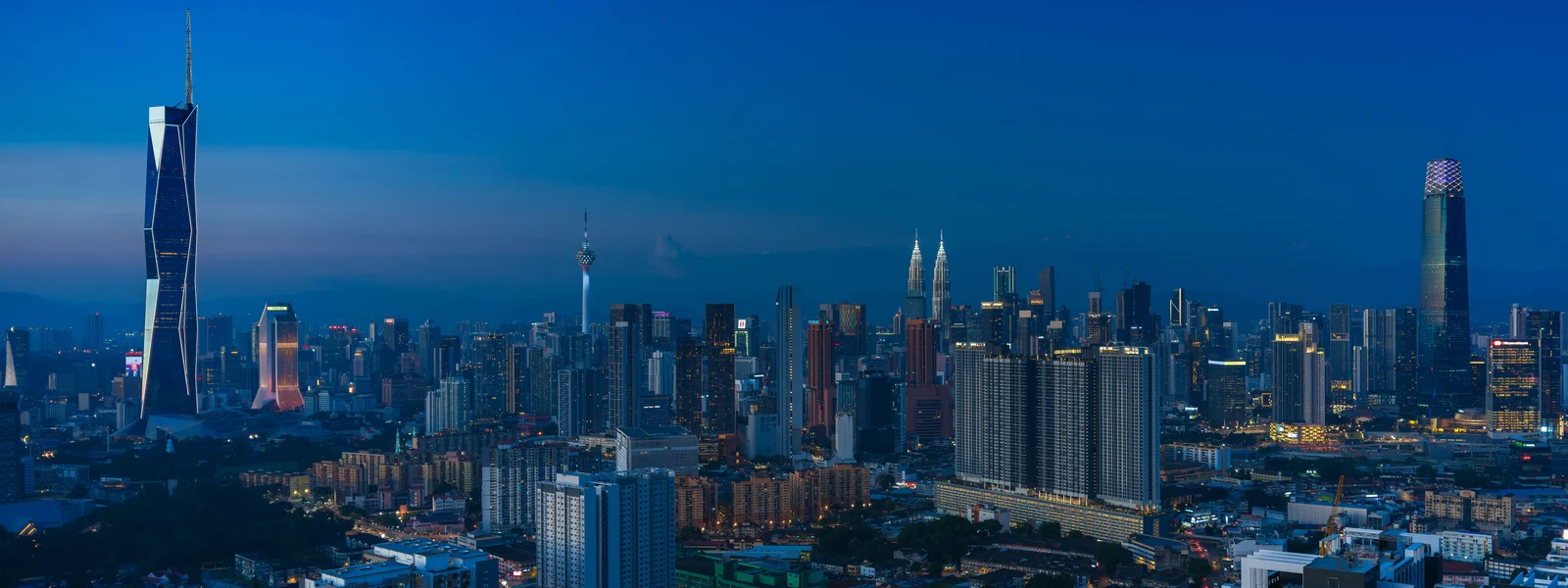
Kuala Lumpur's major tourist landmarks, the KLCC Petronas Twin Towers observation deck, Menara KL tower, Batu Caves, and the central market district, experience predictable mobile network congestion during their busiest visiting hours. Weekend mornings at Batu Caves, Sunday evenings at the KLCC park fountain show, and public holiday afternoons at the Twin Towers all create concentrated simultaneous user loads that slow upload speeds for photography and social media posting.
The practical behaviour at these sites mirrors Bali's DIFF fireworks or Da Nang's festival nights on a smaller scale. Photography and video capture are stored locally without requiring connectivity. Uploading to social media or streaming live from the location is slower during peak hours and faster during off-peak visits. The best approach is to capture content locally and upload on return to accommodation or from a cafe with good WiFi, rather than fighting congested tower capacity at the landmark itself. This is a minor adjustment rather than a meaningful connectivity problem, and it applies specifically during peak visitor hours at specific landmarks rather than throughout the city.
Festival connectivity: George Town Penang
Penang's George Town Festival in August is one of Malaysia's major arts and culture events, drawing significant domestic and international visitors to the UNESCO heritage zone. The festival transforms George Town's streets into performance and installation spaces, concentrating visitors in an already dense urban area over several weeks. CelcomDigi and Maxis cover the heritage zone with 4G that handles normal tourist traffic well. During festival peak evenings, simultaneous user loads increase noticeably, with upload speeds for photos and videos slowing during the busiest outdoor events.
The practical approach for festival connectivity in George Town mirrors the landmark congestion advice: capture locally, upload later. The heritage zone's cafe density means post-festival WiFi upload is typically minutes away from any festival venue. George Town's small geographic footprint and dense cafe and restaurant infrastructure make it one of the most WiFi-rich urban environments in Malaysia, which compensates for any festival-period mobile congestion more effectively than equivalent situations in more spread-out cities.
Malaysia's 5G expansion in 2026 and its visitor relevance
Visit Malaysia 2026 coincides with the ongoing expansion of Malaysia's 5G network through the DNB wholesale infrastructure and U Mobile's independent 5G Standalone rollout, which targets 80% population coverage by the second half of 2026. For visitors in 2026, this expansion means that some destinations that were 4G-only in 2025 may have 5G access in 2026, particularly in secondary cities and major tourist destinations that are part of the expansion roadmap. The practical benefit for most tourists is incremental rather than transformative: the 4G baseline of 30 to 50 Mbps was already adequate for all standard travel tasks, and 5G access adds speed that most tourist use cases do not require.
Where 5G expansion does have practical value in 2026 is in reducing congestion at major tourist sites and events. More users connecting on 5G rather than 4G in KL's urban core frees up 4G spectrum for users without 5G-capable devices, potentially improving overall network performance during peak periods. This is a background infrastructure benefit rather than something visitors need to actively manage, but it is part of why Visit Malaysia 2026 is a better connectivity year than 2024 at the margin.
Practical connectivity planning for a Visit Malaysia 2026 trip
The Visit Malaysia 2026 designation does not change the fundamental connectivity principles for a Malaysian trip. CelcomDigi remains the best operator for full coverage including East Malaysia. Total data pool plans remain better suited to Malaysian itineraries than daily cap plans. Offline maps remain the single most valuable pre-arrival preparation step. The campaign year adds a layer of peak-period awareness: if your itinerary places you in a major city during a public holiday or school break, expect slightly elevated network load at popular sites and plan uploads and heavy data tasks around those peaks rather than during them.
Malaysia's tourism campaign year brings more visitors to the same network infrastructure, meaning slightly elevated congestion at peak landmarks and during major festivals. The 5G expansion running parallel to the campaign improves the baseline. CelcomDigi and Maxis 4G throughout the country remains the reliable foundation for any Malaysian itinerary. Plan data for the connected portions of the trip, use offline maps throughout, and treat peak festival and holiday congestion at landmarks as a minor upload-timing consideration rather than a connectivity problem.
Plans for Malaysia
Malaysia eSIM plans
Prices in USD. Instant QR activation. Pick your data, land connected.
FAQ
What is Visit Malaysia 2026?
Malaysia's official tourism campaign year, which brings coordinated marketing, festival programming, and infrastructure investment. The campaign runs throughout 2026 with peak visitor periods around Chinese New Year, school holidays, Hari Raya, and the George Town Festival. It coincides with ongoing 5G network expansion through the DNB wholesale infrastructure.
Does Visit Malaysia 2026 affect mobile connectivity?
Marginally. More visitors in the same infrastructure creates slightly elevated congestion at peak landmark hours. The parallel 5G expansion improves the overall baseline. The fundamental connectivity principles are unchanged: CelcomDigi for full coverage, total data pool plans, offline maps pre-loaded. Peak periods add a minor upload-timing consideration at major landmarks.
When is Chinese New Year 2026 in Malaysia?
17 February 2026, the same date as Vietnam's Tet. This is the highest domestic travel volume week, with networks elevated in residential areas where families gather. Tourist districts in KL and Penang are quieter than normal as urban residents travel to home towns. Festival decorations and celebrations make this period attractive for visitors.
Is connectivity better in 2026 for Malaysia than previous years?
Marginally better, particularly in secondary cities. U Mobile's 5G Standalone network launched August 2025 and targets 80% coverage by H2 2026. DNB wholesale 5G continues expanding. The 4G baseline on CelcomDigi and Maxis was already good. The improvement is incremental rather than transformative for tourist use cases.
What is the George Town Festival and does it affect connectivity?
Penang's major arts and culture event in August, transforming the UNESCO heritage zone into performance and installation spaces over several weeks. During peak festival evenings, mobile upload speeds slow in the heritage zone. The area's dense cafe infrastructure means WiFi upload options are minutes away from any festival venue. Minor inconvenience, not a connectivity problem.