Singapore Layover eSIM Guide 2026: Make the Most of Your Transit Stop
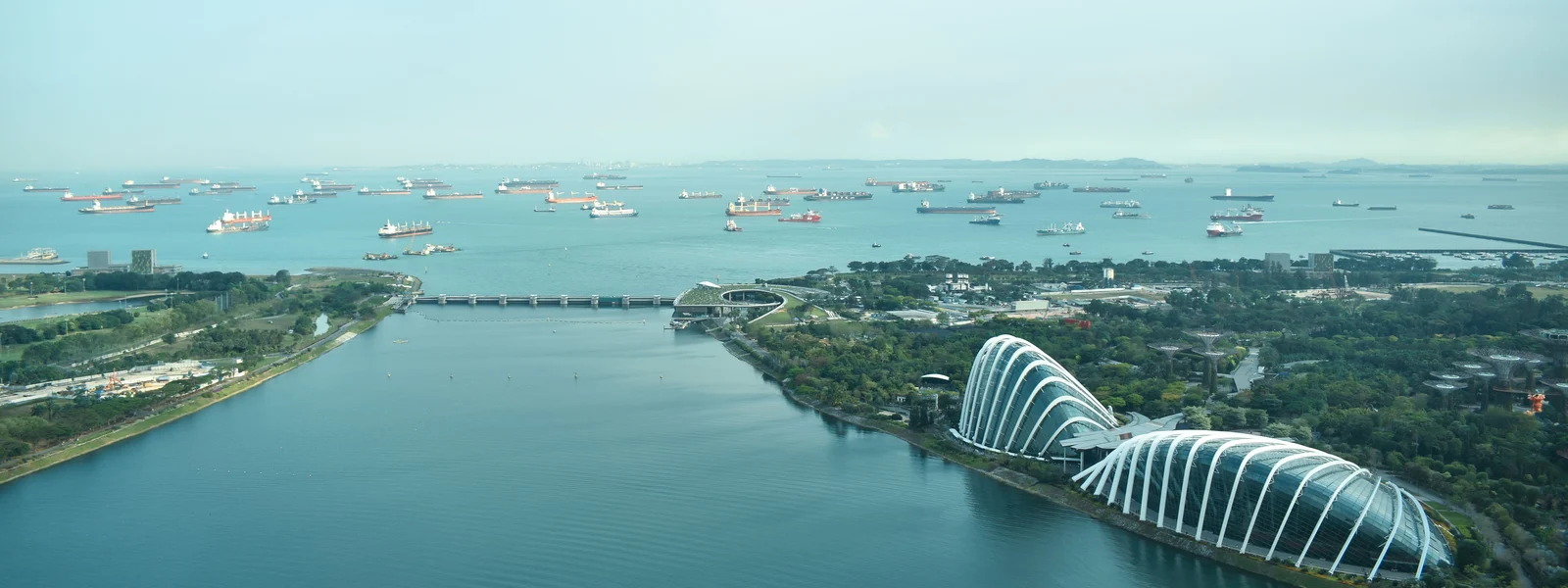
Singapore's Changi Airport is consistently voted the world's best airport, and its location 20 minutes by MRT from the Marina Bay financial district places one of Asia's most extraordinary urban environments within reach of even relatively short transit stops. A six-hour layover in Singapore, managed correctly with a working eSIM for navigation and real-time transport information, allows meaningful exploration of Marina Bay Sands, Gardens by the Bay, the Singapore River waterfront, and the Jewel Changi Airport complex itself. A twelve-hour layover extends the possibility to Chinatown, Little India, and the Botanic Gardens. Understanding how much time is actually available after airport formalities, and how Singapore's seamless connectivity makes every transit minute usable, transforms a Changi stopover from a frustrating wait into a genuine travel experience.
Singapore Connectivity: The Best in Southeast Asia
Singapore has the highest mobile network density in Southeast Asia, with Singtel, StarHub, and CelcomDigi (formerly M1) all providing dense urban 4G and widespread 5G across the entire island. Average 4G download speeds in Singapore measured in 2025 and early 2026 consistently exceed 60 Mbps in most locations, with 5G speeds above 200 Mbps in central areas including Marina Bay, Orchard Road, and Changi Airport itself. For a transit visitor using a Singapore travel eSIM, the practical consequence is instant connectivity, flawless navigation, real-time Grab ride-hailing, and social media sharing at speeds that represent the upper end of what any Asian destination provides. Singapore's connectivity never creates friction; the only planning question is how to allocate the available transit time between the island's densely packed attractions.
The Transit Time Reality: What You Actually Have
Transit time calculation for Singapore layovers requires subtracting airport formalities from the headline stopover duration. Clearing immigration on arrival at Changi typically takes 15 to 25 minutes for most nationalities on a normal travel day, extending to 45 minutes during peak arrival waves. Returning to the airport for your onward flight requires being through security and at the gate 45 to 60 minutes before departure. The MRT journey from Changi to City Hall or Marina Bay takes 30 minutes. Adding the return journey, total transit time consumed by transport and airport formalities is approximately 2.5 to 3 hours for a standard exit and return. From a 6-hour layover this leaves 3 to 3.5 hours of actual exploration time. From a 12-hour layover it leaves 9 to 9.5 hours, a full urban exploration day.
| Layover Duration | Usable Time | Recommended Scope | eSIM Data Needed |
|---|---|---|---|
| 4-5 hours | 1-2 hours city | Jewel Changi + Gardens near airport | 500MB sufficient |
| 6-8 hours | 3-4 hours city | Marina Bay, Gardens by the Bay, Merlion | 1GB comfortable |
| 10-12 hours | 6-8 hours city | Above plus Chinatown or Orchard Road | 2GB comfortable |
| 24 hours | 18-20 hours city | Full day + evening including Sentosa option | 3-5GB for full day |
Visa-Free Transit: The Singapore Free Visa
Singapore grants visa-free transit for 96 hours to citizens of most countries, including all EU/EEA members, UK, USA, Canada, Australia, New Zealand, Japan, South Korea, and many others. For a complete list of nationalities eligible for visa-free entry, check the Immigration and Checkpoints Authority of Singapore website before your trip. Passengers from countries not on the visa-free list may still be eligible for Singapore's Transit Visa or the In-Transit Without Visa (ITWV) scheme if remaining airside. The practical implication is that for the overwhelming majority of international air travellers, exiting Changi to explore Singapore during a layover is a straightforward immigration clearance rather than a visa application process.
The 6-Hour Layover Circuit: Marina Bay by MRT
For a six-hour layover at Changi, the most efficient circuit uses the MRT East-West Line from Changi Airport to Tanah Merah, then transfers to the MRT Circle Line or the Downtown Line toward Marina Bay. The total journey from Changi to Bayfront Station takes 28 to 33 minutes depending on the route. At Bayfront, Marina Bay Sands, Gardens by the Bay's Supertree Grove, and the Marina Bay waterfront are all within five minutes walking distance. Singtel or StarHub 4G is flawless throughout this entire route; navigation via Google Maps, Google Pay or GrabPay for MRT fares loaded on your phone, and real-time photo sharing all work seamlessly on any Singapore travel eSIM. The return journey to Changi takes the same 30 minutes, with Grab available as a faster but more expensive alternative if MRT timing is tight relative to your departure.
Jewel Changi: The Layover Without Leaving the Airport
For very short layovers of four hours or less, or for travellers who prefer not to clear immigration, Jewel Changi Airport is the alternative. The ten-storey indoor garden complex connecting Terminals 1, 2, and 3 features the world's tallest indoor waterfall at 40 metres, the Shiseido Forest Valley indoor garden, dozens of restaurants and cafes, and a canopy bridge. Jewel is accessible from the transit zone without clearing immigration, and Singtel 4G within Jewel is excellent throughout, enabling social media documentation of the waterfall and garden installations without any connectivity concern. The data consumption for a Jewel visit runs 200 to 400MB for the photography and social sharing it generates, trivial on any plan size.
Grab vs MRT: The Navigation Decision
Singapore's MRT is the most reliable and predictable transport for layover visitors, with departures every 3 to 7 minutes during peak hours and a fare from Changi to Marina Bay of approximately SGD 2.20 (USD 1.65). The ease of navigation on any Singapore eSIM, with Google Maps providing real-time MRT platform information, exit numbers, and walking directions from stations to attractions, eliminates the traditional barrier of unfamiliarity with a foreign transit system. Grab operates throughout Singapore with fares that vary by demand; Changi to Marina Bay in normal conditions runs SGD 20 to 30 (USD 15 to 22), five to ten times the MRT fare. For a time-pressured layover, Grab's door-to-door service eliminates the station-to-attraction walking portion but adds cost and demand surge risk during peak airport departure times. For a time-flexible layover with adequate buffer, MRT is the clear choice.
Data Consumption During a Singapore Layover
Singapore layover data consumption is typically modest because the visit duration is short and the WiFi at both Changi Airport and Marina Bay's commercial zones is excellent, reducing mobile data dependency for heavy tasks. Changi Airport Terminal 1, 2, and 3 all provide free, fast WiFi throughout, including in the transit zones. Gardens by the Bay has WiFi in the Flower Dome and Cloud Forest visitor areas. The primary mobile data use during a Singapore layover is navigation on the MRT and street-level walking between attractions, plus social media sharing in real-time rather than deferring to WiFi. A six-hour layover circuit to Marina Bay and back consumes 300 to 700MB of eSIM data, meaning even the smallest travel eSIM plan comfortably covers the layover without any rationing.
Changi Airport Terminal Guide for Transit Visitors
Changi Airport's four terminals (Terminal 4 is the newest, handling primarily Cathay Pacific and Korean Air) are connected by the Skytrain automated people mover, with transit between terminals taking five to eight minutes. Terminal 3, the largest, houses the most extensive retail and dining options in the transit zone along with the Orchid Garden and Sunflower Garden. The Jewel Changi complex, accessible from Terminals 1, 2, and 3 without clearing immigration via the connecting corridors, is the most significant airport development of recent years and the primary destination for visitors who prefer the no-immigration-clearance option. WiFi throughout all Changi terminals is fast and free, reducing mobile data dependency to near zero for the airport-internal portion of a transit stop. The primary data use begins at immigration clearance when the MRT journey into the city starts and Google Maps becomes the navigation tool for the layover exploration.
For transit passengers whose aircraft arrives at Terminal 4, the MRT connection requires a free shuttle bus to Terminal 2 or 3 before accessing the East-West Line. This adds approximately 15 minutes to the transit-to-city journey time and should be factored into layover planning for T4 arrivals. Singapore's Singtel and StarHub 4G is active throughout all terminal areas including the shuttle bus stops, and the Google Maps transit directions from Changi Airport correctly account for the T4 shuttle leg when providing total journey time estimates. The overall Changi transit experience is among the most connectivity-optimised in the world, with every step from aircraft to city MRT guided by reliable 4G without any dead zones or registration hurdles.
Singapore eSIM Plans for Transit Visitors
For a layover of six hours or less, the smallest available Singapore eSIM plan, typically 1GB over 7 days, provides far more data than the layover requires. The 300 to 700MB that a six-hour Marina Bay circuit consumes leaves substantial headroom even on the smallest plan. For a 24-hour layover, a 3GB plan covers a full day of city exploration with active navigation, Grab ride-hailing, social media, and photo sharing without any rationing. Most Singapore eSIM providers use Singtel, StarHub, or CelcomDigi as their network partners, all of which provide equivalent excellent performance throughout Singapore's compact 733 square kilometre geography. The choice between providers for a Singapore layover eSIM is determined primarily by price and plan size availability rather than any meaningful network quality difference, as the three major Singapore operators maintain coverage parity across virtually all accessible locations. Confirm arrival-triggered activation policy before purchasing to avoid validity waste if your layover is scheduled weeks in advance of purchase.
Singapore's status as one of the world's best-connected cities, with the highest mobile network density in Southeast Asia and Changi Airport's exceptional WiFi infrastructure, makes it the most eSIM-friendly layover destination in the region. The practical preparation described throughout this guide, installing the eSIM before the layover flight, downloading offline maps for the MRT circuit, and planning the transit time calculation accurately, transforms even a modest six-hour layover into a genuine Singapore encounter rather than an extended airport wait. Changi and Singapore's combination of transport efficiency, visual spectacle at Marina Bay and Gardens by the Bay, and seamless connectivity provides a layover experience that reinforces why Singapore consistently ranks among the world's most liveable and visitable cities.
A six-hour Singapore layover is genuinely enough to reach Marina Bay, stand at the Merlion, photograph the Gardens by the Bay Supertrees at dusk, and return to Changi for your onward flight -- provided the eSIM is installed before the layover flight departs and the transit time calculation is accurate.Get Your Singapore Layover eSIM
Compare Singtel-based Singapore eSIM plans for short and long transit stops.
FAQ
Do I need a visa for a Singapore transit stop?
Most nationalities can enter Singapore visa-free for up to 96 hours. Check the ICA Singapore website for your specific passport. Citizens of most EU/EEA countries, UK, USA, Canada, Australia, and many others qualify for automatic visa-free entry.
How long does it take to get from Changi to Marina Bay?
28 to 33 minutes by MRT, depending on the route. Use the East-West Line to Tanah Merah then transfer, arriving at Bayfront Station for Marina Bay Sands and Gardens by the Bay.
How much data do I need for a Singapore layover?
300 to 700MB for a six-hour layover with MRT navigation and social media sharing. Airport and Gardens WiFi covers heavy tasks. Even a 1GB plan provides comfortable coverage with significant headroom.
Can I use Grab for transport during my layover?
Yes. Grab operates throughout Singapore. Changi to Marina Bay runs SGD 20 to 30 depending on demand. MRT at SGD 2.20 is far cheaper and equally fast on the same route.