Indonesia as a digital nomad base: eSIM and connectivity guide
Bali has been a digital nomad destination since before the term existed. The combination of fast cafe wifi, a co-working infrastructure that has matured through more than a decade of nomad traffic, low cost of living, and a cultural environment that genuinely welcomes long-stay foreigners has made it one of the most established remote work bases in the world. The mobile data picture that supports daily nomad life in Bali is solid but not exceptional by regional standards.
Bali's strength for nomads is not its mobile network speed. It is the density of reliable wifi environments that means mobile data functions as a backup rather than a primary work connection. Understanding that distinction shapes how you size and use your eSIM plan.
Bali connectivity by zone: the nomad map
Bali's connectivity profile is not uniform across the island. The nomad infrastructure concentrates in specific zones, each with different mobile and wifi characteristics. Canggu is the most active nomad hub, with a density of co-working spaces, cafes with fast wifi, and long-stay accommodation that makes it the default base for most first-time nomads in Indonesia. Telkomsel 4G covers Canggu reliably, with partial 5G in some areas. The co-working spaces in Canggu, including Dojo, Outpost, and a range of smaller operations, offer business-grade internet with dedicated connections that handle sustained video calls without straining a mobile plan.
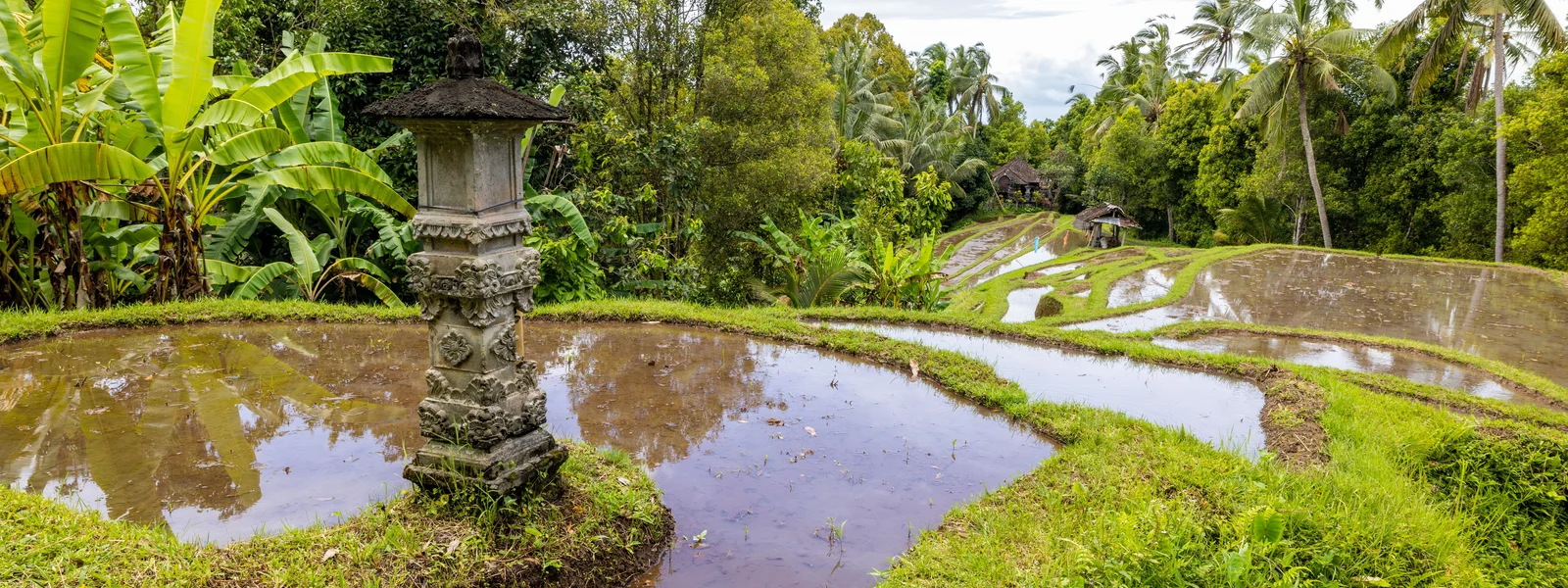
Ubud, Bali's cultural centre in the highland interior, attracts a different nomad profile: those who want the rice terrace environment and cultural depth alongside remote work. Ubud's valleys make tower placement difficult, and the area operates on 4G rather than 5G. Cafe wifi in Ubud is generally good but more variable than in Canggu, reflecting smaller infrastructure investment. The co-working scene in Ubud is smaller, with Hubud being the main dedicated space. For nomads whose work is meeting-intensive or requires consistent high-speed connections, Canggu is the more reliable choice. For those whose work tolerates more variability in exchange for a slower-paced environment, Ubud works well.
Seminyak and Kuta are more tourist-heavy and less nomad-oriented but have strong connectivity from tourist infrastructure investment. Sanur on the east coast has a calmer character and good connectivity. The Bukit peninsula, including Uluwatu, has Telkomsel 4G throughout but less co-working infrastructure and more variable cafe wifi. Nusa Penida, accessible by a 45-minute boat from Bali, has 4G coverage in the main town areas but is not practical as a daily work base due to the ferry and the limited co-working infrastructure.
| Zone | Mobile coverage | Co-working density | Best for |
|---|---|---|---|
| Canggu | 4G reliable, partial 5G | High, multiple dedicated spaces | Most nomads. Best infrastructure balance. |
| Ubud | 4G, valley terrain limits signal | Moderate, Hubud main space | Nomads prioritising cultural environment over connectivity density. |
| Seminyak | Strong 4G/partial 5G | Low dedicated, high cafe wifi | Short stays. Less nomad community than Canggu. |
| Sanur | Strong 4G | Growing, quieter scene | Families, longer-term residents, calmer work environment. |
| Bukit / Uluwatu | 4G throughout | Low | Surfers. Work from villa with accommodation wifi. |
eSIM plan sizing for remote work in Indonesia
The data calculation for nomads in Bali follows the same logic as in Vietnam or Thailand: video calls dominate. An hour of Zoom at 720p uses approximately 540 MB. Two hours of daily meetings consumes around 30 GB per month from video conferencing alone. Adding file uploads, cloud storage syncing, and general work browsing brings a realistic remote work total to 40 to 60 GB per month if mobile data is the primary connection. If co-working spaces handle the heavy sessions, mobile data consumption drops to 10 to 20 GB per month even for meeting-intensive workers.
The most effective eSIM approach for Indonesia is the same hybrid model that works in Vietnam: a total data pool plan of 20 to 30 GB used as backup to co-working and accommodation wifi, rather than an unlimited plan used as a primary connection. Indonesia's Telkomsel 4G delivers real-world speeds of 15 to 50 Mbps, which is adequate for most work tasks but slower than Vietnam's 617 Mbps or Thailand's urban speeds. For tasks that require consistent high-speed connections, co-working wifi is the more reliable environment. The eSIM covers commuting, meetings taken from cafes, and any days outside the co-working infrastructure.
Visa options for long-stay nomads in Indonesia
Indonesia's visa landscape for digital nomads changed with the introduction of the Digital Nomad Visa in 2023, available for up to five years for remote workers with income from outside Indonesia. As of 2026, this visa pathway exists but the application process has been variable in its implementation, with requirements and processing times reported inconsistently by different consulates. The more commonly used long-stay options remain the Social Visa (B211A), available for 60 days and extendable up to six times for a potential 210-day stay, and the multiple-entry Business Visa.
The standard tourist visa-on-arrival (VOA) allows 30 days extendable once to 60 days, which is the default for most first-time Indonesia visitors. For stays beyond 60 days without the Social Visa structure, the border run to Singapore or Malaysia remains the pragmatic approach used by many long-term Bali residents. Confirm the current visa requirements through the official Indonesian immigration website or a licensed visa agent before planning a long stay, as Indonesian immigration policy has been revised multiple times in recent years.
Nyepi: the one annual connectivity disruption
Nyepi on 19 March 2026 shuts down mobile data across Bali for 24 hours under Ministerial Circular No. 2 of 2026. For nomads with client deadlines or scheduled meetings, this requires advance planning rather than a workaround. The advance planning has two components: the technical and the client-facing. On the technical side, hotel and resort wifi via fibre remains available during Nyepi, so nomads in accommodation with a fibre connection can continue working via wifi on Nyepi if their work commitments require it. The mobile data shutdown does not affect fibre-connected wifi. On the client-facing side, informing clients and scheduling any meetings away from 19 March is the more professional approach, particularly for nomads whose clients are not aware of Nyepi as a concept.
Nomads who embrace Nyepi as a scheduled rest day, which is how the Balinese themselves approach it, find it less disruptive than the advance framing suggests. A 24-hour period without mobile connectivity is a minor operational adjustment for most remote work arrangements, particularly when accommodation wifi remains available. The day before Nyepi is useful for front-loading any work that benefits from mobile connectivity and for downloading any content needed for the day itself.
Co-working costs in Bali: eSIM as a proportion of the budget
Bali remains one of the more affordable nomad bases globally, which contextualises the eSIM cost meaningfully. A co-working day pass in Canggu runs approximately USD 8 to 20 depending on the space. A monthly co-working membership at established spaces like Dojo or Outpost costs USD 120 to 250, which typically includes fast internet, meeting room access, and community programming. Against this backdrop, an unlimited or 30 GB eSIM plan at USD 20 to 40 per month is a minor additional line in the nomad budget. The eSIM is the mobility layer. The co-working space is the productivity investment.
Accommodation in Canggu ranges from USD 400 to 1,000 per month for a villa depending on location and specification. The co-working membership plus eSIM plus accommodation in Canggu positions Bali as significantly cheaper than comparable nomad hubs in Europe, North America, or Singapore, while offering a comparable or better connectivity environment for the type of work most nomads do. The connectivity constraint in Bali is not mobile data speed, which is adequate. It is the occasional app transport restriction in contested zones and the one Nyepi day per year when mobile data stops.
Connectivity outside Bali: the nomad trip calculation
Nomads based in Bali frequently take short trips to Java, Lombok, and occasionally Flores. The connectivity picture on Java is generally good for work purposes, with Jakarta and Yogyakarta both offering solid Telkomsel 4G and multiple co-working options. Lombok's Gili islands are not practical for work requiring reliable connectivity but function as weekend escape destinations where offline time is the point. Flores and eastern Indonesia are genuinely offline for extended periods and require scheduling around work commitments before departure. The practical rule for nomad side trips from Bali is the same as for travellers: schedule any meetings or deadlines for days when you are on main islands with confirmed connectivity, and treat remote island trips as work-free windows within the broader stay.
Bali is one of the world's most established nomad bases for good reason. The wifi infrastructure is strong, the cost of living is low, and the lifestyle is genuinely pleasant. Mobile data on Telkomsel 4G is adequate but not exceptional by regional speed standards. Use co-working spaces for sustained video calls and heavy uploads. Use the eSIM for mobility and backup. Plan Nyepi as a scheduled rest day. The connectivity case for Bali as a nomad base is solid if you understand its character: good wifi infrastructure with adequate mobile backup, rather than the blazing mobile speeds of Da Nang or Bangkok.
Plans for Indonesia
Indonesia eSIM plans
Prices in USD. Instant QR activation. Pick your data, land connected.
FAQ
Is Bali good for digital nomads in 2026?
Yes. Bali has one of the most established nomad infrastructures in the world, with dense co-working spaces in Canggu, good wifi throughout tourist areas, and a cost of living that makes co-working plus accommodation plus eSIM affordable. Mobile data on Telkomsel 4G averages 15 to 50 Mbps, adequate for most work tasks.
Which Bali zone is best for digital nomads?
Canggu for most nomads. It has the highest density of co-working spaces, the most active nomad community, reliable Telkomsel 4G, and good accommodation infrastructure. Ubud suits nomads who prioritise cultural environment and slower pace over connectivity density. Seminyak and Sanur work for shorter stays.
How much data does a digital nomad need in Indonesia?
20 to 50 GB per month if co-working wifi handles the heavy video call sessions. Unlimited if mobile data is the primary work connection. Daily Zoom at 720p consumes around 30 GB per month for meetings alone. The hybrid approach, co-working wifi for meetings, eSIM for mobility, is the most cost-effective structure.
What happens to my work on Nyepi in Bali?
Mobile data is shut down from 6am on 19 March to 6am on 20 March under Ministerial Circular No. 2 of 2026. Hotel and resort wifi via fibre remains available. Schedule any critical meetings away from 19 March and inform clients in advance. Nomads with fibre-connected accommodation can continue working via wifi.
What visa do I need for a long stay in Indonesia?
For stays up to 60 days, the visa-on-arrival (VOA) covers you with one extension. For longer stays, the Social Visa (B211A) allows up to 210 days with extensions. Indonesia also introduced a Digital Nomad Visa in 2023 for up to five years. Check current requirements on the official Indonesian immigration website as policy has changed multiple times recently.